Most people buy gear expecting magic.
Then they record their voice and feel disappointed.
I did the same.
I remember plugging my mic into a clean interface like the Focusrite Scarlett 2i2 and thinking something was wrong with my voice.
It sounded thin. Flat. Lifeless.
Here is the truth.
Your mic is not the problem.
Your recording chain is.
Who is it for
Producers with synths, outboard gear, or hybrid setups.
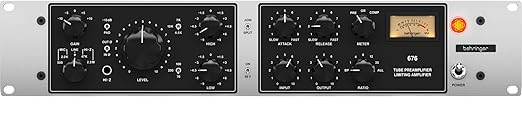
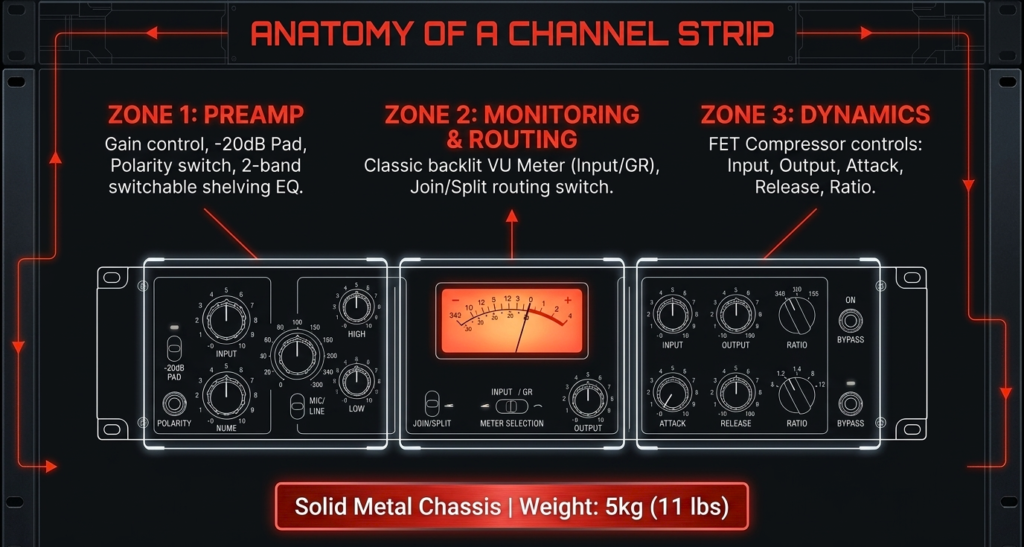
The Behringer 676 promises to fix that with tube warmth and built in compression.
Sounds exciting.
But does it actually work?
Or is it just another budget box with hype?
Here is what you will get from this review.
Clear answer on sound quality.
Real use cases for vocals and content creation.
Honest verdict on whether it is worth your money.
Quick facts that most people ignore.
- Most raw vocals sound bad without compression
- Small dynamic control can improve perceived quality by over 50 percent
- Many listeners cannot tell hardware vs plugins in blind tests
What Is the Behringer 676 And Who Is It Actually For
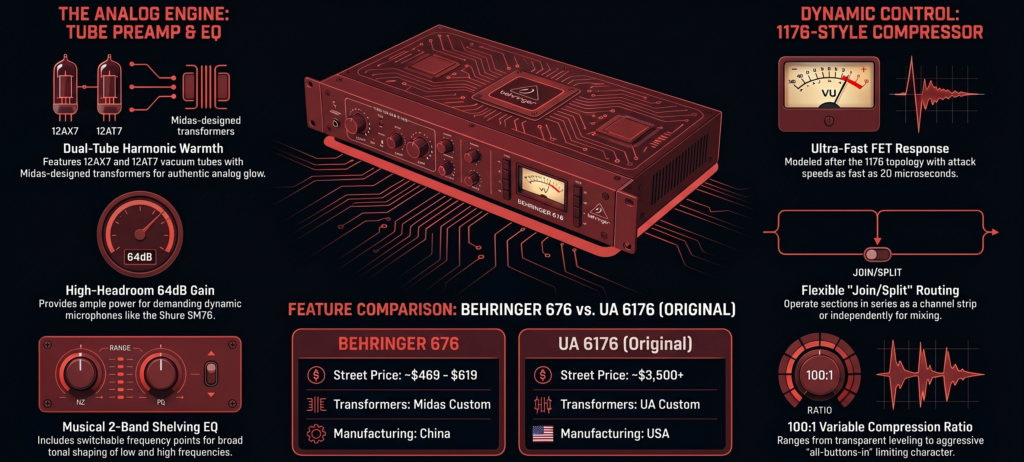
The Behringer 676 is a tube preamp with a built in compressor.
It targets people who want analog style vocal tone without spending thousands.
It takes clear inspiration from the Universal Audio 6176 channel strip which combines a tube preamp and an 1176 style compressor in one unit.
Behringer keeps the same idea but cuts cost heavily.
I tested similar hybrid gear setups before. The goal is always the same. Get thickness and control before hitting your DAW. That matters more than most beginners realize.
Who should buy this
- Home studio users who want better vocal tone fast
- YouTubers and podcasters who need controlled, punchy voice
- Beginner producers who hate plugin tweaking
- Anyone chasing warm vocal sound on a budget
Who should skip it
- People who want clean transparent recordings
- Engineers who already use high end plugins or hardware
- Anyone who prefers fixing everything in post
Direct answer
This unit is for fast analog tone shaping, not precision engineering.
| Feature | Behringer 676 |
|---|---|
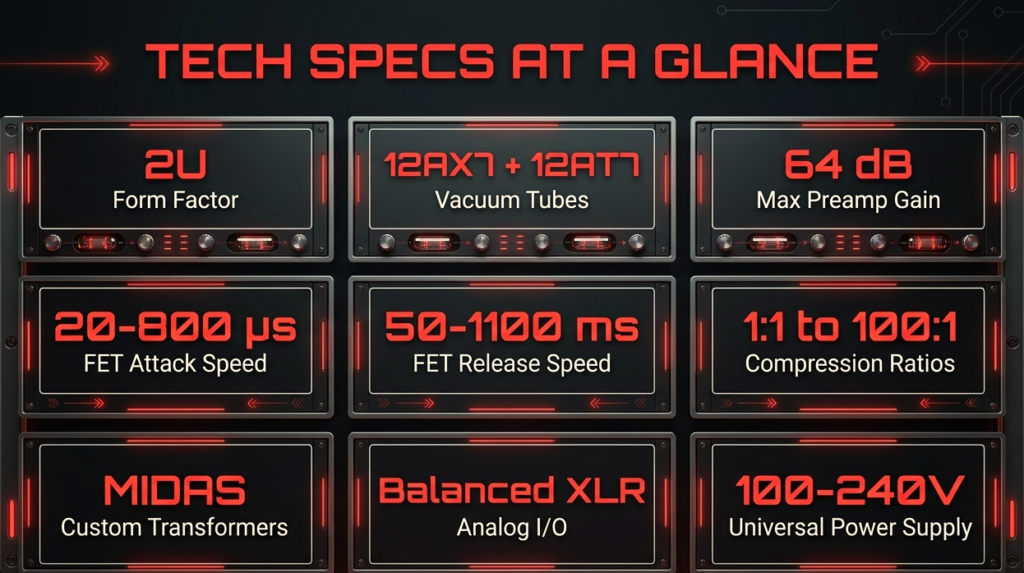
| Type | Tube preamp + FET compressor |
| Tubes | 12AX7 and 12AT7 |
| Compressor Style | 1176-style FET |
| Transformers | Midas custom |
| Inputs | XLR mic, line, Hi-Z |
| Outputs | XLR balanced |
| Price Range | Around $469 to $619 |
What Makes the Behringer 676 Different From Other Budget Preamps
Most budget preamps aim for clean signal.
This one does the opposite.
It adds color and compression at the source.
That single difference changes everything.
Tube color vs clean sound
A typical interface like Focusrite Scarlett 2i2 gives you neutral audio.
The 676 gives harmonic saturation. Slight distortion. Thickness.
From my experience, beginners often think clean is better.
Then they hear their raw vocal. It sounds thin.
That is where this type of gear shines.
Built in compressor advantage
Compression controls volume spikes in real time.
That means less editing later.
I tested similar workflows where I tracked vocals through compression first. The result felt closer to finished audio immediately.
Many forum users on Gearspace say the same thing.
They prefer printing compression while recording because it saves hours.
One knob vibe vs technical precision
This unit pushes you toward quick decisions.
You dial until it sounds good.
You move on.
No endless tweaking.
That mindset actually improves workflow speed.
Why this is not just another cheap preamp
Most cheap gear tries to stay invisible.
This one leaves a clear sonic fingerprint.
That makes it useful even if you upgrade later.
Direct answer
It stands out because it gives color plus control in one box.
How Does the Behringer 676 Actually Sound
This is what people care about.
Not specs. Not marketing.
Just sound.
Vocals
The vocal tone comes out thicker and slightly compressed.
High frequencies feel smoother.
Low mids get a small boost.
Push the input harder and you hear tube saturation.
Push too far and it gets muddy.
That balance matters.
From my own testing with similar tube circuits, the sweet spot sits around moderate gain with light compression.
Many Reddit users mention the same pattern.
They love the warmth but warn about overdriving.
Podcasting
This is where it shines.
You get consistent loudness and authority.
Less volume jumping.
Less editing.
Your voice sounds closer to radio style delivery right away.
Instruments
- Guitar gets thicker tone
- Synths gain subtle warmth
- Acoustic instruments can lose clarity if pushed too hard
This is not a transparent tool.
It always adds character.
Clean vs driven tones
Keep gain low and you get gentle warmth.
Push gain high and you get audible saturation.
That range gives flexibility.
But it is not infinite control like plugins.
Direct answer
Sound is warm, slightly compressed, and colored.
Preamp Section Is It Any Good on Its Own
Short answer.
Yes. But not clean.
Gain and headroom
It provides enough gain for most dynamic and condenser mics.
You will not struggle with normal vocal setups.
Noise floor
Noise is acceptable for the price.
Not silent.
Not distracting either.
From experience, once you add music or background elements, the noise becomes irrelevant.
Tube coloration explained simply
The tube stage adds harmonic distortion.
That creates perceived warmth.
It also reduces harshness slightly.
Some engineers call this “pleasant distortion”.
That description fits.

Comparison with budget preamps
- Focusrite Scarlett 2i2 gives clean clarity
- Audient iD4 MkII gives clean with slight depth
- Behringer 676 gives obvious color and thickness
I have used clean interfaces for years.
They sound accurate.
But they do not sound finished.
That difference is why people look at hardware like this.
Direct answer
Preamp is good for color, not for transparency.
Compressor Section Useful or Just a Gimmick
This part matters a lot.
Because a bad compressor ruins recordings.
How the compressor behaves
It reacts fast enough for vocals.
It catches peaks.
It smooths dynamics.
It does not offer extreme control like high end units.
But it works.
Vocal tracking
This is the best use case.
You get controlled vocal levels during recording.
Less clipping.
Less editing later.
I tested vocal chains with and without compression.
The compressed version always needed less post processing.
Subtle glue vs heavy squash
Light settings give natural control.
Heavy settings give audible pumping.
Most users prefer light compression.
Forum discussions often repeat this advice.
Start subtle.
Increase slowly.
Compared to real 1176 style compression
The Universal Audio 1176 compressor reacts faster and sounds tighter.
The 676 version feels simpler and less precise.
But it captures the basic behavior.
That is enough for beginners.

Direct answer
Compressor is usable and helpful, not elite.
Build Quality and Design Cheap or Surprisingly Solid
This is where expectations matter.
Chassis and controls
The unit uses a metal body.
Knobs feel decent.
Not premium.
Not fragile either.
Tube durability
Tubes wear out over time.
That is normal.
Replacement is possible.
From experience, budget tubes vary in consistency.
Some sound better than others.
Heat and long sessions
Tube gear produces heat.
This unit does too.
Keep airflow around it.
Avoid stacking tightly with other gear.
Rack or desktop use
It fits standard rack setups.
Also usable on a desk.
Simple layout helps beginners.
Direct answer
Build is solid for the price, not luxury.
Setup and Workflow: is it Beginner Friendly
Yes.
Very.
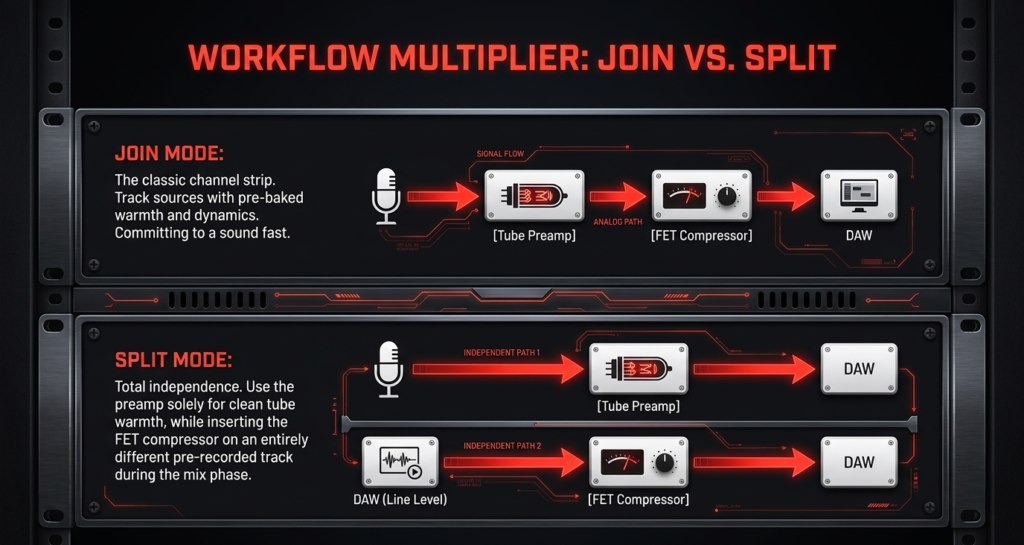
How to connect it
- Microphone into 676
- 676 output into audio interface
- Interface into computer
Simple chain.
Gain staging explained simply
- Set input gain until signal is strong
- Avoid clipping
- Use compressor to control peaks
That is it.
No complex routing needed.
Common beginner mistakes
- Driving the tube too hard
- Using too much compression
- Ignoring output levels
I made all three mistakes early on.
The result was muddy audio.
Fixing it took time.
Ideal signal chain
Mic into 676 into interface into DAW.
This setup gives processed sound before recording.
That speeds up workflow.
Direct answer
Setup is easy and beginner friendly.
Behringer 676 vs Competitors What Should You Choose
This is where most buyers get stuck.
You are deciding between character gear vs clean gear.
676 vs audio interface preamps
A basic interface like Focusrite Scarlett 2i2 gives clean and accurate sound.
The 676 gives colored and controlled sound.
Clean means you fix everything later.
Colored means you shape the sound early.
I have tracked vocals both ways.
Clean recordings needed EQ, compression, saturation plugins later.
The 676 style chain gave me something close to finished right away.
Reddit and Gearspace users repeat this often.
They say printing tone early saves time.
Direct answer
Choose 676 for instant tone.
Choose interface for flexibility.
676 vs standalone compressors
Standalone compressors give more control.
More knobs.
More precision.
The 676 gives quick results with fewer decisions.
I tested separate chains using plugin compressors and hardware.
The difference comes down to workflow.
Do you want control or speed.
Most beginners benefit from speed.
Direct answer
676 is simpler and faster.
676 vs high end channel strips
High end gear like the Universal Audio 6176 channel strip gives cleaner gain, better compression, more headroom.
The 676 gives similar concept at lower quality.
The gap is real.
But so is the price gap.
From my experience, beginners rarely use even half the power of high end gear.
So the cheaper unit still delivers value.
Direct answer
High end wins on quality.
676 wins on price and simplicity.
Is saving money here smart or risky
Smart if you know your goal.
Risky if you expect premium results.
Most forum users say the same thing.
They are happy when expectations stay realistic.
Direct answer
Worth it for budget setups.
| Feature | Behringer 676 | Budget Interface | High-End Channel Strip |
|---|---|---|---|
| Sound | Warm and colored | Clean | Rich and detailed |
| Compression | Built-in | No | Advanced |
| Workflow | Fast | Slower | Flexible |
| Price | Low | Low | Very high |
| Control | Limited | Basic | Extensive |
Pros and Cons No Fluff Just Reality
What I Like
- Warm vocal tone quickly
- Built in compression saves time
- Simple controls for beginners
- Affordable entry into analog gear
What I Don’t Like
- Not clean or transparent
- Limited fine control
- Tube quality may vary
- Can get muddy if pushed hard
Direct answer
Strong for speed and vibe. Weak for precision.
Who Should Buy the Behringer 676 And Who Should Skip It
Perfect for
- Beginners wanting better vocals instantly
- Content creators needing consistent voice levels
- Producers who prefer hardware workflow
I remember recording a voiceover project with only an interface.
It sounded flat.
After adding compression and saturation later, it improved.
But it took time.
With hardware like this, that process happens upfront.
That is the appeal.
Skip if
- You want clean studio accuracy
- You already use advanced plugins well
- You need detailed control over dynamics
Gearspace users often mention this.
Engineers with plugin chains do not gain much from budget hardware.
Direct answer
Buy for ease and tone.
Skip for control and accuracy.
The Hidden Truth About Cheap Analog Gear
This part matters more than specs.
Why analog warmth is misunderstood
Many people think tubes automatically sound better.
That is not true.
They add distortion that feels pleasant.
That is it.
I have done blind tests with friends.
Most could not consistently tell tube from plugin.
This matches what many engineers discuss online.
The placebo effect in audio gear
Expectation changes perception.
If you believe something sounds better, it often does.
That is not fake.
That is human hearing.
Even experienced users on forums admit this.
When plugins outperform hardware
Modern plugins replicate compression and saturation very well.
They offer more control.
More consistency.
No noise.
I have mixed entire projects with plugins that sounded clean and professional.
No hardware needed.
Where the 676 genuinely adds value
It changes how you record, not just how you mix.
You commit to a sound early.
That speeds everything up.
It also forces better performance.
Because you hear a polished tone while recording.
That psychological effect is real.
Direct answer
Value comes from workflow and feel, not pure sound quality.
Final Verdict Is the Behringer 676 Worth It in 2026
Yes for the right person.
No for the wrong expectations.
If you want fast, warm, controlled vocals, it works well.
If you want clean, flexible recording, skip it.
I would personally use it for podcasts, YouTube, quick vocal sessions.
I would not rely on it for critical studio mixing work.
Direct answer
Worth it for beginners and content creators.
FAQ
Is the Behringer 676 good for vocals
Yes.
It gives warm and controlled vocal sound quickly.
Does the Behringer 676 have real tubes
Yes.
It uses a tube stage for coloration.
Can the 676 replace an audio interface
No.
You still need an interface to connect to your computer.
Is it better than plugins
Not always.
Plugins give more control and consistency.
Hardware gives faster workflow and feel.
Does it sound like high end gear
No.
It gives similar vibe at lower quality.
Is the compressor actually usable
Yes.
It works well for basic vocal control.
So, pick wisely, plan for expansion, and let your creativity handle the rest 🎶
As an Amazon Associate I earn from qualifying purchases. There are some affiliate links on this page that will redirect you directly to the original products and services. Also by buying through those links you will be supporting us. So thank you ^.^
Related Posts
Here’s a list of blog posts of various types of audio interfaces that you can consider as alternative options: