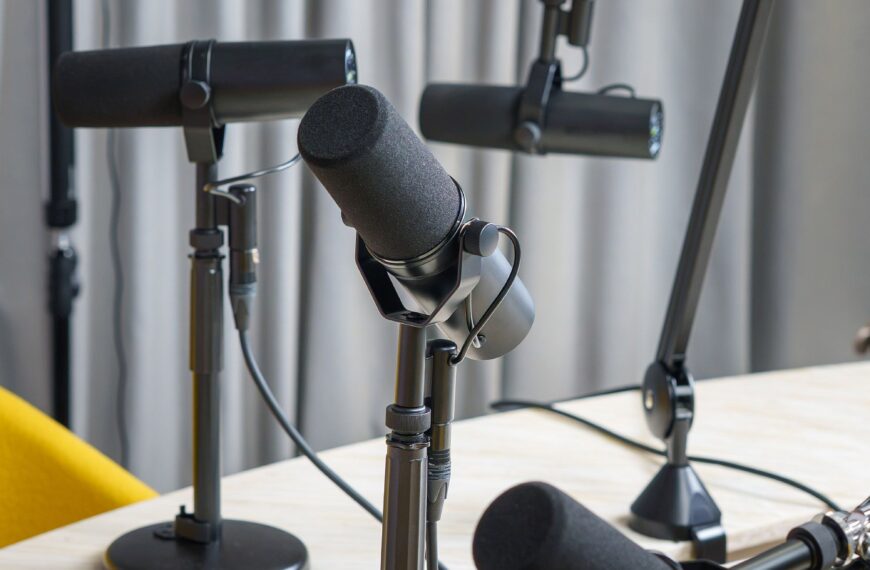
Can a Video Podcast Help SEO? Yes, a video podcast can help with SEO by increasing your online presence and provide more opportunities for backlinks to allow your content to rank on platforms like YouTube.
Did you know that Google loves video content so much that pages with videos are 53 times more likely to rank on the first page than those without? (Forrester)
That’s not just a wild guess—it’s a hard SEO fact.
And if you’re wondering if a video podcast can help SEO,
the answer is a loud YES!
But hold on, it’s not just about throwing a video up on YouTube and hoping for the best.
But it doesn’t stop there.
Video podcasts also boost CTR (Click-Through Rates).
Ever noticed that search results with video thumbnails get way more attention? In fact, adding a video to a page can increase organic traffic by 157% (Search Engine People).
So, if you’re struggling to get people to click on your blog, a video podcast could be your golden ticket.
And let’s talk about backlinks—the holy grail of SEO.
A well-done video podcast makes your content more shareable.
Other bloggers, journalists, and even businesses are far more likely to link to a valuable video than a plain text article.
That’s why articles with video attract 3x more backlinks (Moz).
Now, before you start recording, here’s the reality check: not all video podcasts will help SEO.
If your podcast is just you rambling for an hour without a clear structure, without engaging visuals, or worse—without proper SEO optimization (titles, tags, descriptions, transcripts)—then you’re missing out on its full potential.
So, does a video podcast help SEO?
Absolutely.
But only if done right.
How Does a Video Podcast Improve SEO?
You might be wondering, “Does adding a video podcast really move the needle for SEO?” The short answer?
Absolutely.
But let’s break it down, because it’s not just about posting a video and expecting Google to shower you with traffic.
A video podcast enhances SEO in multiple ways—some obvious, others surprisingly powerful.
1. Increases Dwell Time (Google’s Hidden Ranking Factor)
Google is obsessed with keeping people on your page longer.
The longer someone stays, the better Google assumes your content is.
And guess what?
Videos make people stick around.
🔹 Stat alert: Pages with videos see 2.6x more time spent on them than text-only pages (Wistia).
But here’s the catch—boring videos won’t help.
If your video podcast is 30 minutes of rambling, users might bounce faster, hurting your rankings.
The trick?
Hook them early.
Add a preview at the start, highlight the key takeaways, and keep your content concise yet engaging.

2. Boosts Click-Through Rate (CTR) with Video Thumbnails
Ever noticed that Google sometimes shows videos in search results?
That’s because searchers are more likely to click on results with a video thumbnail than a plain text link.
🔹 CTR fact: Including a video thumbnail in search results can increase CTR by 15-30% (Backlinko).
📢 Pro Tip: Use eye-catching thumbnails with text overlays. A/B test different styles to see what works. And don’t forget to add timestamps in descriptions to increase engagement!
3. Generates More Backlinks & Social Shares
Here’s an SEO goldmine—video content gets shared & linked more often than plain articles.
And backlinks?
They’re still one of Google’s top ranking factors.
🔹 Stat alert: Pages with video content earn 3x more backlinks than text-based pages (Moz).
Think about it—when was the last time you saw a blog post without a video go viral? Never.
But video podcasts?
They get picked up by other bloggers, industry sites, and even mainstream media.
⚠️ Criticism: Not all video podcasts are link-worthy.
If it’s just a talking head with no visuals or insights, don’t expect many shares.
The trick?
Show something valuable—screenshares, product demos, charts, or a unique take that others haven’t covered.
4. Expands Search Visibility (YouTube & Google Domination)
Here’s where things get interesting:
Google owns YouTube.
And it loves ranking YouTube videos in search results.
This means your video podcast can rank twice—once on Google, once on YouTube.
🔹 Fact: YouTube is the #2 largest search engine, processing 3+ billion searches per month (HubSpot).
📢 SEO Tip: Use keyword-rich titles, tags, and descriptions on YouTube.
Add subtitles & transcripts, and don’t forget timestamps, since they help Google understand your content better.
5. Encourages Multi-Platform Traffic (More Than Just Google!)
The beauty of video podcasts?
They don’t rely solely on Google traffic.
Instead, they tap into multiple traffic sources—YouTube, Spotify (if converted to video format), TikTok, Instagram, LinkedIn, and even email marketing.
🔹 Fact: Multi-platform content drives 400% more brand visibility compared to single-channel strategies (Sprout Social).
🚀 Pro Tip: Repurpose your video podcast into clips for TikTok, Reels, and Shorts. Embed it in blog posts to boost engagement. And always add a CTA leading back to your main site.
A video podcast isn’t just another content format—it’s an SEO multiplier.
It boosts dwell time, CTR, backlinks, rankings, and multi-platform reach, all while making your content more engaging.
But don’t just upload and pray—optimize, repurpose, and promote strategically.
Would I recommend it?
100% yes.
If you’re serious about SEO, start recording, embed your episodes, and watch your rankings rise. 🚀

How to Optimize a Video Podcast for Maximum SEO Impact
So, you’ve got a video podcast, but how do you make sure it’s actually boosting SEO and not just sitting there, collecting digital dust?
Let’s break it down.
1. Transcribe & Add Captions (for SEO & Accessibility)
Here’s a harsh truth: Google can’t “watch” your video podcast.
It relies on text to understand what’s inside. That’s why adding transcriptions is a game-changer.
A study by Liveclicker found that pages with transcripts earn 16% more revenue than those without.
And it makes sense—
more text = more keywords = better rankings.
A tool like Otter.ai or Rev.com can auto-generate transcripts, but be warned—AI transcriptions aren’t perfect.
You’ll need to edit them to remove weird errors (unless you want “microphone” misheard as “my crow phone” 🐦📱).
2. Embed Video Podcast in Blog Posts
This one’s a must-do.
Embedding your video podcast into a related blog post does two things:
keeps people on your site longer (boosting dwell time) and makes your page more engaging.
Google loves that.
In fact, a study by Wistia found that people spend 2.6x more time on a page with a video than without.
But here’s a common mistake I see—people just slap the video at the bottom of the post and call it a day.
Big mistake.
Instead, place it above the fold (near the top), add timestamps for key topics, and write a short summary so people know what they’re getting into.
Pat Flynn does this brilliantly in his Smart Passive Income podcast blogs—his embedded videos aren’t just there; they guide the reader.
3. Optimize YouTube Video for SEO
If you’re uploading your video podcast to YouTube (which you should), don’t just dump it there and hope for views.
YouTube is the #2 search engine in the world, and optimized videos rank not just on YouTube, but also on Google.
Here’s what works:
- Keyword-rich title – Instead of “Podcast Episode 12,” go for something like “How Video Podcasts Boost SEO (and Why You Need One!)”.
- Detailed descriptions – YouTube’s algorithm reads descriptions, so use 250+ words with natural keywords.
- Chapters & timestamps – Not only do these help viewers, but Google sometimes highlights them in search results (free ranking boost!).
- Engagement hacks – Ask people to comment and pin a comment with a CTA (like “📌 Want more tips? Check out my full blog post here!”).
If your thumbnails look boring, nobody clicks, and SEO dies.
4. Repurpose Podcast into SEO-Optimized Content
Here’s where things get fun—and maximize SEO impact. A single video podcast can turn into:
- A written blog post (boosting website SEO).
- YouTube Shorts, Instagram Reels, TikToks (short-form video = wider reach).
- Infographics (Pinterest & LinkedIn love these).
- Email newsletters (reminds subscribers to check out your content).

This is exactly what big players like HubSpot and Gary Vaynerchuk do.
They take one video podcast and milk it across five+ platforms.
More content = more backlinks, more engagement, and higher SEO rankings.
Optimizing a video podcast for SEO isn’t just about uploading and hoping—it’s about strategic placement, repurposing, and engagement hacks.
Get your transcripts right, embed videos correctly, optimize YouTube like a pro, and repurpose your content smartly.
Done right, your video podcast won’t just sit there—it’ll drive serious SEO results. 🚀
Case Study: Video Podcasts That Dominated SEO
Is it worth the effort? Here are two well-known examples of how video podcasts get used.
🔥 HubSpot’s Marketing Podcast – 40% More Traffic Just by Adding Video
HubSpot was already a content powerhouse, but when they introduced a video version of their “Marketing Against the Grain” podcast, things skyrocketed.
HubSpot publishes a video version of its podcast and pairs episodes with written content, so one topic can be found through Google, YouTube and its own site.
Why?
Because their audience stayed longer on pages, and Google took notice. More dwell time = better rankings.
But here’s where things get interesting.
They didn’t just slap a video on their site and call it a day.
They optimized everything—from catchy YouTube thumbnails to keyword-rich descriptions.
Plus, they used timestamps (Google loves those) so viewers could jump to key sections, which also improves watch time.
The downside?
It took extra effort—video production, scripting, editing—but the results? Worth every second.
🎤 Pat Flynn’s Smart Passive Income – 50K+ YouTube Subscribers from Podcast Clips
Pat Flynn, the godfather of online entrepreneurship, took his audio-only “Smart Passive Income” podcast and turned it into bite-sized video clips.
Instead of just posting full episodes, he broke them into highly searchable, short-form content—answering questions like “How to make passive income with no money?”
And guess what? Those clips exploded on YouTube. Short, searchable clips give each answer its own chance to show up in YouTube and Google results.
The key?
He repurposed content smartly.
Instead of creating new episodes just for video, he used what he already had and simply formatted it for SEO-friendly searchability.
His biggest challenge?
Keeping up with the demand.
Viewers loved the clips so much that they wanted more, forcing him to scale up video production—which meant hiring editors, investing in better gear, and managing a growing YouTube audience.
📈 The “Hidden” SEO Advantage: Video Clips Rank Faster than Blog Posts
Here’s something crazy: video content ranks faster on Google than traditional blog posts.
Why?
Because Google prioritizes fresh, engaging, multimedia content.
A study by Forrester found that pages with video are 53x more likely to rank on the first page of Google.
That’s why podcasts like “The Diary of a CEO” and “The School of Greatness” now dominate video search results—
their clips keep appearing in Google’s video carousel before written articles even have a chance.
This doesn’t mean blogging is dead (far from it), but combining video + text is the ultimate SEO cheat code.
The Reality Check: Is It Worth the Effort?
If you’re expecting overnight results, video podcasts aren’t a magic pill.
They require time, effort, and a bit of trial and error.
Editing can be a nightmare, and not everyone likes being on camera.
But the SEO benefits? Unmatched.
More engagement, backlinks, dwell time, and cross-platform reach.
The trick is to start small—record simple video episodes, optimize them for search, and repurpose clips to maximize visibility.
And if HubSpot, Pat Flynn, and countless YouTubers are crushing it with video podcasts,
why not give it a shot? 🚀
Conclusion & Next Steps
So, can a video podcast help SEO? Absolutely! In fact, it’s one of the smartest ways to boost dwell time, engagement, backlinks, and multi-platform reach—all things Google loves. But here’s the catch: Just uploading a video podcast won’t magically rank your content. You need to optimize it strategically to see real results.
Building out your setup? Check our Complete Audio Gear Guide or try the free Signal Chain Builder to make sure everything you buy actually works together.
There are some affiliate links on this page that will redirect you directly to the original products and services. Also by buying through those links you will be supporting us. So thank you ^.^
Related Posts
- Why Podcasting Should Be a Core Part of Your Content Strategy?
- Podcast SEO: All the Secrets to Enhance Podcast SEO
- Case Study: How Tim Ferriss Uses Podcasting to Grow His Empire
- How Podcasters are Getting RICH: What You Need to Know
- Getting guests for your podcast: Full Guide
- 25 Reels Ideas based on the latest algorithm
- How to attract listeners to your podcast: Audio Insight
- Podbean vs Buzzsprout: Which Podcast Platform is Best for You
- 24 Social Media Tips to get Viral
- How to Succeed on Youtube: Blueprint