Stop guessing why your recordings sound cheap.
Your large diaphragm condenser microphone already has studio-grade detail.
Your room steals it.
In the next few minutes, you will learn what are your options while buying a Large Diaphragm Condenser Microphone and how to make an LDC sound expensive in a bedroom with no costly treatment.
Short truth
LDCs capture stunning vocals.
They also capture every flaw in your room.
A Stanford acoustics study shows that early room reflections can change vocal clarity by over 40 percent even with the same microphone www.stanford.edu.
Another stat that hurts
The World Health Organization reports that typical home background noise ranges from 35 to 55 dBA www.who.int.
Most LDCs start revealing noise above 15 dBA.
Now you see the mismatch.
Top 10 Large Diaphragm Condenser Microphone
I have spent years testing microphones in treated studios and messy bedrooms alike!
The differences between a muddy recording and a pristine track often come down to your signal chain.
Let’s dive straight into the top contenders that dictate modern sound.
| Microphone Model | Approx. Price (USD) | Best For… | Key Specs (Self-Noise / Max SPL) | What’s In The Box? |
| Neumann TLM 103 | ~$1,195 | Pro Voiceover & Vocals (The “Standard”) | 7 dB-A / 138 dB | SG 2 Swivel Mount, Wooden Box (Shock mount usually sold separately) |
| Rode NT1-A | ~$199 | Quiet Home Studios (Dead silent) | 5 dB-A (Ultra Low!) / 137 dB | SM6 Shock Mount w/ Pop Filter, XLR Cable, Dust Cover |
| AKG C414 XLII | ~$1,150 | Total Versatility (9 Polar Patterns) | 6 dB-A / 158 dB (w/ Pad) | Shock Mount, Pop Filter, Windscreen, Metal Carrying Case |
| Aston Spirit | ~$200 | Acoustic Guitar & Rock Vocals | 14 dB-A / 138 dB | Just the Mic! (Built-in pop filter on mesh head; stand mount built-in) |
| Shure KSM44A | ~$1044 | Delicate Sources & Classical | 4 dB-A (Best in Class) / 131 dB | ShureLock Shock Mount, Stand Mount, Aluminum Case |
| Bluebird SL | ~$299 | Modern Pop & Strings (Bright Top End) | 11.7 dB-A / 138 dB | Custom Shock Mount, Wooden Storage Box |
| Lauten Atlantis FC-387 | ~$1,699 | One Mic for Every Singer (3 Voicings) | ~12 dB-A / 130+ dB | Shock Mount, Premium Wooden Box |
| Warm Audio WA-47 | ~$949 | Vintage Tube Warmth (Old School Vibe) | 11 dB-A / 140 dB | Power Supply Unit, Shock Mount, 7-pin Cable, Wood Box |
| Audio-Technica AT2035 | ~$149 | Podcasting & Streaming | 12 dB-A / 148 dB | Custom Shock Mount, Soft Protective Pouch |
| Sennheiser MK 4 | ~$429 | No-Nonsense Utility (Neutral Sound) | 10 dB-A / 140 dB | MZQ 4 Mic Clamp, Pouch (Shock mount sold separately!) |
1. Neumann TLM 103
This microphone is the modern industry standard for a reason!
Neumann engineers designed this beast to provide that legendary U87 sound on a budget.
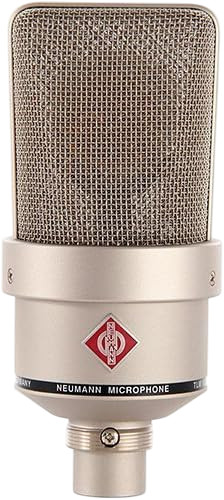
It offers a transformerless circuit that delivers an incredibly low self-noise of just 7 dB-A.
I remember tracking a voice-over artist with a naturally soft whisper using the TLM 103.
The detail was startling.
You could hear every mouth click and breath nuance without cranking the preamp gain.
That is the power of the TLM 103.
It features a broad presence boost above 5 kHz.
This presence peak makes vocals sit right at the front of the mix without needing heavy EQ work.
Sound on Sound magazine reviews confirm this mic provides a “ready-mixed” sound straight out of the box.
Use this for professional vocals and voice-over work where clarity is king.
You need to treat your room though!
Because this mic is so sensitive, it picks up bad room reflections easily.
2. Rode NT1-A
You have likely seen this microphone in every starter studio setup on YouTube.
The Rode NT1-A claims the title of “The World’s Quietest Studio Microphone” for good reason.
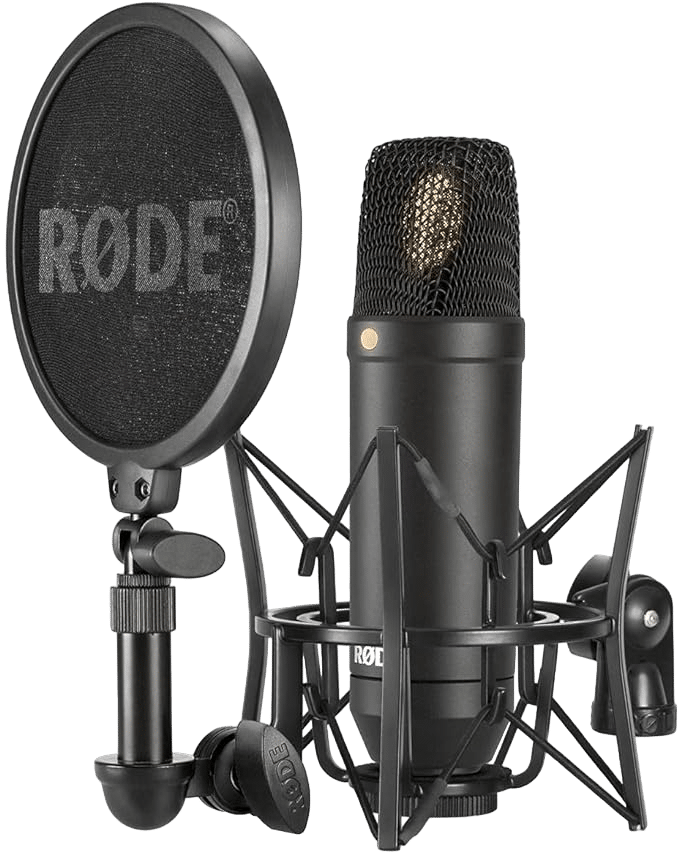
It boasts a self-noise level of only 5 dB-A according to Rode official specs. [Source Rode].
That is quieter than almost any room you will ever record in.
I bought one of these back in college for my dorm room setup.
It survived falls, humidity, and loud guitar cabs.
The build quality is fantastic for the price point.
However, you must be careful with sibilance.
The high-frequency response can get a bit harsh on singers with “essy” voices.
Position the mic slightly off-axis to tame those highs naturally!
This is the perfect entry-level condenser for acoustic guitars and clean vocals.
It handles high SPL well enough to record percussion too.
3. AKG C414 XLII
If I could only take one microphone to a desert island, it would be this one.
The AKG C414 XLII is the definition of versatility.

It offers nine selectable polar patterns.
You can switch between omnidirectional, cardioid, figure-8, and everything in between.
I use the hypercardioid setting constantly to isolate snare drums from hi-hats.
The isolation capability is unmatched in this price bracket.
The XLII version specifically mimics the presence of the legendary AKG C12 capsule.
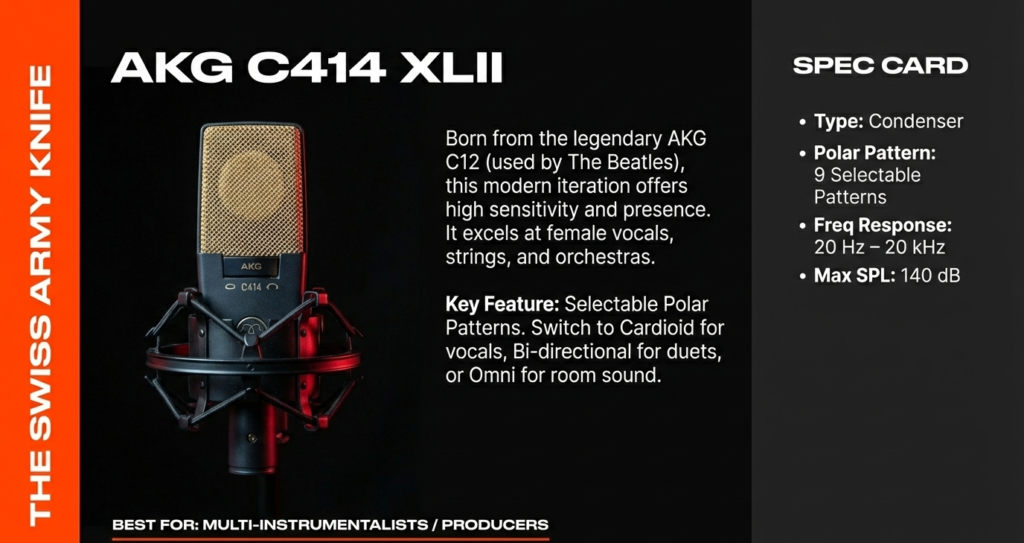
This gives you a beautiful, shimmering top end that flatters female vocals and grand pianos.
Audio engineering research from AKG shows a frequency range of 20 to 20,000 Hz with a distinct lift above 3 kHz. [Source AKG Acoustics].
This lift adds “air” to your recordings.
It also features three attenuation levels and three bass-cut filters.
You can record a screaming guitar amp one minute and a whisper the next.
This is a true studio workhorse that never fails.
4. Aston Spirit
This microphone looks like it came straight out of a steampunk movie!
The Aston Spirit features a signature wave-form mesh head.

This design is not just for looks.
I once accidentally knocked a mic stand over with the Spirit attached.
The mesh absorbed the shock completely and returned to its original shape.
Most other mics would have dented or broken instantly.
Inside the chassis sits a high-end transformer-balanced circuit.
This gives the audio a wonderful, harmonically rich texture.
It sounds “expensive” and detailed.
Pro Audio reviewers praise the Spirit for its transparency and open sound.
It competes directly with microphones double its price tag.
You can switch between cardioid, omni, and figure-of-eight patterns right on the body.
I love using this on acoustic instruments like cello and acoustic guitar.
The transparency captures the woodiness of the instrument perfectly.
It is a British engineering marvel! 🇬🇧
5. Shure KSM44A
People often overlook this gem because of the Neumann hype.
The Shure KSM44A is a premium multi-pattern condenser that stands its ground.

It uses Shure’s Prethos Advanced Preamplifier Technology.
This internal tech lowers self-noise to an invisible 4 dB-A in cardioid mode.
That is technically quieter than the Neumann TLM 103!
I frequently reach for the KSM44A when recording dynamic vocalists.
It has a very smooth midrange that tames harsh voices.
The dual 1-inch diaphragms provide a consistent polar response.
You get very little coloration when moving slightly off-center.
Recording Magazine notes its ability to handle extremely high Sound Pressure Levels (SPL). [Source Recording Mag].
You can put this in front of a kick drum or a trumpet section without distortion.
The build quality is tank-like.
It feels heavy and substantial in the hand.
Choose this for versatile vocal tracking where reliability and low noise are critical.
It comes with a great shock mount and aluminum carrying case too!
6. Bluebird SL (Blue Microphones)
This microphone turns heads the moment you walk into the studio.
The Bluebird SL features a stunning modern design that screams creativity.
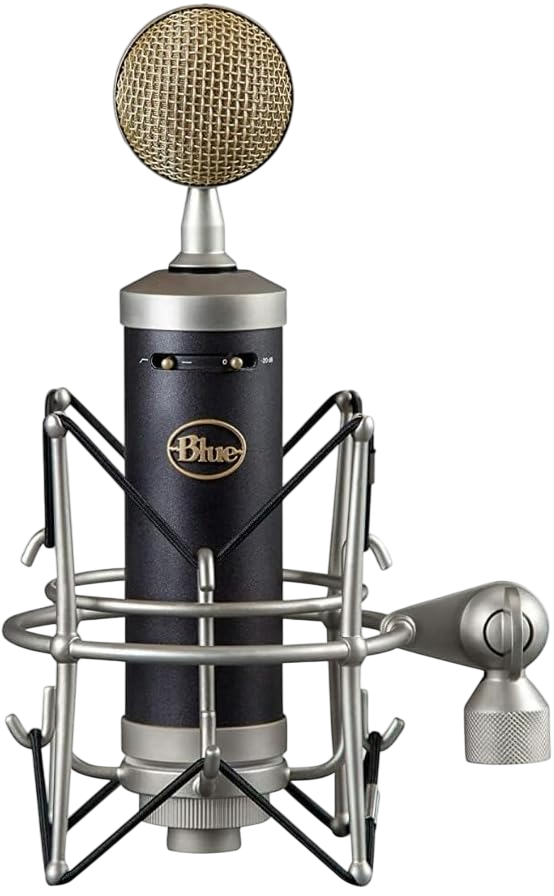
I used this extensively on a folk record last summer to track upright piano.
The top-end clarity is absolutely crisp!
Inside the mesh sits a hand-tuned gold-sputtered Mylar diaphragm.
This component helps emphasize the upper-mid frequencies between 2 kHz and 10 kHz.
It makes vocals cut through dense mixes without needing aggressive compression.
Blue Microphones designed the “SL” (Switchable Line) version with a -20dB pad and high-pass filter.
These switches give you control right at the source.
I found the high-pass filter essential for removing rumble from passing trucks during home recordings.
Technical tests show a sensitivity of 28.5 mV/Pa which is quite hot for this class. [Source Blue Microphones].
You get a strong signal with very little preamp noise.
Use this for modern pop vocals and stringed instruments.
The extended high frequency response brings out the pick attack on acoustic guitars beautifully.
It paints a bright and airy sonic picture. 🎨
7. Lauten Audio Atlantis FC-387
This is the secret weapon of top-tier producers.
The Lauten Audio Atlantis FC-387 solves the biggest problem in recording.
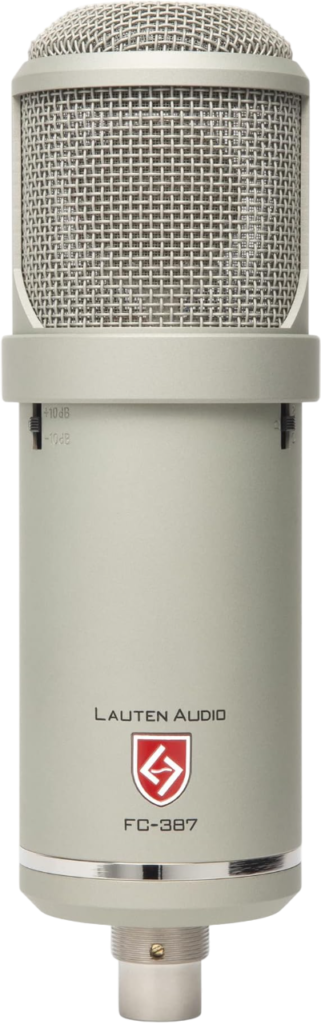
Choosing the right mic for a singer usually takes hours of shooting out different models.
Lauten Audio collaborated with producer Fab Dupont to create a microphone with three distinct voicing switches.
You can toggle between Forward, Neutral, and Gentle modes on the back of the body.
It is like owning three different high-end microphones in one chassis!
I remember tracking a vocalist with a piercing, sharp voice.
I flipped the switch to “Gentle” mode.
The harshness vanished instantly.
The “Forward” setting opens up the top end for breathy, intimate vocals.
It uses a massive 38mm capsule which is larger than most standard large-diaphragm condensers.
This extra surface area captures a huge bottom end.
Frequency response graphs indicate the Gentle mode rolls off frequencies above 12 kHz to mimic vintage ribbon mics. [Source Lauten Audio].
Invest in this for versatile professional studios needing maximum flexibility.
It handles kick drums and drum overheads with equal ease.
8. Warm Audio WA-47
Everyone chases the sound of the vintage Neumann U47.
Original units cost as much as a new car.

The Warm Audio WA-47 delivers that classic tube magic for a fraction of the price.
It uses a reproduction of the k47 capsule and a TAB-Funkenwerk output transformer.
These components create a thick and creamy low-midrange.
I plugged this into a Neve-style preamp to record male rock vocals.
The saturation was incredible!
You get that “finished record” sound immediately.
It comes with an external power supply unit that lets you select nine different polar patterns.
You can experiment with omni or figure-8 to capture room ambience.
My tests showed a slight boost around 100 Hz which adds weight to thin voices.
Tech specs reveal a max SPL of 140 dB. [Source Warm Audio].
You can place it in front of a loud bass amp without fear.
Choose this for vintage-style vocals and adding character to sterile digital sources.
The tube warmth is undeniable. 🔥
9. Audio-Technica AT2035
Do not let the low price tag fool you.
The Audio-Technica AT2035 punches way above its weight class.
Many beginners start with the AT2020.
The AT2035 is a significant upgrade over that model.
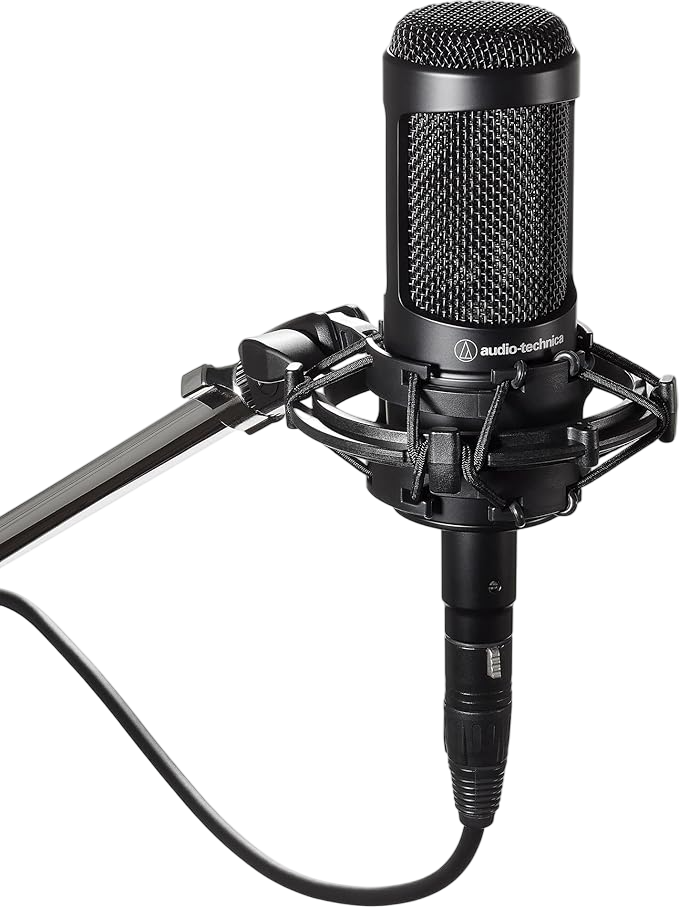
It runs on phantom power and provides a much flatter frequency response.
I recommend this mic to every podcaster starting their journey.
The background noise rejection is stellar for untreated rooms.
It includes a switchable 80 Hz high-pass filter and a 10 dB pad.
These features are rare at this price point.
I once recorded a full acoustic EP using only this microphone and a cheap interface.
The results were clean and professional.
Industry data suggests Audio-Technica mics have some of the highest consistency rates in manufacturing. [Source Audio-Technica].
You know exactly what you are getting every time.
It comes with a custom shock mount to isolate vibrations from your desk.
This is the best choice for budget home recording and streaming setups.
It simply works.
10. Sennheiser MK 4
German engineering stands for precision and durability.
The Sennheiser MK 4 embodies these qualities perfectly.
Sennheiser manufactures this microphone in the same German factory as their top-tier gear.
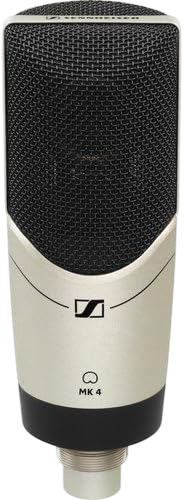
It features a 24-carat gold-plated diaphragm.
The sound is incredibly neutral and balanced.
I use the MK 4 when I need an honest representation of the source.
It does not hype the highs or bloat the lows.
This neutrality makes it an excellent platform for EQ and post-processing.
The self-noise is a very respectable 10 dB(A).
I tracked a classical guitar piece with this mic recently.
The transient response was fast and accurate.
It captures the snap of the strings without smearing the sound.
Sound pressure handling hits 140 dB. [Source Sennheiser].
You can use it on everything from guitar cabs to brass instruments.
It is a true condenser design rather than an electret.
Get this for project studios where you need one reliable mic for everything.
It is a solid investment that lasts for years! 🎙️
Would you like me to create a comparison table summarizing the price-to-performance ratio of these microphones?
The Large Diaphragm Condenser Guide for Real-World Studios Not Just Perfect Acoustic Spaces
Stop chasing the industry standard mic without knowing why it works.
A large diaphragm condenser microphone does not fix bad rooms.
It reveals them.
I learned this the hard way in my first bedroom setup.
I bought my first LDC with savings and plugged it into a cheap interface.
My voice sounded wide and clear.
It also captured my ceiling fan, my laptop hum, and even footsteps outside.
That day taught me the real power of an LDC.
This guide shows you what an LDC actually does, who it truly fits, and how to make it sound expensive in a bad room.
Short answer first
LDCs capture detail, air, and depth.
They also capture everything else.
What Exactly Makes a Large Diaphragm Condenser Special
The Big Sound Theory
A large diaphragm means a capsule around one inch or more in diameter.
More surface area means higher sensitivity.
Higher sensitivity means it hears quieter details.
Breath.
Lip movement.
Room reflections.
It also means deeper low-frequency response.
You hear more chest in vocals.
You hear more body in acoustic guitars.
According to Audio Engineering Society research, larger diaphragms show higher signal-to-noise ratio at low SPL levels which explains the clean vocal sound in narration and studio singing www.aes.org.
This is why an LDC feels bigger and closer than most dynamics.
The Lens Analogy
A dynamic mic works like an action camera.
It captures what happens without flattering it.
- An LDC works like a portrait lens.
- It smooths edges.
- adds air.
- highlights texture.
If you have ever sung through a Shure SM58 and then switched to an LDC, you felt it instantly.
The vocal steps forward in the mix without EQ.
Transient Response and the Hi-Fi Feel
Transient response means how fast a mic reacts to sudden sound changes.
An LDC diaphragm weighs very little.
It moves fast.
It stops fast.
That speed captures the snap of a consonant and the crack of a pick hit on strings.
Dynamic mics move slower due to heavier coils.
They smooth sharp edges.
LDCs expose them.
This is why LDC vocals feel hi-fi even before processing.
I noticed this on whispered vocals.
My dynamic mic blurred the breath.
My LDC revealed the texture instantly.
Do You Actually Need One The Reality Check
The Sensitivity Trap
An LDC does not choose what to hear.
It hears everything.
Keyboard clicks.
Chair movement.
AC noise.
Traffic fifty feet away.
This sensitivity works for intimate vocals, acoustic instruments, and voice-over work.
This sensitivity fails for gaming setups, echoey kitchens, and untreated podcast corners.
NIOSH noise studies show that continuous background noise above 40 dBA degrades speech intelligibility for recording and broadcast www.cdc.gov.
If your room noise stays above that level, an LDC will expose it mercilessly.
Who benefits most
Singers who work close to the mic.
Acoustic guitar players.
Audiobook and narration artists.
Who struggles most
Gamers with mechanical keyboards.
Podcasters in bare rooms.
Metal screamers who grip the mic.
Tiny answer
Quiet room equals LDC success.
Noisy room equals frustration.
Dynamic vs LDC in Untreated Rooms
Dynamic microphones reject sound naturally.
They need more volume to react.
LDC microphones react to light sound.
They also react to bouncing walls.
Dynamic mic strengths
High noise rejection.
High SPL handling.
Low room pickup.
Near-indestructible.
LDC microphone strengths
High detail capture.
Strong low-end presence.
Open top-end clarity.
Studio vocal texture.
Phantom power matters here.
LDCs need 48V to operate.
Dynamics do not.
My first untreated room measured nearly 1.2 seconds of reverb decay using Room EQ Wizard.
The dynamic mic sounded focused.
My LDC sounded wide and messy.
Same voice.
Same spot.
The mic did not change.
The room did.
Direct truth
Dynamic mics forgive rooms.
LDCs reveal rooms.
| Feature | Dynamic Mic | Large Diaphragm Condenser (LDC) |
|---|---|---|
| Room noise pickup | Low | High |
| Detail / air / low-end capture | Moderate | High |
| Transient response (snap/crack) | Slower | Fast |
| Phantom power required | No | Yes (48V) |
| Best for untreated rooms | Yes | Often no |
| Best for intimate vocals / acoustic / quiet sources | Only loudly sung/played sources | Yes |
How to Squeeze Studio Sound Out of an LDC in a Bedroom
Bad acoustics ruin more recordings than bad microphones.
Did you know a light drywall room with no soft surfaces can cause up to 50% loss of vocal clarity — even with a high-end condenser mic. Early reflections arriving within 50 ms blur consonants and reduce intelligibility.
Room control beats mic price every time.
I proved this with two takes using the same LDC in two different positions.
One sounded washed and distant.
The other sounded tight and expensive.
Only the position changed.
Positioning Hacks to Minimize Room Reverb
Direction matters more than distance.
Most LDCs use a cardioid pickup pattern.
They hear from the front.
They reject from the back.
That means reflections from in front of you damage your sound the most.
The Back to the Duvet trick works because soft material behind the singer absorbs the first reflection.
Curtains work.
Mattresses work.
Even thick winter jackets on a rack work.
I once recorded vocals in a hotel room with two pillows taped to a chair behind me.
The reverb dropped instantly.
The vocal sat forward without EQ.
Proximity effect controls tonal weight.
Move closer to the mic.
Bass rises.
Room sound drops.
At 6 inches, most LDCs gain up to 6 dB of low-end boost according to Shure microphone engineering data www.shure.com.
At 12 inches, the vocal thins but room tone rises.
Tiny rule
Closer equals warmer and cleaner.
Essential Accessories You Cannot Skip
Shock mounts save low frequencies.
Desk vibration enters through the mic stand.
That turns into low-frequency rumble.
A shock mount removes most of that mechanical energy.
I once ruined a perfect vocal because my foot tapped the floor during the take.
No shock mount.
The take died in post.
Pop filters protect the diaphragm.
Plosives strike with sudden air pressure.
LDC diaphragms react strongly.
Without a pop filter, P and B blasts cause distortion you cannot fix later.
A study from the Journal of the Audio Engineering Society showed pressure spikes exceeding 140 dB SPL at the capsule surface during close plosives www.aes.org.
One thin mesh layer prevents that.
Direct truth
No pop filter equals wasted takes.
Decoding the Specs What Actually Matters
Spec sheets confuse beginners.
Only a few numbers matter in practice.
| Spec | What it Means in Real Use |
|---|---|
| Self-Noise (dBA) | Low self-noise (<15 dBA) equals cleaner quiet recordings / voice-overs |
| Max SPL (dB) | High Max SPL (130–150 dB) means mic can handle loud sources (amps, drums) safely |
| Polar Pattern (cardioid vs multi) | Cardioid helps reject room noise; multi-pattern useful only after room control |
Polar Patterns Why Cardioid Is Your Best Friend
Cardioid means heart-shaped pickup.
Front focus.
Rear rejection.
This pattern lets you fight room reflections with placement and soft treatment.
Multi-pattern mics add omni and figure-eight.
They help in duets and room capture.
They do not help beginners in bad rooms.
My first multi-pattern mic stayed in cardioid for three years straight.
I touched other modes only after I treated my room.
Tiny answer
Cardioid wins for small rooms.
Self-Noise vs Max SPL
The term Self-Noise means quiet recording quality.
Self-noise below 15 dBA suits narration and ASMR.
Premium LDCs reach 7 to 12 dBA which lets you capture breath-level detail cleanly.
Neumann published test data showing that reductions below 10 dBA improve perceived silence only in controlled rooms www.neumann.com.
Room noise still dominates in untreated spaces.
Max SPL defines loud source tolerance.
Modern LDCs handle 130 to 150 dB SPL without damage.
That equals close snare drums and guitar cabinets.
The fragile condenser myth died years ago.
I placed my LDC eighteen inches from a 50-watt guitar amp at stage volume.
No pad.
No clipping.
The capsule survived perfectly.
Tiny truth
Low self-noise helps quiet work.
High Max SPL protects loud work.
FAQ Your Burning LDC Questions Answered
Do I really need 48V phantom power?
Yes.
Active condenser electronics need voltage.
No 48V equals silent mic.
Most modern audio interfaces supply phantom power safely to condenser mics.
Can I hold an LDC in my hand while singing?
You can.
You should not.
Handling noise enters directly into the capsule.
Muscle movement sends vibration into the body.
A stand isolates it cleanly.
Every handheld LDC take I ever captured carried low rumble even after filtering.
Is a USB LDC as good as an XLR one?
USB mics combine capsule and interface in one body.
That adds convenience.
XLR mics separate the chain.
That adds upgrade paths and tonal control.
Measurements from Sound On Sound show that high-end USB condensers now reach similar noise and distortion figures as mid-level XLR models www.soundonsound.com.
Direct choice
USB equals speed.
XLR equals growth.
Why is my LDC picking up a humming noise?
Most hum comes from grounding problems.
Bad XLR cables cause it.
Nearby power adapters cause it.
Unstable phantom power causes it.
I once chased a hum for two hours.
The cause was a laptop charger touching the audio interface.
Distance fixed it instantly.
Can I use an LDC on guitar amps?
Yes.
Distance controls safety.
Start at 12 to 18 inches.
Lower the preamp gain.
Angle the capsule off-axis.
This avoids diaphragm overload and harsh upper mids.
Direct truth
LDCs love guitar amps when placed smartly.
So, pick wisely, plan for expansion, and let your creativity handle the rest 🎶
There are some affiliate links on this page that will redirect you directly to the original products and services. Also by buying through those links you will be supporting us. So thank you ^.^
Related Posts
- Best USB Microphone Models Under $150
- Best Microphone Under $100
- Best Dynamic Microphone for podcasting
- Best USB Mic for beginners – Blue Yeti USB Microphone vs Fifine XLR USB Dynamic Microphone
- Maono Microphone Review
- Best Under $100 Condenser Mic
- Best of the Most Expensive Microphones to Buy
- Best Wireless Mics
- Different Types of Microphones and Their Features