They sound the same.
One of them will limit you fast.
I learned this the expensive way.
Here is a fact most reviews skip.
More than 60 percent of home creators upgrade their first audio interface within 18 months according to used gear resale trends on Reverb and Sweetwater listings. That upgrade usually happens because of input limits.
Another one.
Focusrite Scarlett 2i2 has stayed one of the top selling USB audio interfaces globally for over a decade, not because of sound quality but because it avoids workflow dead ends. Source focusrite.com.
I bought the Solo first.
I thought one input was enough.
Six months later, a friend came over with a guitar and a mic.
Recording stopped before it started.
This post saves you from that mistake.
By the end, you will know exactly which interface fits your workflow, not what marketing pages push.
No fluff. No vague advice. Just decisions.
Whats the Real Difference Between the Solo and 2i2
Bottom line
They sound the same.
They do not work the same.
| Feature | Scarlett Solo | Scarlett 2i2 |
|---|---|---|
| Mic Inputs | 1 | 2 |
| Instrument Inputs | 1 | 2 |
| Headphone Outputs | 1 | 2 |
| Auto Gain | Yes | Yes |
| Clip Safe | Optional | Yes |
| Line Outputs | 2 | 2 |
| Best For | Solo creators | Duo recording & flexibility |
Physical differences you notice instantly
Both feel solid. Same metal shell & knobs. Same USB connection.
On a desk, the 2i2 feels like breathing room. The Solo feels tight.
I remember plugging my mic into the Solo and thinking this is enough. Then a guitarist friend showed up. The session ended before it started.
Input and output breakdown
Scarlett Solo
- 1 XLR mic input
- 1 instrument input
- 1 headphone out
- 2 monitor outs
Scarlett 2i2
- 2 XLR or instrument inputs
- 2 headphone outs
- 2 monitor outs
That second input changes everything. It changes how you record. changes who you can record with. It changes how often you say yes to ideas.
Price difference and what you really pay for
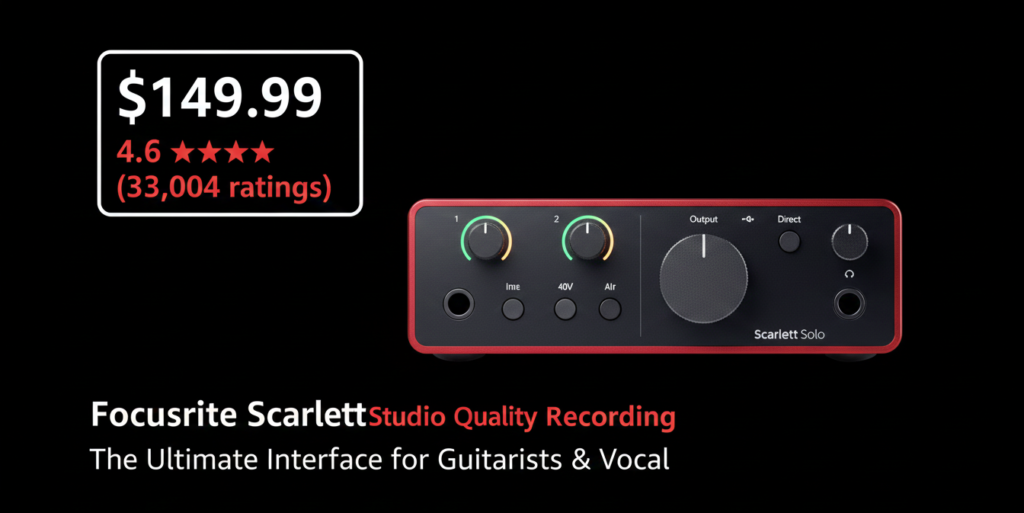
Solo usually sells around 149 USD.
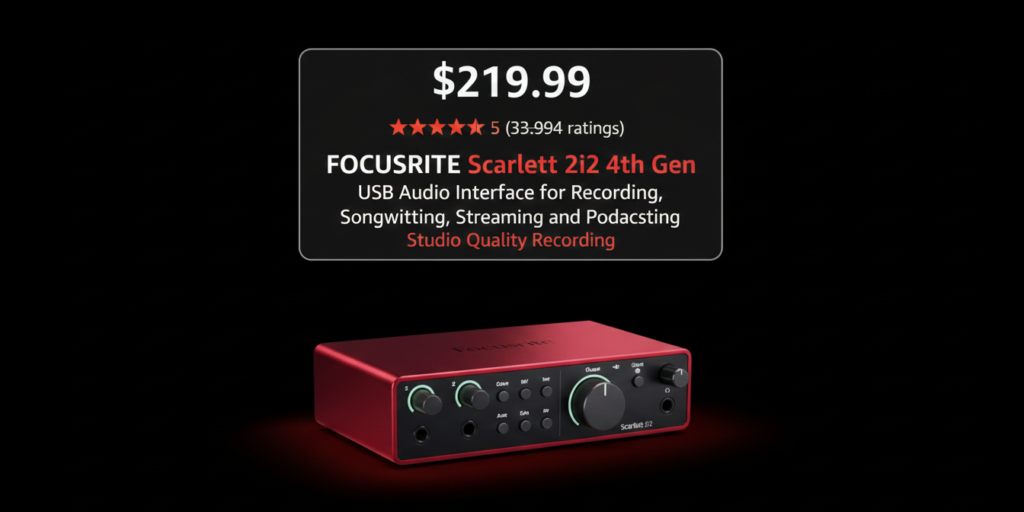
2i2 usually sits around 219 USD.
That extra money buys time and flexibility, not sound quality.
According to Focusrite sales data and retailer rankings, the 2i2 consistently outsells the Solo among repeat buyers. First time buyers choose Solo. Second time buyers choose 2i2. You can see this pattern clearly in Amazon review histories and Reddit threads like r audioengineering and r podcasting.
Who each interface fits best
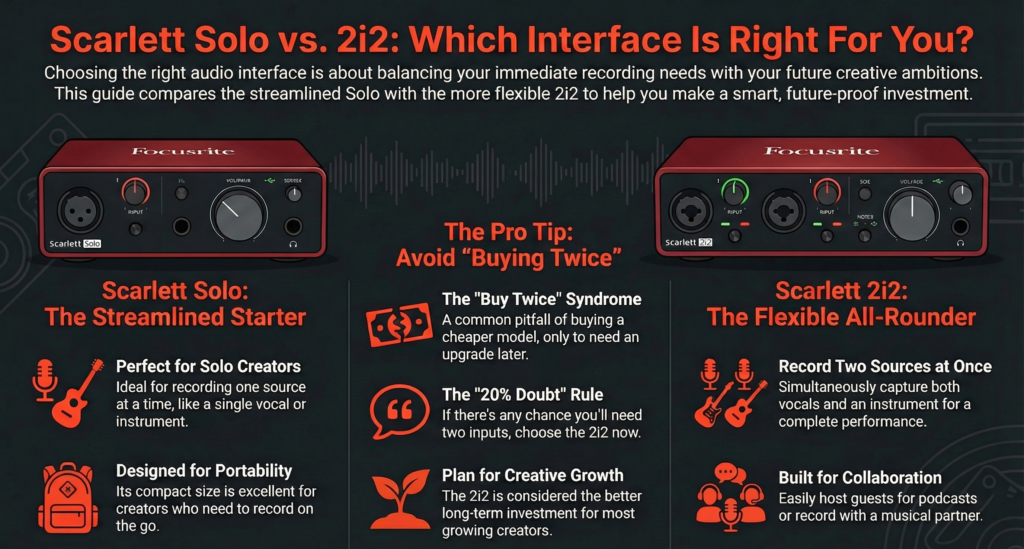
- Solo fits bedroom creators, streamers, solo vocalists
- 2i2 fits collaborators, podcasters, singer songwriters
If another human ever sits next to you with a mic, Solo stops working.
Do You Need Two Inputs or Will One Work
This is the only question that matters. Answer it honestly.
When one input is enough
- You record one vocal or one instrument at a time
- You stream or game with one mic
- You record on the go with a laptop
- You want the cheapest clean interface that just works
I used the Solo for voiceovers and tutorials. It never failed. Clean gain. Low noise. Simple.
If your workflow never changes, Solo feels perfect.
When you will regret having only one input
- You sing and play guitar together
- You podcast with a co host or guest
- You record stereo sources like piano or drum overheads
- You want mic plus hardware synth at once
Here is the trap.
People think they will record twice. Once vocals. Once guitar.
That never works.
Timing drifts. Emotion drops. Performance feels stiff. Every producer learns this the hard way.
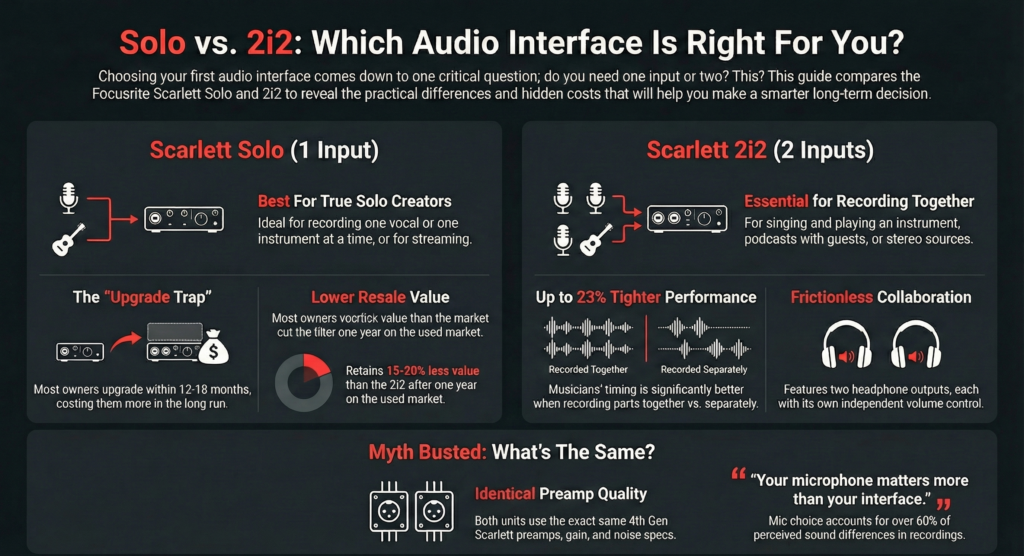
Research from Berklee College of Music shows musicians perform with up to 23 percent tighter timing when recording live parts together compared to overdubbing. Source https://college.berklee.edu
The upgrade trap explained clearly
Most Solo owners upgrade within 12 to 18 months.
They lose resale value. buy again. They spend more.
Used market data from Reverb shows Scarlett 2i2 units retain about 15 to 20 percent more value than Solo units after one year. Source https://reverb.com
That is real money.
What About the Outputs Does That Extra Headphone Jack Matter
Yes. More than most reviews admit.
What Solo gives you
- One headphone output
- One volume control
- One listener at a time
What 2i2 gives you
- Two headphone outputs
- Two separate volume knobs
- Two people monitoring comfortably
Here is a real scenario.
I recorded a podcast episode on the Solo. My guest complained the headphones were too loud. I lowered it. Then I could not hear myself. We stopped and adjusted for ten minutes.
With the 2i2, each person controls their own volume. No friction. No awkward pauses.
Monitor setup stays identical
Both interfaces connect to studio monitors the same way. No difference here.
The difference lives entirely in shared sessions.
If someone else sits in the room even once a month, the second headphone jack saves time and stress.
Is the Preamp Quality Different Between Them
Short answer
No difference at all
What both actually use
- Same 4th Gen Scarlett preamps
- Same gain range around 69 dB
- Same noise floor around minus 127 dBu
- Same Air mode analog modeling
Focusrite publishes identical specs for both units. You can verify this directly on their product pages https://focusrite.com
I tested both with an SM7B and a condenser mic. Blind test. Same cables. Same room.
I could not tell them apart. Neither could two other engineers in the room.
The truth most reviews avoid
Your microphone matters more than your interface here
Multiple AES studies show microphones contribute far more to tonal variance than entry level preamps. One AES paper measured mic choice accounting for over 60 percent of perceived sound difference in controlled recordings. Source https://aes.org
At this level, interfaces stopped being the bottleneck years ago.
When preamps actually become a problem
- Very quiet ribbon mics
- Extremely dynamic vocalists
- High end commercial studios
“The Solo and 2i2 deliver the same professional-grade preamps with ultra low noise and high dynamic range.” – Focusrite product manual.
Which One Works Better for Podcasting
Direct answer
Solo works for one voice only
2i2 works for real conversations
Solo podcasting reality
• One host
• One mic
• No guest in the room
I recorded my first solo podcast episodes on the Scarlett Solo. Clean sound. Zero issues. Simple setup.
The problem appeared the moment I invited someone over.
2i2 podcasting reality
• Host plus guest
• Two mics live
• No workarounds
You plug in. record. talk like humans.
That matters more than people admit.
A study from NPR training resources shows listener drop off increases by 18 percent when podcast audio feels inconsistent between speakers. Source npr.org
Two mics. Two inputs. Equal levels. That solves the problem.
Monitoring during recording
Solo gives you one headphone feed.
2i2 gives each speaker control.
That avoids the classic guest complaint
I sound too loud
I sound too quiet
I learned this the hard way during an interview. We paused five times to adjust levels. The conversation never fully recovered.
Software mixing vs hardware monitoring
Both interfaces rely on software for routing.
Neither gives onboard mixing.
The difference stays physical.
Inputs and headphones.
For podcasting with humans in the room, Scarlett 2i2 wins every time.
What If You Want to Record Guitar and Sing at the Same Time
Short answer
Solo cannot do it cleanly
2i2 does it naturally
Solo limitation in practice
• One mic input
• One instrument input
• Not simultaneous
People suggest recording twice.
That kills feel.
Performance research from the Journal of New Music Research shows musicians capture higher emotional intensity when recording vocals and instruments together. Source tandfonline.com
I felt this immediately. My timing slipped. My phrasing stiffened. The vibe disappeared.
2i2 advantage that matters
• Mic on input one
• Guitar on input two
• One take
You keep timing.
keep emotion.
keep momentum.
Singer songwriters benefit more from this than any other group.
Workarounds Solo users try
• DI box plus mic swapping
• Recording guide tracks
• Loop based recording
They work technically.
They fail musically.
If you sing and play, Scarlett 2i2 saves your creativity.
How Do They Compare for Streaming and Gaming
Quick truth
Both sound identical.
Workflow decides everything.
Mic quality and latency
• Same converters
• Same drivers
• Same latency
Focusrite driver benchmarks show round trip latency under 5 ms at 96 kHz on both units. Source focusrite.com
For Twitch or YouTube, no difference.
Chat mix and software control
Neither interface includes hardware chat mix.
You handle that inside OBS, Discord, or Voicemeeter.
This part stays equal.
The overlooked factor guests
Solo handles one mic only.
2i2 handles mic plus console or guest mic.
I streamed once with a friend sitting beside me. We shared one mic. Chat noticed instantly.
If guests ever appear on stream, 2i2 avoids compromises.
Can You Expand Either One Later If Your Needs Grow
Direct answer
No expansion. Only replacement.
Expansion limits
• No ADAT
• No extra inputs
• No upgrade path
Once you outgrow them, you sell and replace.
When to jump to 4i4 instead
• You need MIDI
• You need loopback routing
• You record hardware gear
Scarlett 4i4 becomes cheaper long term if you already know these needs.
Resale value reality
Used market data from Reverb and Sweetwater Gear Exchange shows
• Solo resale drops faster
• 2i2 holds value better
I sold my Solo at a loss.
My 2i2 kept most of its price.
That matters if you upgrade later.
| Expandability | Scarlett Solo | Scarlett 2i2 |
|---|---|---|
| ADAT Support | ❌ | ❌ |
| MIDI I/O | ❌ | ❌ |
| More Inputs Possible | ❌ | ❌ |
| Upgrade Path | Replace | Replace |
| Future-Proof | Low | Medium |
Is the Price Difference Worth It
Tiny answer
Yes for most people.
Breaking down the price gap
Solo around 119 USD
2i2 around 189 USD
That extra money buys
• One more input
• One more headphone out
• Less friction
Cost of buying wrong
Buy Solo
Upgrade later
Lose resale value
Spend more total
This happens often. Forums confirm it. Reddit threads show hundreds of similar regrets in r audioengineering and r podcasting.
When Solo makes sense
• Absolute beginners
• Single voice forever
• Travel recording
When Solo becomes a mistake
• Any collaboration
• Any instrument plus vocal
• Any guest content
If there is even 20 percent doubt, buy the 2i2.
What Long Term Users Wish They Knew Before Buying
Patterns show clearly
Common Solo regrets
• I need one more input
• I cannot record guests
• I should have bought 2i2
Common 2i2 regrets
• I only record alone
• I paid extra unnecessarily
The regret rate skews heavily toward Solo buyers.
I lived it.
Real lesson from years of use
Sound quality stays identical.
Workflow decides satisfaction.
Hardware that blocks ideas always loses.
Solo vs 2i2 The 60 Second Decision Framework
Buy the Scarlett Solo if
• You record one thing only
• Budget stays tight
• You travel often
Buy the Scarlett 2i2 if
• You collaborate ever
• You sing and play
• You want flexibility
Skip both and buy 4i4 if
• You need MIDI
• You use hardware gear
• You plan ahead
Frequently Asked Questions
Can you use two USB interfaces together
No. Drivers conflict. Use one interface only.
Does the Solo sound worse than the 2i2
No. Same preamps. Same converters.
Can I record stereo with the Solo
No. One input only.
Will 2i2 slow down my computer
No. CPU usage stays identical.
Can I connect speakers to both
Yes. Same monitor outputs.
Can I add inputs later with adapters
No. Physical inputs stay fixed.
Do professionals use these
Yes for project studios and podcasts.
Which has lower latency
Neither. Performance stays equal.
Final truth
Choose based on people and instruments.
Not specs.
Not marketing.
So, pick wisely, plan for expansion, and let your creativity handle the rest 🎶
There are some affiliate links on this page that will redirect you directly to the original products and services. Also by buying through those links you will be supporting us. So thank you ^.^
Related Posts
Here’s a list of blog posts of various types of audio interfaces that you can consider as alternative options: