What Is the Behringer X32 Rack?
The Behringer X32 Rack is a rackmount version of the famous Behringer X32 digital mixer.
It gives you the same mixing engine, the same processing power, the same effects, and the same routing flexibility found in larger X32 consoles.
The biggest difference is simple.
No motorized faders.
Everything lives inside a compact 3U rack unit.
For many engineers, that tradeoff is exactly why the X32 Rack became so popular.
You save space.
You spend less money.
You get the same audio engine.
After spending years around live sound engineers, church tech teams, studio owners, and mobile production companies, I’ve noticed something interesting.
Many people buy large mixers because they think they need faders.
Then six months later they mix from an iPad 95% of the time.
The X32 Rack cuts straight to that reality.
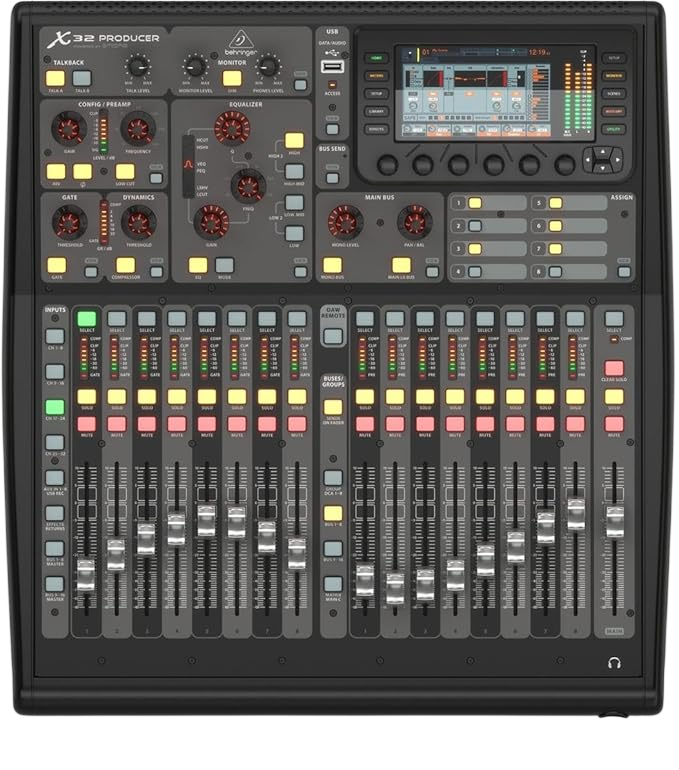
How Is the X32 Rack Different From the Regular X32?
On paper, both mixers are remarkably similar.
Both provide access to the X32 ecosystem.
Both support AES50 stage boxes.
Both support scene recalls.
Both include the same effects processing.
Both provide extensive routing options.
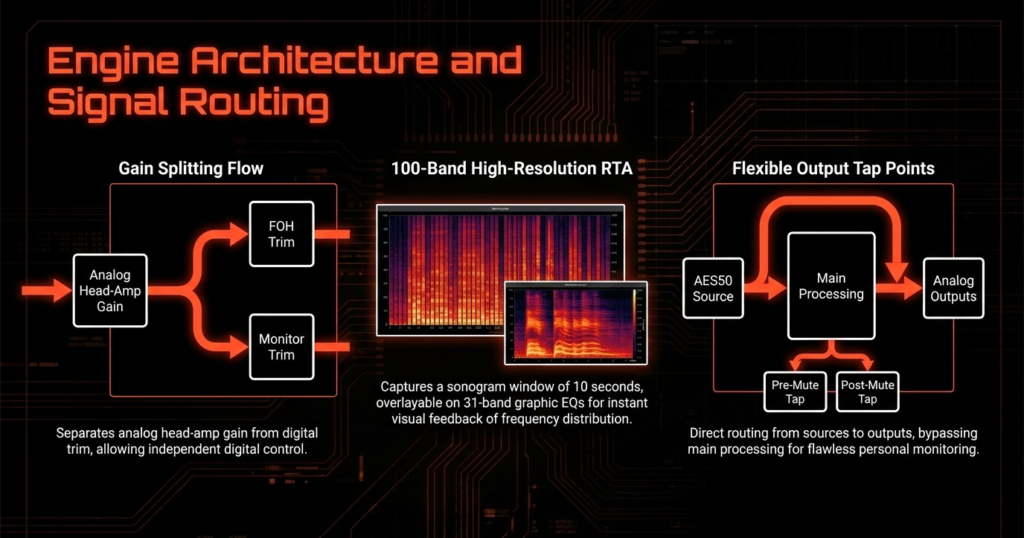
The major difference is physical control.
The standard X32 gives you:
- 25 motorized faders
- Larger display
- Dedicated channel controls
- Faster hands-on mixing
The X32 Rack gives you:
- Compact rackmount design
- Lower purchase cost
- Easier transport
- Remote mixing focus
Audio quality remains essentially identical.
A vocal mixed through an X32 Rack sounds the same as a vocal mixed through a full-size X32 when using the same settings.
That fact surprises many first-time buyers.
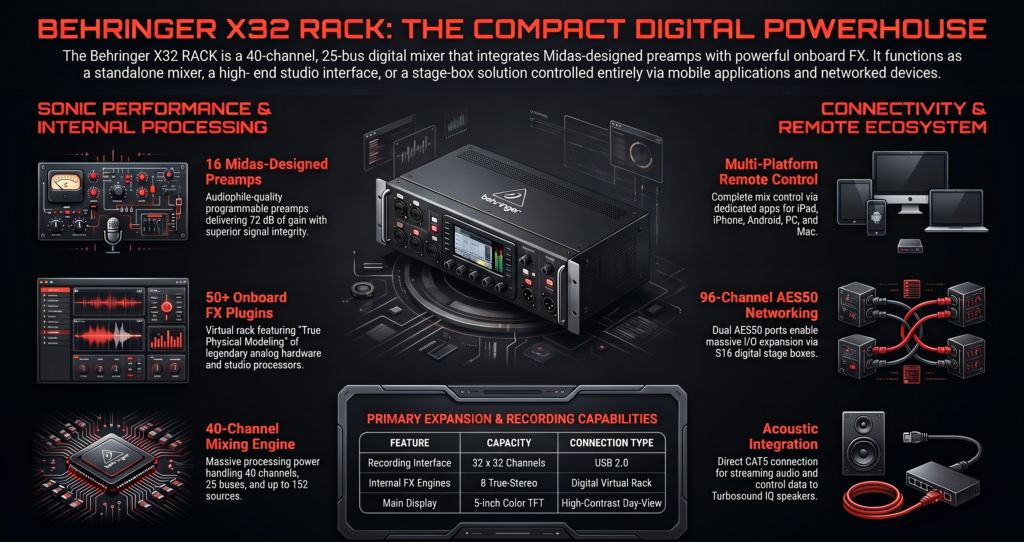
Who Was the X32 Rack Originally Designed For?
The target audience was surprisingly broad.
Behringer created the X32 Rack for users who wanted professional digital mixing without carrying a large console.
That included:
- Touring bands
- Churches
- Mobile sound companies
- Small venues
- Broadcast setups
- Recording studios
Touring musicians quickly became one of the biggest user groups.
Instead of carrying a heavy front-of-house console, bands could place an X32 Rack inside a road case and control everything remotely.
Many regional touring acts still use this approach today.
I’ve personally worked with bands that arrived at venues carrying nothing except an X32 Rack, wireless IEM system, microphones, and stage box.
Setup often took less than thirty minutes.
That efficiency is one reason the mixer remains relevant years after launch.
Why Are People Still Buying It Years After Release?
Simple answer.
Because it still solves real problems.
Many digital mixers released after the X32 introduced touchscreens, prettier interfaces, and modern designs.
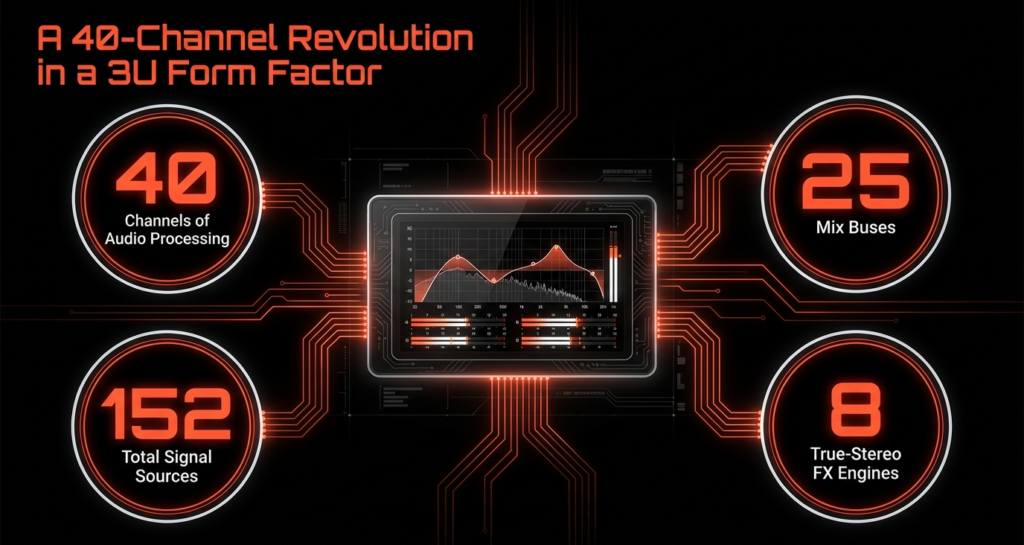
Very few matched the combination of:
- Processing power
- Expandability
- Reliability
- Community support
- Affordable used pricing
The used market plays a huge role here.
Today, buyers can often find an X32 Rack for significantly less than newer competitors while gaining access to a mature ecosystem that has already been tested in thousands of venues.
Another reason is familiarity.
Walk into enough churches, clubs, and production companies and you’ll eventually encounter an X32 system.
Engineers already know the workflow.
Volunteers can find tutorials easily.
Replacement parts exist.
Troubleshooting information is everywhere.
That matters more than many spec sheets suggest.
What Do You Actually Get Inside the X32 Rack?
The biggest misconception about the Behringer X32 Rack is that people think they’re buying a simple rack mixer.
They’re actually buying a complete digital audio ecosystem.
The mixer itself is only part of the story.
| Feature | Behringer X32 Rack |
|---|---|
| Mic Preamps | 16 MIDAS Designed |
| XLR Outputs | 8 |
| Aux Inputs | 6 |
| Aux Outputs | 6 |
| Mix Buses | 16 |
| Matrix Mixes | 6 |
| USB Recording | 32×32 |
| Rack Size | 3U |
| AES50 Ports | 2 |
| Ultranet Support | Yes |
| Remote Control | iPad, Android, PC, Mac |
Inputs, Outputs, and Connectivity Overview
The X32 Rack includes:
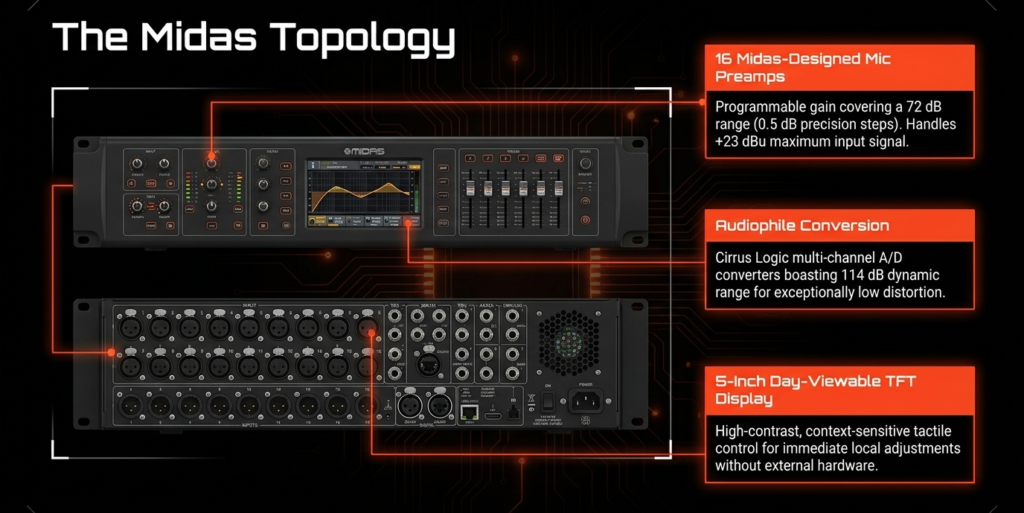
- 16 MIDAS-designed microphone preamps
- 8 XLR outputs
- 6 auxiliary line inputs
- 6 auxiliary outputs
- AES50 networking
- Ultranet connectivity
- USB audio interface functionality
- MIDI support
- Ethernet remote control
For many studio owners, sixteen onboard preamps are already enough to record an entire drum kit, several vocalists, and additional instruments simultaneously.
That alone makes the mixer attractive for recording applications.
The routing flexibility is where things get interesting.
Almost every input and output can be reassigned.
Signals can move virtually anywhere inside the mixer.
When I first used an X32 system years ago, routing felt intimidating.
After learning the logic behind it, I realized the flexibility was one of the strongest reasons people stay inside the X32 ecosystem for years.
What Can You Expand Later?
Expansion is one of the X32 Rack’s biggest strengths.
You can connect stage boxes and dramatically increase channel counts without replacing the mixer.
Popular expansion options include:
- S16 stage boxes
- SD16 stage boxes
- SD8 stage boxes
- Personal monitoring systems
- Digital snake setups
This allows a small rack mixer to grow into a system capable of handling surprisingly large productions.
Many churches and venues start with only the rack unit.
A few years later they add stage boxes and monitor systems while keeping the same core mixer.
That reduces long-term costs significantly.
How Many Channels Can You Realistically Use?
This question confuses many buyers.
The answer depends on your setup.
Internally, the X32 processing engine supports up to 32 input channels.
With stage box expansion, those channels can come from external sources instead of only the onboard preamps.
For most users, channel limitations rarely become the bottleneck.
Workflow becomes the bigger consideration.
A small worship team might use 12 to 16 channels.
A typical rock band might use 20 to 30 channels.
Large productions can approach the full channel count.
The X32 Rack comfortably handles all of those scenarios.
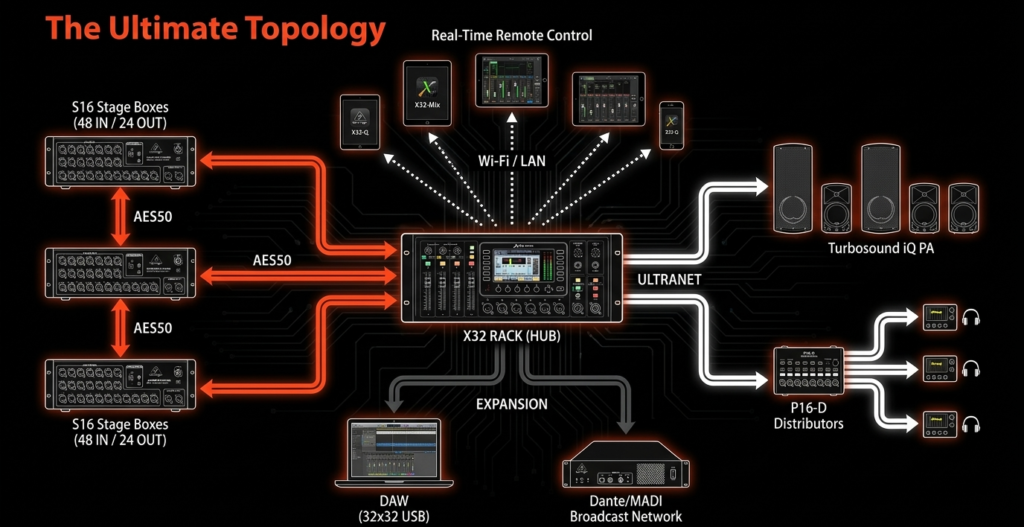
Can the X32 Rack Replace Your Audio Interface, Mixer, and Monitor Controller?
For many users, yes.
This is where the X32 Rack creates the most value.
Instead of buying separate devices, one unit can often handle multiple jobs simultaneously.
Using the X32 Rack as a Recording Interface
The built-in USB interface allows multitrack recording directly into a DAW.
You can record individual channels separately rather than capturing only a stereo mix.
That means:
- Individual drum tracks
- Separate vocal tracks
- Individual guitar tracks
- Full mix control after recording
This feature alone has saved countless recording sessions.
I remember helping a local band track a live rehearsal.
Nobody expected the recording to become an album candidate.
Because every channel was recorded separately, the band later mixed the session professionally.
Without multitrack capture, that opportunity would have disappeared.
Using It as a Live Mixer
Live sound remains the X32 Rack’s primary strength.
You get:
- Channel processing
- Parametric EQ
- Compression
- Gates
- Effects
- Routing control
- Scene recall
Everything required for professional live mixing lives inside one box.
The scene recall system deserves special mention.
Being able to save complete show configurations dramatically reduces setup time.
Churches and venues often rely on scene management every week.
Using It as a Monitor Controller
The X32 Rack excels at monitor management.
You can create multiple independent monitor mixes simultaneously.
Each performer can receive a customized mix.
The flexibility becomes especially useful when musicians have different monitoring preferences.
A vocalist may want more vocal level.
A drummer may want more bass and click track.
The mixer handles both without difficulty.
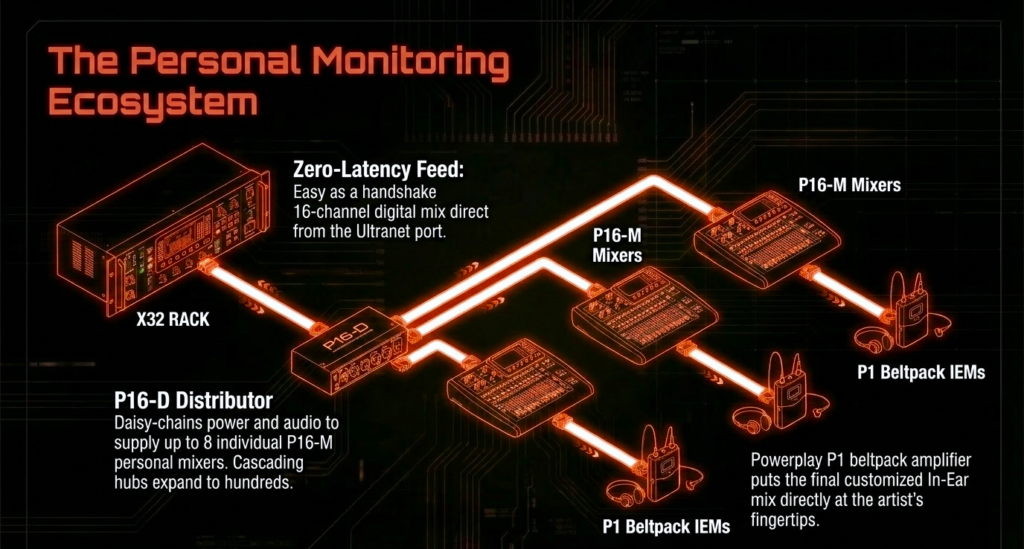
Using It for In Ear Monitor Mixes
This is one of the most common modern use cases.
Many bands purchase the X32 Rack specifically for in-ear monitoring.
Benefits include:
- Consistent monitor mixes
- Reduced stage volume
- Better hearing protection
- Faster setup
- Easier touring
Entire touring rigs are often built around an X32 Rack and wireless IEM systems.
The combination has become extremely common among regional and professional touring acts.
Can It Eliminate Multiple Pieces of Gear?
For many users, absolutely.
The X32 Rack can often replace:
- Audio interface
- Live mixer
- Digital snake system
- Monitor controller
- Effects processor
- Headphone distribution hub
That consolidation creates a strong value proposition.
The biggest reason many owners keep their X32 Rack for years is simple.
Once it becomes the center of a studio or live setup, replacing it means replacing an entire workflow.
That stickiness says a lot about how useful the platform remains today.
How Does the X32 Rack Sound?
The Behringer X32 Rack sounds clean, professional, and predictable.
That predictability is one reason engineers continue using it years later.
A mix that sounds good today will sound good tomorrow.
A lot of mixers in this price range add a subtle character.
The X32 Rack aims for transparency.
That works well for live sound and multitrack recording.
| Category | X32 Rack | Premium Interfaces |
|---|---|---|
| Live Sound | Excellent | Excellent |
| Multitrack Recording | Excellent | Excellent |
| Preamps | Clean | Cleaner |
| Conversion Quality | Good | Better |
| Routing Flexibility | Outstanding | Usually Lower |
| Inputs Per Dollar | Extremely High | Lower |
| Touring Use | Excellent | Varies |
| Value | Outstanding | Depends |
Are the MIDAS Preamps Still Competitive Today?
Yes.
They are still very usable in this date.
Modern premium interfaces from companies like RME, Audient, and Universal Audio often measure better in laboratory tests.
Most listeners will never hear that difference in a live venue.
In practical use, the MIDAS designed preamps provide:
- Plenty of gain
- Low noise
- Consistent performance
- Clean vocal reproduction
I’ve mixed vocals through the X32 Rack beside interfaces costing several times more.
The premium gear sounded slightly smoother during critical headphone listening.
The audience never noticed.
That is the reality.
How Clean Are the Preamps at Higher Gain Levels?
They remain surprisingly quiet.
Dynamic microphones like the SM7B or RE20 push preamps harder than condenser microphones.
The X32 Rack handles those situations reasonably well.
An external inline booster may still help with very quiet sources.
For normal live sound applications, gain performance is rarely a concern.
Do the Onboard Effects Actually Sound Good?
Most of them do.
The effects remain one of the strongest features of the X32 platform.
Useful effects include:
- Hall reverbs
- Plate reverbs
- Delays
- Graphic EQs
- Bus compression
- Gates
I still encounter engineers using stock X32 reverbs during paid events.
That tells you something.
Good engineers stop caring about gear marketing and focus on results.
Effects You’ll Probably Replace With Plugins
Studio users often prefer dedicated plugins for:
- Advanced mastering
- Surgical EQ work
- Modern vocal processing
- Specialized saturation
The onboard effects still work well for tracking and monitoring.
Does It Sound Noticeably Better Than Budget Analog Mixers?
Yes.
The difference usually appears in workflow first and audio quality second.
You gain:
- Better EQ control
- Better dynamics processing
- Better effects
- Better consistency
Many budget analog mixers cannot provide that level of control.
How Easy Is It to Mix Without Physical Faders?
This question determines whether you’ll love or hate the X32 Rack.
Some engineers adapt immediately.
Others never fully embrace it.
Can You Operate Everything From the Front Panel?
Yes.
You can access every major function.
You can build complete shows from the front panel.
The process takes longer than using software.
Small screen navigation requires patience.
Emergency adjustments remain easy.
Large setup tasks feel slower.
Is the X32 Edit Software Better Than Using the Hardware?
Absolutely.
Most owners spend the majority of their time inside X32 Edit.
The software provides:
- Faster routing
- Faster scene management
- Better visibility
- Easier troubleshooting
After using both methods, I rarely choose front panel programming unless I have no alternative.
What Is Mixing From a Tablet Actually Like?
This is where the mixer shines! 📱
Walking through a venue while adjusting EQ and monitor mixes feels incredibly useful.
You hear the room directly.
You hear problem frequencies immediately.
Many engineers now prefer tablet mixing for smaller shows.
The X32 Rack helped popularize that workflow.
When Does the Lack of Faders Become Frustrating?
Several situations stand out.
- Fast festival changeovers
- Large theatrical productions
- Complex broadcast environments
- High pressure live mixing
Physical faders remain faster for some tasks.
There is no way around that.
The question becomes whether those situations match your workload.
How Well Does the X32 Rack Work for Home Studios?
Much better than many people expect.
Recording Bands
This is one of the strongest use cases.
Sixteen onboard preamps simplify band recording.
You can easily capture:
- Drums
- Bass
- Guitars
- Vocals
- Keyboards
Many interfaces require expensive expansion before reaching this capability.
Recording Podcasts
It works well for multi person podcasts.
The routing flexibility helps create separate headphone mixes and recording feeds.
For solo podcasting, a dedicated audio interface may be simpler.
Recording Drums
Drum recording is where the X32 Rack delivers tremendous value.
A typical drum session can consume:
- Kick
- Snare top
- Snare bottom
- Hi hat
- Rack tom
- Floor tom
- Overheads
- Room microphones
The onboard preamp count handles these sessions comfortably.
Hybrid Studio Workflows
Many users combine recording and live sound.
One week the mixer records a band.
The next week it runs a live event.
That flexibility improves long term value significantly.
Can It Replace a Focusrite, MOTU, or PreSonus Interface?
For many users, yes.
For pure music production, dedicated interfaces often provide:
- Simpler workflows
- Better conversion
- Better desktop ergonomics
For users needing lots of inputs, the X32 Rack often becomes the more economical choice.
How Good Is the X32 Rack for Live Sound?
Excellent.
Live sound remains its strongest category.
Small Venues
The X32 Rack feels almost tailor made for small venues.
You gain professional processing without dedicating large amounts of space to a console.
Churches
Church adoption helped make the X32 ecosystem famous.
Churches appreciate:
- Scene recall
- Volunteer friendly operation
- Remote mixing
- Expandability
Many churches continue running the same X32 systems after years of weekly services.
Corporate Events
Corporate work values consistency.
The X32 Rack delivers that consistency.
Stored scenes reduce setup mistakes.
Predictable workflows reduce stress.
Touring Bands
Touring musicians frequently choose the X32 Rack for:
- Compact size
- Reliability
- In ear monitoring
- Repeatable shows
The ability to recall yesterday’s mix instantly is incredibly valuable on the road.
Can One Person Run Front Of House And Monitor Mixes At The Same Time?
Yes.
The mixer was designed for that type of flexibility.
Small productions often operate successfully with a single engineer.
What Are The Biggest Problems X32 Rack Owners Eventually Discover?
Every mixer has weaknesses.
The X32 Rack is no exception.
Is The User Interface Showing Its Age?
Yes.
Modern mixers often provide:
- Better touchscreens
- Faster navigation
- Cleaner interfaces
The X32 architecture remains functional.
It simply feels older.
How Reliable Is The Built In Screen?
Generally reliable.
Older units may eventually develop display issues.
Most units continue operating for years without problems.
What Happens If Your Network Setup Fails?
Remote mixing becomes difficult.
Every serious X32 owner should understand:
- Router configuration
- Backup networking
- Wired control options
Experienced users prepare backups before important events.
Is The Fan Noise Noticeable In Studio Environments?
Sometimes.
Quiet recording rooms reveal fan noise more easily.
Many studio owners place the rack farther away from microphones.
Does The Software Ecosystem Feel Outdated?
Compared with newer products, yes.
Compared with many older digital mixers, it remains perfectly usable.
Are Spare Parts And Repairs Becoming An Issue?
Repairs can be more challenging than they were years ago.
That concern affects many aging digital products.
Used buyers should keep this reality in mind.
What Features Still Feel Ahead Of Their Time?
Several features continue to impress.
Flexible Routing
Routing remains one of the strongest aspects of the X32 platform.
Almost anything can go almost anywhere.
That flexibility solves countless real world problems.
AES50 Ecosystem
The AES50 ecosystem helped make the X32 successful.
Expansion remains straightforward.
Long cable runs remain practical.
Remote Mixing
Remote mixing still feels modern.
Many newer products copied this concept after seeing its success.
Scene Management
Scene recall saves enormous amounts of time.
Professional users depend on it constantly.
Monitor Mixing Capabilities
Monitor flexibility remains outstanding.
Few products in this price range match it.
Did You Know? 🤯
The X32 architecture launched back in 2012.
More than a decade later, many venues, churches, and production companies still use it daily.
Very few digital mixers stay relevant that long.
Supported by long-running field reports and continued industry usage.
Is Buying A Used X32 Rack A Good Idea?
For many buyers, yes.
A used X32 Rack often delivers the best value in the entire digital mixer market.
What Should You Inspect Before Buying?
Check:
- All inputs
- All outputs
- Display functionality
- Encoder operation
- Ethernet connectivity
- USB connectivity
Test everything.
Assume nothing.
Common Problems In Older Units
Potential concerns include:
- Worn encoders
- Display wear
- Cosmetic damage
- Dust buildup
Most issues become obvious during testing.
Which Production Years Are Safest?
Condition matters more than manufacturing year.
A well maintained older unit often outperforms a neglected newer unit.
How Much Should You Pay In Today’s Market?
Pricing varies heavily by region.
Compare recent local sales rather than relying on old forum discussions.
Who Should Buy Used Vs New?
Buy used if:
- Budget matters
- You can inspect the unit
- You understand digital mixers
Buy new if:
- You need warranty protection
- Reliability is mission critical
Who Is The X32 Rack Best For?
The ideal buyers include:
- Live sound engineers
- Churches
- Mobile production companies
- Touring musicians
- Recording bands
- Hybrid studio owners
These users extract maximum value from the platform.
Who Should Avoid The X32 Rack?
Some buyers should look elsewhere.
Creators Wanting Simplicity
Smaller interfaces are easier.
Beginners Needing Physical Controls
Traditional mixers may feel more comfortable.
Users Wanting Modern Touchscreen Workflows
Newer products offer cleaner interfaces.
Studios Needing Premium Conversion Quality
Higher end interfaces remain the better choice.
Is The Behringer X32 Rack Still Worth Buying In this date?
Yes.
The answer is surprisingly simple.
If You’re Buying New
The value remains strong.
The ecosystem remains relevant.
If You’re Buying Used
The value becomes exceptional.
A well maintained unit can outperform many newer competitors on a cost per feature basis.
If You Already Own One
Keep it.
Most owners gain more value by learning the mixer deeply than replacing it.
The Final Verdict
The Behringer X32 Rack remains one of the smartest purchases in digital audio.
It records.
It mixes.
It routes.
It expands.
It handles live sound exceptionally well.
Most importantly, it solves real world audio problems efficiently.
That is why the X32 Rack continues appearing in churches, studios, venues, and touring rigs all over the world.
The X32 Rack cuts straight to that reality.
Frequently Asked Questions
Is The Behringer X32 Rack Discontinued?
No. Availability varies by region, but the platform remains widely supported.
How Many Channels Can The X32 Rack Record Simultaneously?
Up to 32 channels through its USB recording system depending on configuration.
Does The X32 Rack Work As A USB Audio Interface?
Yes.
Can I Control The X32 Rack From An iPad?
Yes. Remote control is one of its strongest features.
Does The X32 Rack Have Motorized Faders?
No.
Is The X32 Rack Good For Churches?
Yes. It remains one of the most common church mixers worldwide.
Can The X32 Rack Mix Monitors And Front Of House At The Same Time?
Yes.
What Stage Boxes Work With The X32 Rack?
Common options include S16, SD16, and SD8 stage boxes.
Is The X32 Rack Good For Recording Drums?
Yes. It is excellent for drum recording.
Is The X32 Rack Better Than The Wing Rack?
It depends on your workflow and budget. The Wing Rack offers a newer architecture. The X32 Rack offers a mature ecosystem and lower cost.
How Long Does An X32 Rack Typically Last?
Many units remain in regular use after years of operation.
What Are The Most Common X32 Rack Problems?
Display wear, aging encoders, networking mistakes, and fan noise are the most commonly reported issues.
Is The Behringer X32 Rack Worth Buying Used?
Yes. Many buyers consider a used X32 Rack one of the strongest values available in professional digital mixing.
So, pick wisely, plan for expansion, and let your creativity handle the rest 🎶

There are some affiliate links on this page that will redirect you directly to the original products and services. Also by buying through those links you will be supporting us. So thank you ^.^
Related Posts
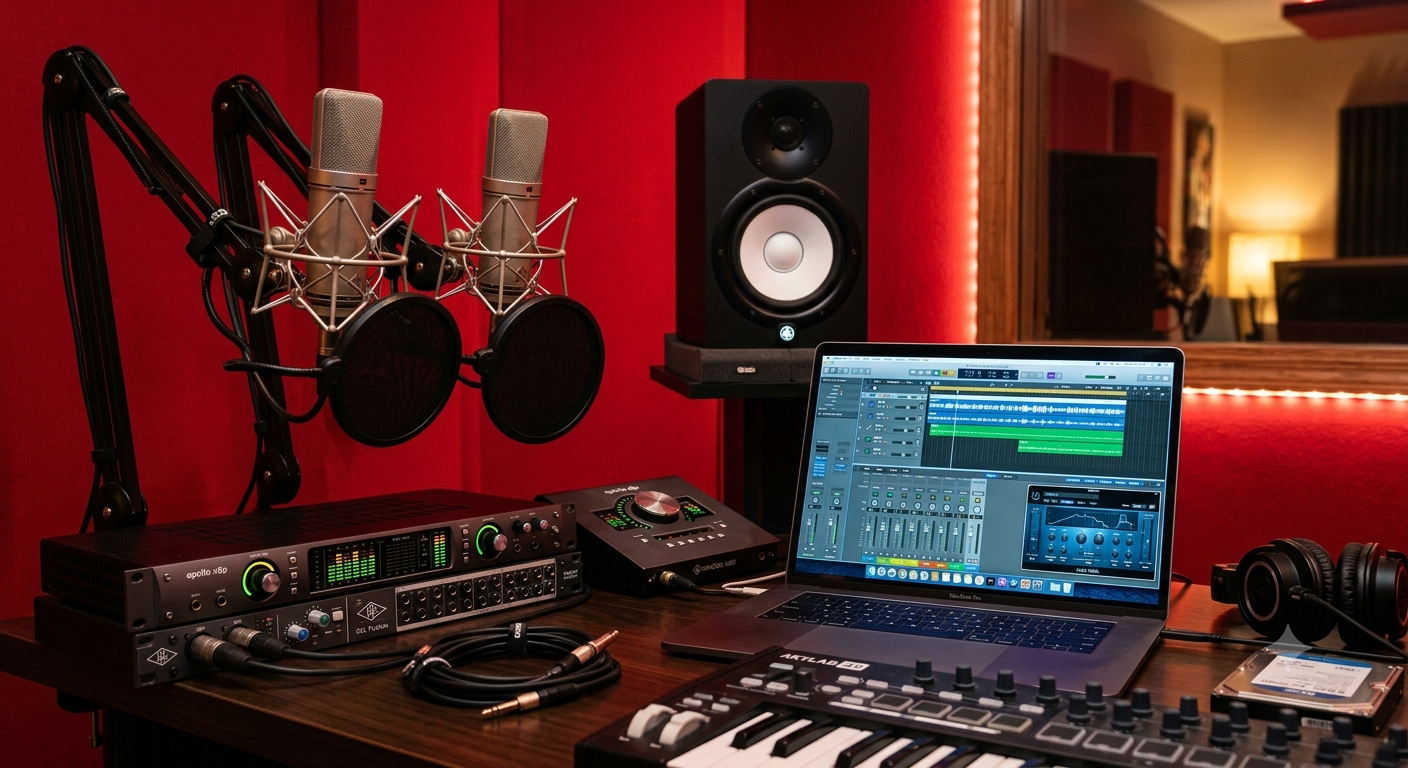
Here’s a list of blog posts of various types of audio interfaces that you can consider as alternative options: