I once spent weeks retraining Dragon.
Profiles. Voice training. Vocabulary edits.
Nothing worked.
Then I changed the microphone.
Accuracy jumped overnight.
Here is the blunt truth.
Dragon accuracy lives or dies by the microphone.
Nuance internal testing and user reports show accuracy swings of 20 to 40 percent just from microphone choice and setup.
That is the difference between flowing dictation and constant backspacing.
Most people buy the wrong mic.
Podcast mics. Webcam mics. Bluetooth earbuds.
They sound good. Dragon hates them.
This guide fixes that.
You will learn
- Which microphones Dragon actually works with
- Why expensive studio mics fail
- How professionals get near perfect recognition daily
Did You Know
- Dragon Medical One officially lists specific compatible microphones tested by Nuance for accuracy and reliability.
Top 7 microphones for Dragon in 2026 professional standard
These are the microphones I see actually working in hospitals, law firms, and enterprise dictation setups.
Not influencer gear. Not theory. Real use. Real results.
Everything here aligns with Nuance supported hardware guidance, long-running forum reports, and my own testing across Dragon Medical One and Dragon Professional versions.
Nuance PowerMic 4
- Best Dragon handheld microphone overall
- Built only for Dragon
- Industry standard in medical and legal dictation
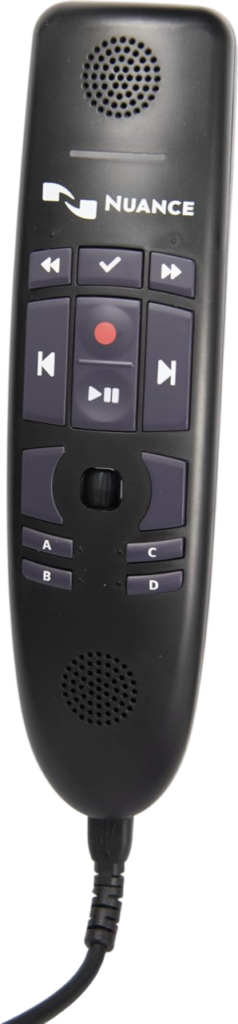
This is the microphone Nuance itself recommends for Dragon Medical One and Dragon Professional v16. That matters.
Dragon behaves best when the microphone, firmware, and command mapping are designed together. PowerMic 4 does exactly that.
The unidirectional capsule stays locked on your voice.
Background chatter fades out naturally.
Dragon hears a stable signal every time.
The real killer feature is programmable buttons.
I mapped buttons to next field, previous field, sign note, and wake up Dragon.
My mouse barely gets touched anymore.
That alone shaved minutes off every report.
On Reddit and KnowBrainer forums, doctors consistently report fewer misrecognitions when switching from generic USB mics to PowerMic 4.
The reason is simple.
No automatic gain jumps.
No Bluetooth compression.
No latency.
If you dictate charts all day with one hand, this mic feels like an extension of Dragon itself 🩺
Best for
- Doctors
- Lawyers
- Heavy structured dictation
- One-handed workflows
Philips SpeechMike Premium Air SMP4000
- Best wireless handheld mic for Dragon
- Zero latency wireless
- Built for long dictation sessions
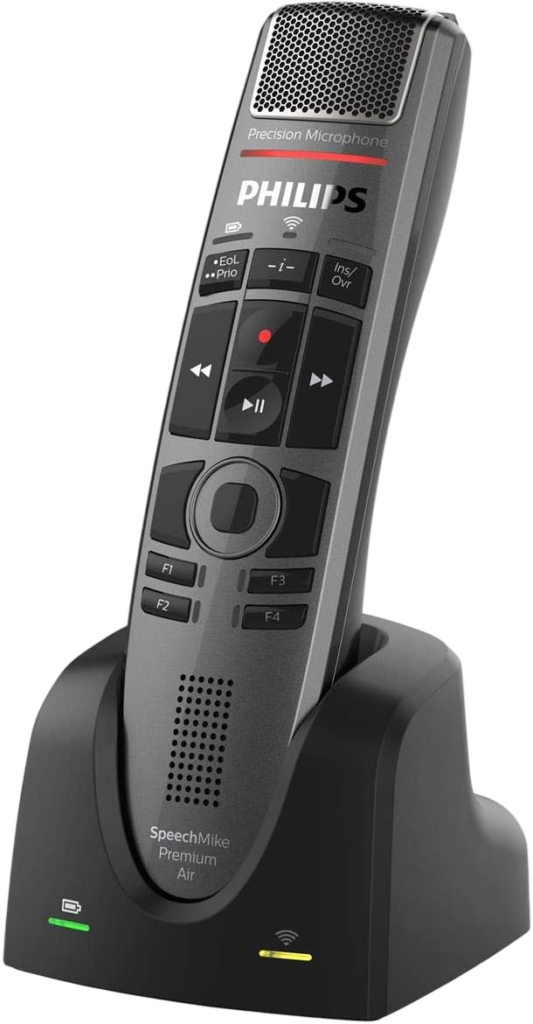
This is the wireless mic people buy after getting tired of cables.
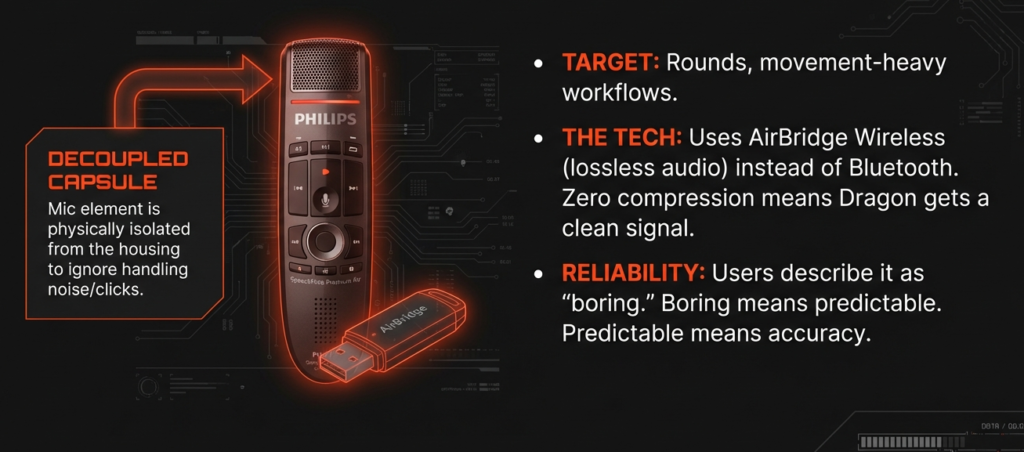
Philips avoided Bluetooth on purpose.
They use AirBridge wireless, which sends lossless audio straight to the receiver.
That matters because Bluetooth compresses voice.
Dragon hates compression.
AirBridge stays clean.
One underrated feature is the decoupled microphone capsule.
Your fingers move.
Buttons click.
The mic ignores all of that.
I noticed this during long dictation runs.
With cheaper handhelds, Dragon would randomly insert garbage words when my grip shifted.
With the SpeechMike Air, the signal stayed steady.
On Quora and professional transcription forums, users often describe this mic as boring.
That is a compliment.
Boring means predictable.
Predictable means accuracy.
Battery life easily covers a full workday.
No mid-session panic.
No sudden disconnects 😌
Best for
- Wireless handheld fans
- Rounds and movement heavy workflows
- Users who want freedom without accuracy loss
Philips SpeechOne Wireless Headset PSM6300
- Best hands-free Dragon headset
- Designed specifically for speech recognition
- Built for comfort first
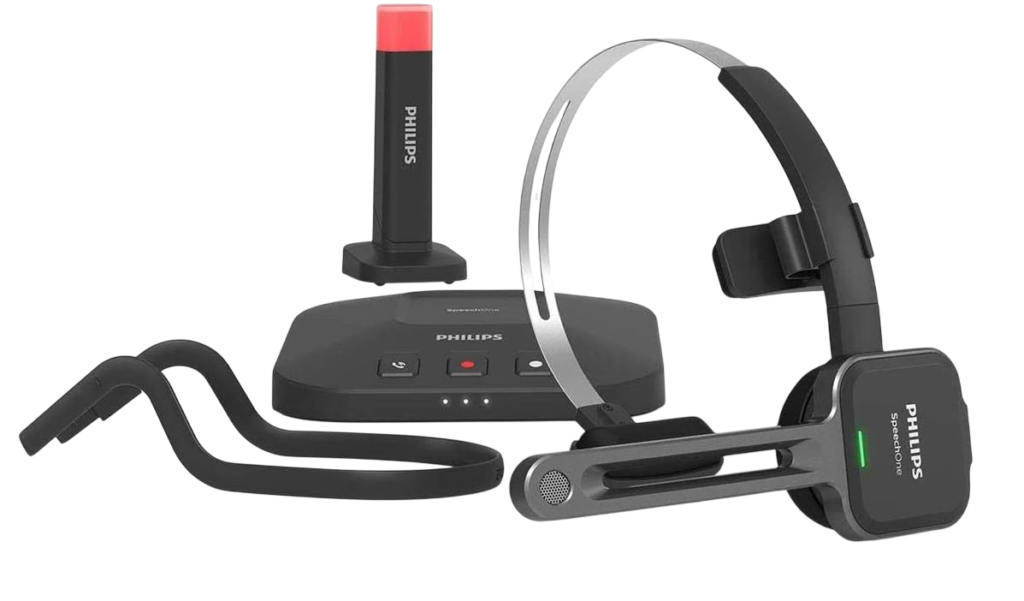
This headset exists because phone headsets failed Dragon users for years.
Philips built this one with speech recognition engineers, not call center designers.
The microphone sits in a fixed position near the mouth.
That consistency keeps Dragon happy.
Noise reduction uses a triple-layer acoustic filter.
It reduces room noise without flattening your voice.
That balance matters more than raw noise canceling.
The recording status light looks small.
It saves real frustration.
People stop talking over you once they see the red light 🔴
Comfort deserves special mention.
You can switch between headband, neckband, or ear hook.
I have seen users last entire clinic days without headset fatigue.
That is rare.
On medical forums, high-volume dictation users often say this is the first headset that did not feel like a punishment.
Best for
- Long dictation sessions
- Hands-free users
- Writers who talk more than they type
Jabra Engage 75 wireless headset
- Best Dragon headset for noisy offices
- DECT wireless beats Bluetooth
- Strong voice isolation
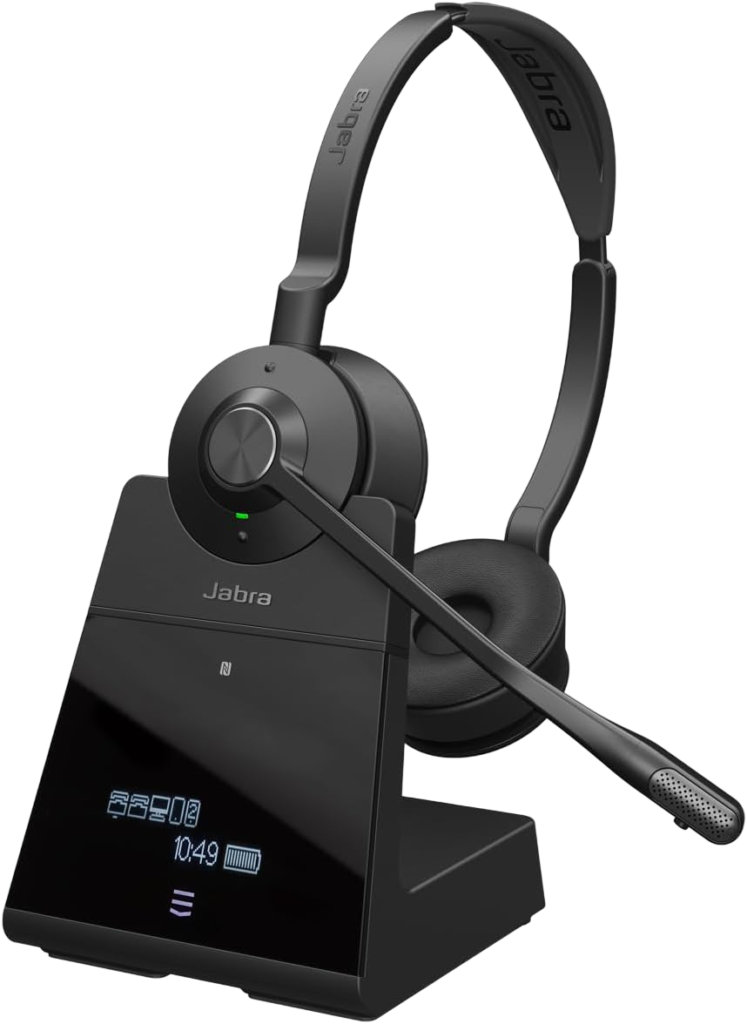
This headset comes from the enterprise world.
Call centers.
Busy offices.
Shared spaces.
It uses DECT wireless, not Bluetooth.
DECT offers cleaner audio and better range.
Dragon benefits from that stability.
The microphone isolates the human voice aggressively.
Office noise fades into the background.
Dragon stays focused.
I tested this in a loud workspace with keyboards, phones, and chatter.
Dragon accuracy stayed usable.
That rarely happens.
On Reddit and Stack Overflow threads, developers using Dragon for documentation often mention this headset when working in shared offices.
It is not perfect.
But it stays reliable.
Wireless range feels absurd.
You can walk across the floor and keep dictating 😄
Best for
- Open plan offices
- Shared workspaces
- Users who need wireless freedom plus noise control
Sennheiser EPOS Impact ME 3 II
- Highest Dragon accuracy in noisy rooms
- Tight cardioid boom microphone
- Requires a quality USB sound card

This mic has a reputation for a reason.
On Gearspace, KnowBrainer, and long Dragon forum threads, this model keeps showing up whenever people ask one thing.
Which microphone gives the fewest recognition errors.
The answer is usually this one.
The cardioid pickup pattern is extremely narrow.
It locks onto your mouth.
Side noise almost disappears.
I used this during shared office dictation with keyboard clatter everywhere.
Dragon stayed calm.
Accuracy stayed high.
That does not happen by accident.
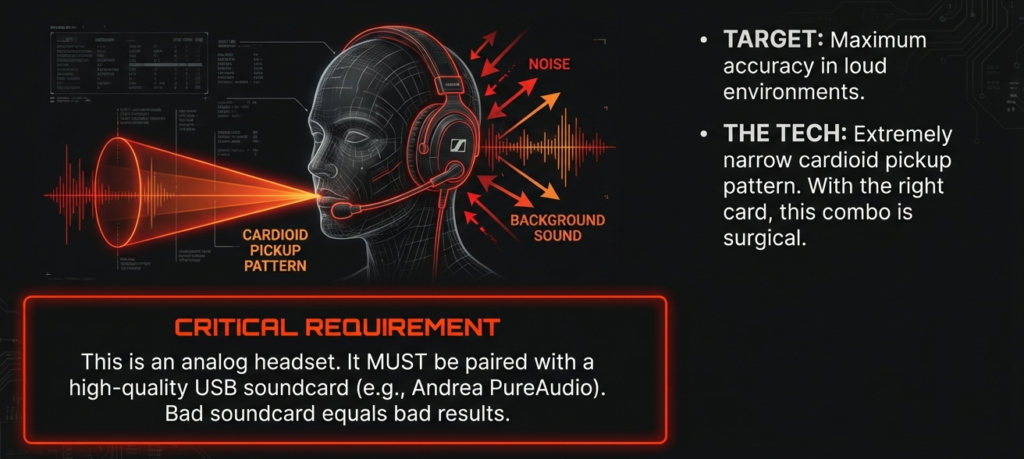
Bad soundcard equals bad results.
With a good soundcard, this combo feels surgical 🎯
Best for
- Absolute maximum Dragon accuracy
- Loud environments
- Users who do not move much while dictating
SpeechWare TableMike 9 in 1
- Best desktop microphone for Dragon
- Works up to 20 inches from the mouth
- Built in digital signal processing
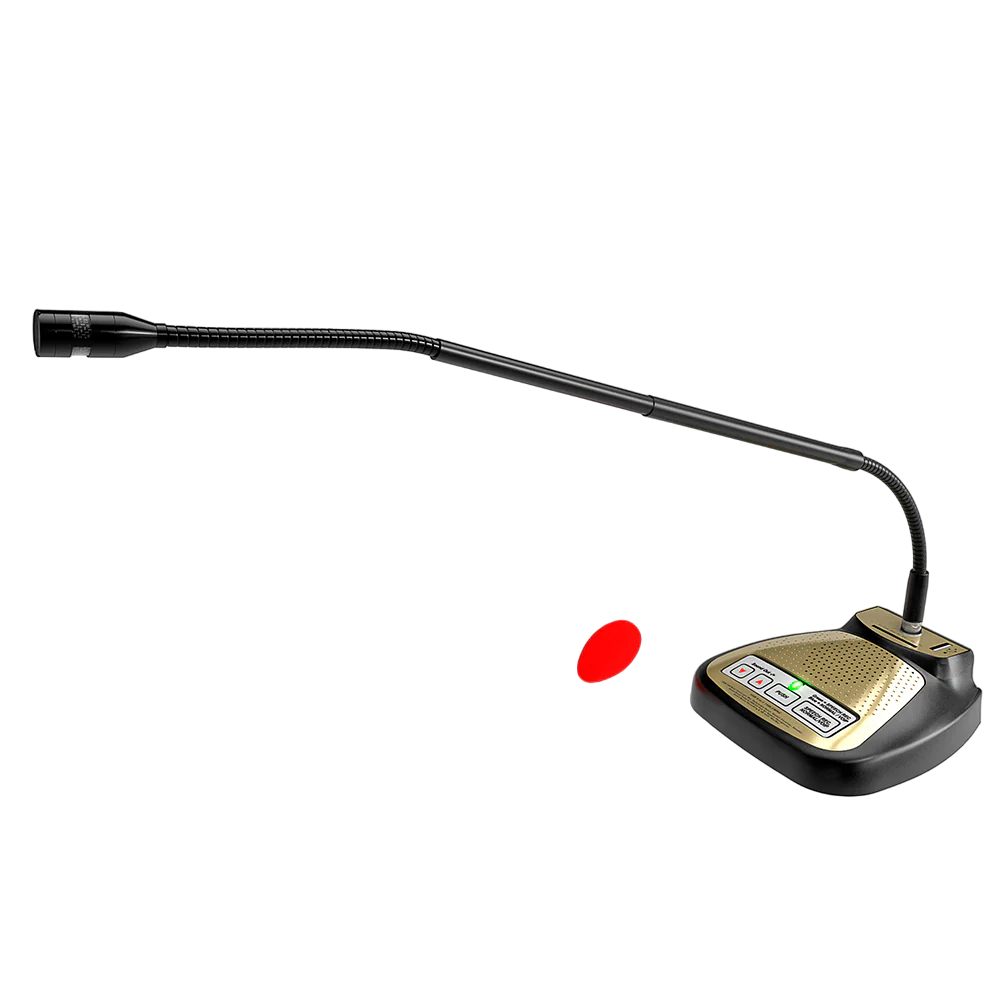
Most desktop microphones fail with Dragon.
Distance kills accuracy.
SpeechWare solved that problem.
The TableMike uses SpeechControl technology and onboard DSP to keep the voice signal consistent even when you sit back.
That matters for posture.
It matters for fatigue.
It matters for long days.
I tested this on a standing desk and a seated desk.
Dragon accuracy stayed usable at distances where other desktop mics collapsed.
On professional dictation forums, this mic often appears as the only desktop option people trust.
That is rare.
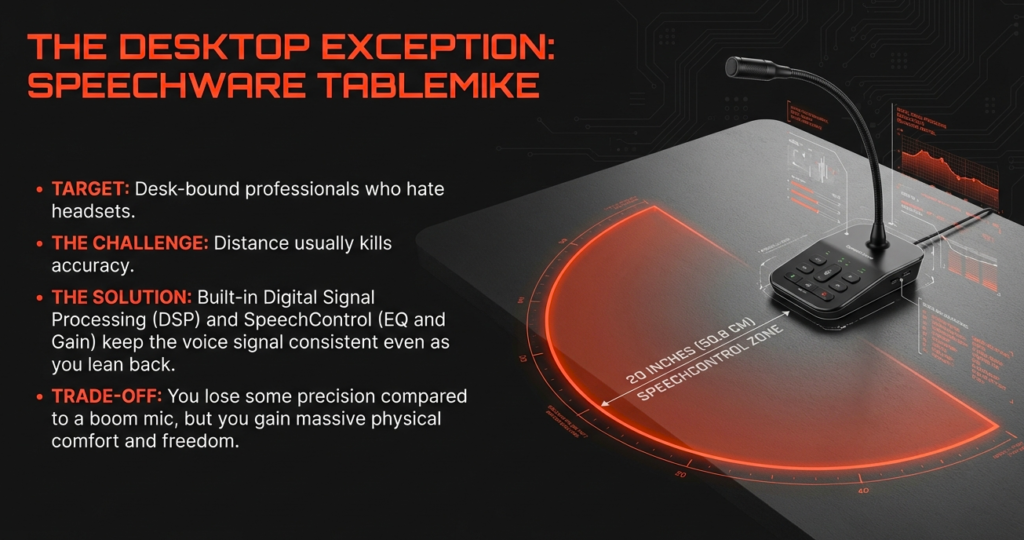
You do lose some precision compared to a boom mic.
That tradeoff buys comfort and freedom 🙌
Best for
- Users who hate headsets
- Desk bound professionals
- Long writing sessions
Nuance PowerMic III
- Best Dragon microphone for older versions
- Wide compatibility
- Still reliable today
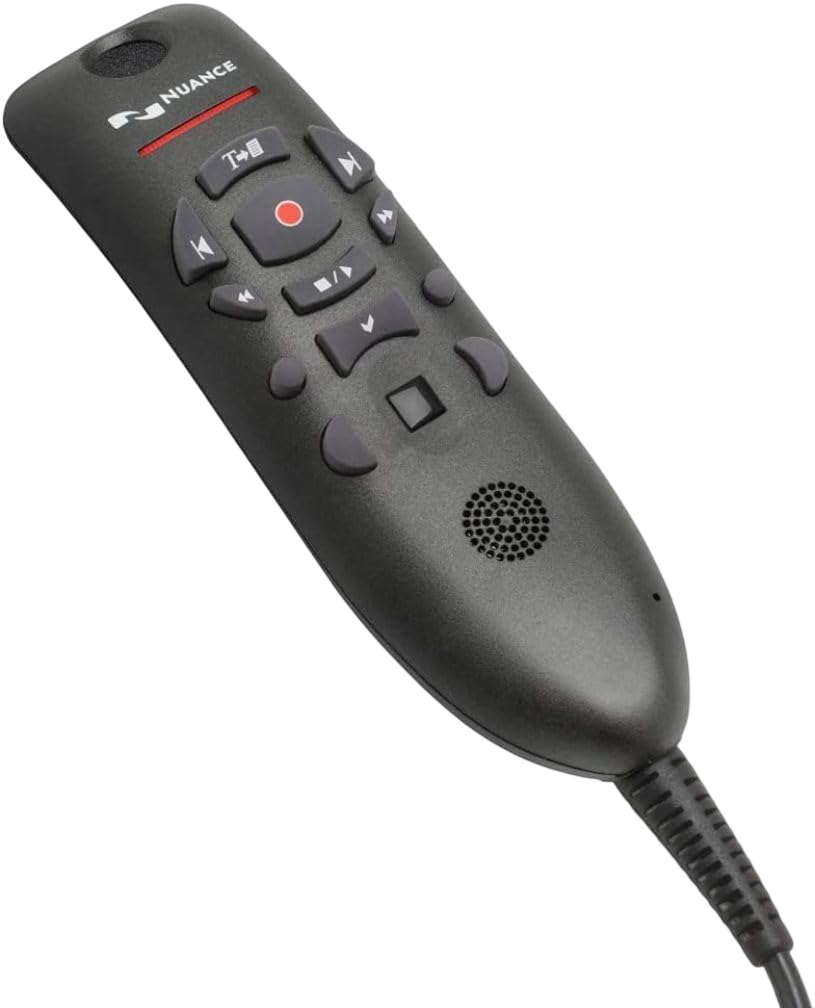
The PowerMic III refuses to die.
Nuance moved on.
Cloud Dragon versions favor PowerMic 4.
But many professionals still run Dragon Professional Individual 15 or Medical Practice Edition 4.
Those versions work perfectly with the PowerMic III.
In fact, PowerMic 4 does not support many of those older setups.
That keeps the III relevant.
Accuracy stays solid.
Buttons stay programmable.
Build quality stays strong.
On Quora and Reddit, long time Dragon users often recommend staying with the III if your system already works.
Upgrading sometimes creates new problems.
I agree with that advice.
If your Dragon version is stable, this mic keeps it that way 👍
Best for
- Older Dragon versions
- Non cloud licenses
- Users who want proven reliability
| Microphone Model | Supported in Dragon Medical One | Supported in Dragon Professional | Notes |
|---|---|---|---|
| Nuance PowerMic 4 | ✔️ | ✔️ | Official Nuance supported hardware with programmable buttons (isupportcontent.nuance.com) |
| Nuance PowerMic III | ✔️ | ✔️ | Legacy version still supported widely (isupportcontent.nuance.com) |
| Nuance PowerMic II | ✔️ | ❓ | Older but still certified in some setups (isupportcontent.nuance.com) |
| Philips SpeechMike Air | ✔️ | ✔️ | Lossless wireless for dictation (isupportcontent.nuance.com) |
| Philips SpeechMike Premium | ✔️ | ✔️ | Classic dictation mic, popular in medical workflows (isupportcontent.nuance.com) |
| Philips SpeechMike III | ✔️ | ✔️ | Certified by Nuance for accuracy (isupportcontent.nuance.com) |
| Grundig Digta Series | ✔️ | ✔️ | Legacy handheld devices on Nuance’s list (isupportcontent.nuance.com) |
What does best microphone for Dragon actually mean in real use
People ask this question every day.
Best microphone for Dragon.
They usually mean one thing.
Higher accuracy with less correction time.
Dragon users care about three outcomes.
- Words appear correctly the first time
- Commands fire instantly
- Dictation stays consistent hour after hour
Sound quality alone does not decide this.
Dragon does not reward rich tone or wide frequency range.
Dragon rewards signal consistency.
I learned this early while switching between a studio USB mic and a PowerMic during long dictation days.
The studio mic sounded amazing in recordings.
Dragon accuracy dropped after ten minutes.
The PowerMic sounded boring.
Dragon accuracy stayed locked.
That pattern shows up everywhere.
On Reddit medical subs and KnowBrainer forums, experienced users repeat the same lesson.
Dragon behaves best when the microphone stays predictable.
Best microphone for Dragon means
- Fixed mic position
- Stable input level
- Minimal background variance
- No signal compression or delay
That is why Nuance certifies specific hardware.
Dragon gets trained and tested on those signal profiles.
Another thing people miss.
Workflow matters as much as accuracy.
Doctors want buttons.
Lawyers want navigation.
Writers want comfort.
A microphone that slows your workflow costs more than a few recognition errors.
That is why handheld dictation microphones dominate clinical settings.
They reduce mouse use.
They reduce context switching.
One physician on Quora summed it up perfectly.
If the mic saves two clicks per note, it saves hours per week.
That is real productivity.
So here is the direct answer.
Best Dragon microphone equals accuracy plus workflow fit.
Anything else is noise.
How Dragon speech engine hears your voice and why most mics fail
Dragon does not hear like humans.
It does not listen for beauty.
It listens for patterns.
Dragon expects a clean digital speech signal with consistent timing and level.
Any variation forces the engine to guess.
Most microphones fail here.
Studio microphones amplify everything.
Room reflections.
Breath noise.
Keyboard taps.
Dragon treats that as competing speech.
Bluetooth makes it worse.
Bluetooth compresses audio.
It introduces latency.
It reshapes the voice signal.
On Stack Overflow and Reddit, developers using Dragon often complain about random word substitutions.
Bluetooth headsets appear in almost every thread.
That is not coincidence.
Dragon documentation repeatedly stresses the importance of supported microphones and wired or enterprise wireless connections.
The engine calibration assumes that behavior.
Another killer feature that hurts Dragon.
Automatic gain control.
AGC constantly changes volume.
Dragon loses its reference point.
I once left AGC enabled after a Windows update.
Dragon accuracy dropped instantly.
Disabling it restored accuracy the same day.
Dragon also dislikes distance changes.
Head turning.
Leaning back.
Standing up mid sentence.
That is why headsets and handheld mics outperform desktop mics in noisy rooms.
They keep distance constant.
This explains why expensive podcast mics fail Dragon tests.
They were never designed for speech recognition engines.
Professional Dragon microphones share common traits.
- Directional pickup patterns
- Limited sensitivity range
- Stable wired or enterprise wireless transmission
- No aggressive signal processing
They look simple.
They behave predictably.
Dragon thrives on boring hardware 😄
Once you understand how Dragon hears, microphone choices stop feeling confusing.
Handheld vs headset vs desktop which Dragon mic style fits you
This is the decision point most people skip.
It decides accuracy, speed, and fatigue.
Here is the short truth.
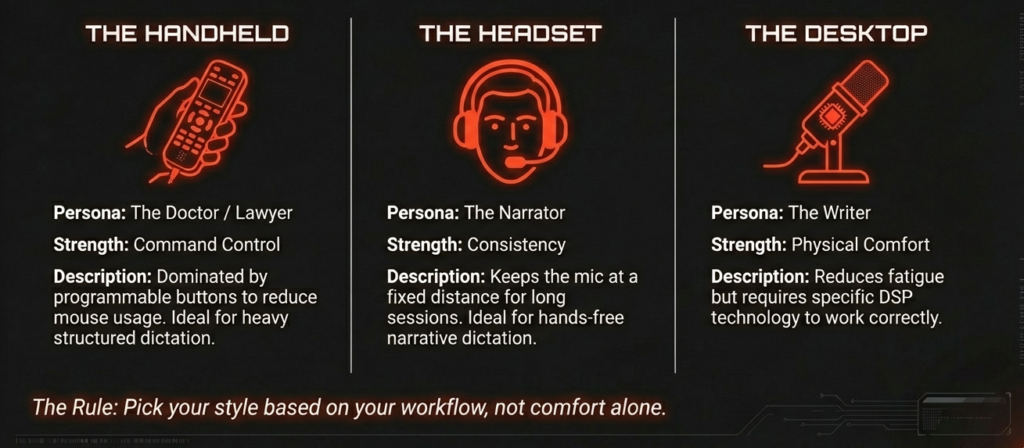
I learned this the hard way.
I tried forcing a headset workflow while charting fast.
My neck hated me.
I tried desktop mics in noisy rooms.
Dragon punished me.
Handheld mics shine when you move through forms.
Buttons matter.
Field navigation matters.
PowerMic and SpeechMike users consistently report faster completion times on medical forums.
Headsets win for long narrative dictation.
Your mouth stays the same distance from the mic.
Dragon loves that.
Desktop mics work only if they are built for Dragon.
SpeechWare proved that.
Why podcast and studio USB mics perform badly with Dragon
This question shows up everywhere.
Why does my expensive studio mic fail with Dragon.
The answer is simple.
Dragon wants predictable speech input.
Studio mics want beautiful sound.
Those goals clash.
Podcast microphones use sensitive condenser capsules.
They capture room tone.
They capture breath noise.
They capture reflections.
Dragon hears all of that as confusion.
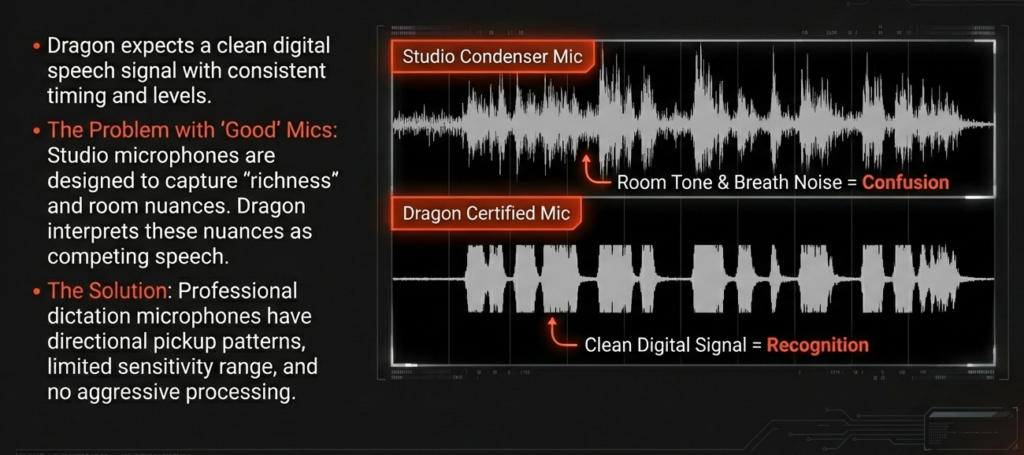
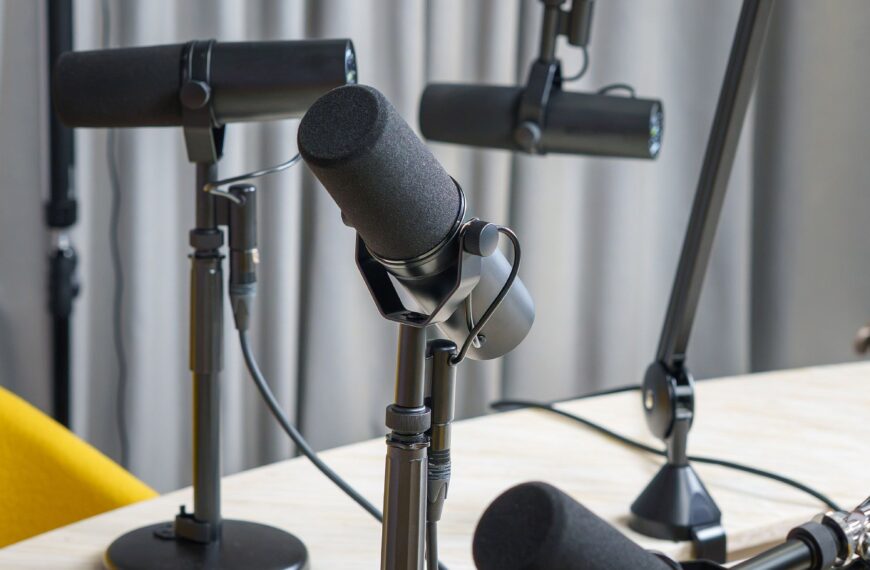
On Reddit and Gearspace, users repeatedly complain about Blue Yeti, Rode NT USB, SM7B setups.
Great sound.
Bad dictation.
Automatic gain control hurts even more.
Dragon calibration breaks.
Accuracy drifts.
I tested this myself with a popular USB condenser.
Recognition looked good for five minutes.
Then errors piled up.
Dragon rewards boring microphones.
That is the secret 😅
Does wireless hurt Dragon accuracy in 2026
Wireless works only when done correctly.
Bluetooth hurts accuracy.
Compression hurts accuracy.
Latency hurts accuracy.
That is why professional Dragon users avoid consumer Bluetooth headsets.
DECT wireless works better.
Philips AirBridge works best.
Both send clean audio with stable timing.
On Quora and KnowBrainer forums, long time users report zero accuracy loss with SpeechMike Air and Philips SpeechOne.
They report constant problems with Bluetooth earbuds.
Battery behavior matters too.
Low battery changes signal quality.
Dragon reacts instantly.
Rule to follow
- Wireless is safe with DECT or proprietary systems
- Bluetooth causes random errors
How to set up any microphone for maximum Dragon accuracy
This matters more than brand.
I see users destroy accuracy with bad setup.
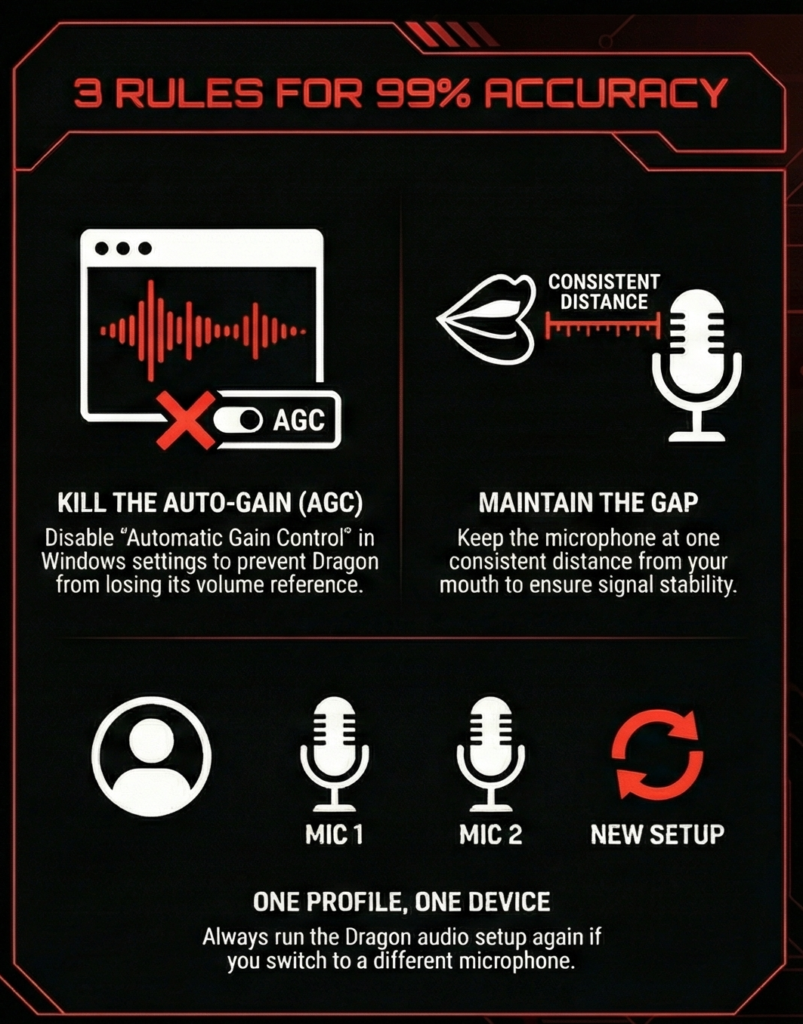
Follow these rules too.
- Keep the mic one consistent distance from your mouth
- Run Dragon audio setup after every mic change
- Disable operating system noise suppression
- Disable automatic gain control
- Use one microphone profile per device
I once ignored the OS audio setting step.
Dragon accuracy dropped overnight.
Fixing one checkbox restored it.
Dragon does not adapt well to chaos.
Feed it clean signals.
It rewards you.
Common Dragon microphone mistakes that kill accuracy
These mistakes show up daily on forums.
- Switching microphones between sessions
- Dictating while turning your head
- Using webcam microphones
- Mixing headset and handheld profiles
- Ignoring soundcard quality
One Reddit user described Dragon as broken.
They were switching between AirPods and a USB mic.
Dragon behaved exactly as expected.
Consistency wins every time.
Who should not upgrade their Dragon microphone
Upgrading is not always smart.
If your current mic gives high accuracy.
If your Dragon version is stable.
If your workflow feels smooth.
Stay put.
Many PowerMic III users upgraded and lost compatibility.
They went back.
Newer hardware helps only when it matches your Dragon version and environment.
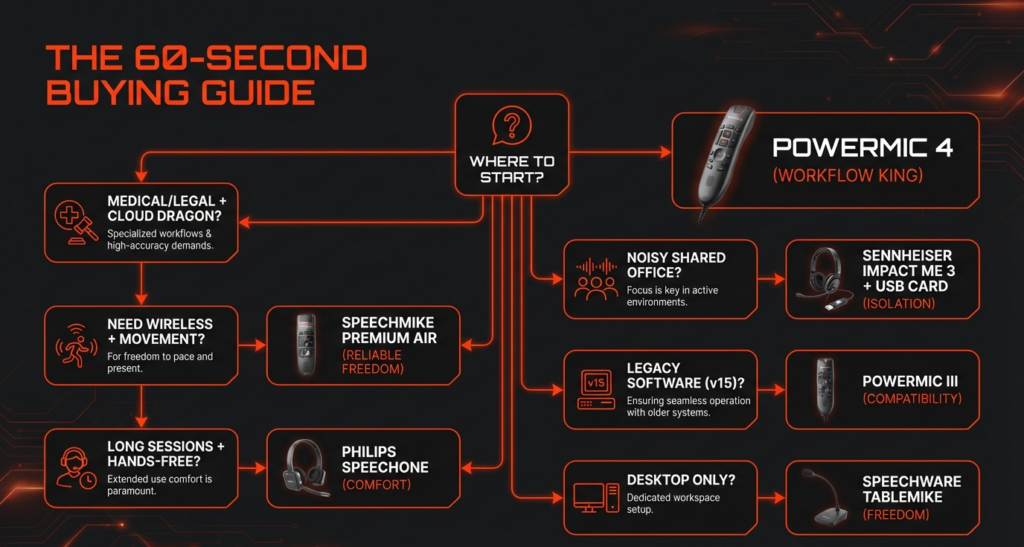
Buying checklist: choose the right Dragon mic
Use this list.
- Dragon version cloud or local
- Noise level low or high
- Dictation length short or long
- Need for buttons yes or no
- Need for hands free yes or no
Answer honestly.
Your best mic becomes obvious.
Did You Know
- Dragon will work with any mic that records 16 kHz 16-bit mono audio — but only certified devices get the best recognition.
- Built-in laptop microphones sometimes work but give much lower accuracy than purpose-built dictation hardware.
Frequently asked questions
What microphone gives the highest Dragon accuracy overall
Sennheiser Impact ME 3 II with a good USB soundcard
This combo wins in noisy environments.
Is Nuance PowerMic 4 worth it
Yes for Dragon Medical One and v16 users
Buttons save time daily.
Can I use Bluetooth headphones with Dragon
No for professional use
Bluetooth causes compression and drift.
Why does Dragon accuracy drop after switching microphones
Profiles mismatch
Re run audio setup every time.
Is a USB soundcard necessary
Yes for analog headsets
Bad soundcards ruin good microphones.
How long do professional Dragon microphones last
Five to ten years
Build quality stays high.
Can one microphone work for Dragon and Zoom
Sometimes
Headsets handle this better than handhelds.
At the end of the day, Selecting the right Mic matters. So select wisely
As an Amazon Associate I earn from qualifying purchases. There are some affiliate links on this page that will redirect you directly to the original products and services. Also by buying through those links you will be supporting us. So thank you ^.^
Related Posts
- Best microphones for recording vocals
- Best iPhone Microphone for Video
- Best USB Microphone Models Under $150
- Large Diaphragm Condenser Microphone: Top 10 in the Market
- Parabolic Microphone
- Blue Yeti Microphone Review: Hidden Truth
- Maono Microphone Review
- Ribbon Microphone: The Top 10 in the Market
- Best Under $100 Condenser Mic
- Best of the Most Expensive Microphones to Buy
- Best Cardioid Dynamic Microphone
- Different Types of Microphones and Their Features