The sE Electronics sE8 pair costs less than a single Neumann KM 184, and both list the same 13 dB-A self-noise. 🎤
That is why this is a good buyer’s guide to read before you spend.
This guide compares 7 of the best small diaphragm condenser mics using manufacturer specs and current retailer prices, then tells you which one fits your sound source.
One note on fit.
These mics are mostly used on instruments like acoustic guitar, piano and drum overheads.
If you record voice for podcasts or streams, our dynamic vs condenser mic guide is the better starting point.
Quick picks
| Mic | Best for | Self-noise | Max SPL | Typical price |
|---|---|---|---|---|
| Neumann KM 184 | Acoustic guitar and strings | 13 dB-A | 138 dB | $899 each at Sweetwater |
| Shure SM81-LC | Flat, accurate pickup | 16 dB-A | 136 dB, 146 dB with pad | $439 at B&H |
| AKG C451 B | Cymbals and overheads | 18 dB-A | 135 dB, 155 dB with pad | $749 each at AKG |
| Rode NT5 | Budget stereo pair | 16 dB-A | 143 dB | About $400 per pair |
| sE Electronics sE8 | Low noise and value | 13 dB-A | 139 dB, 159 dB with pad | About $499 to $569 per pair |
| Schoeps CMC 6 with MK 4 | Top tier accuracy | 14 dB-A | 131 dB | $2,142 for a mono set at Full Compass |
| Audio-Technica AT4051b | Neutral all rounder | 16 dB SPL | 145 dB, 155 dB with pad | $769 at Audio-Technica |
Some retailer pages list different noise figures for the KM 184 and the Schoeps.
This page uses the manufacturer’s numbers.
Affiliate links below. As an Amazon Associate I earn from qualifying purchases.
What is the best small diaphragm condenser mic
It depends on your budget and your sound source.
- Best value pair is the sE8
- Lowest cost stereo pair is the Rode NT5
- Reference pick for acoustic instruments is the Neumann KM 184
- Best for cymbals is the AKG C451 B
- Top tier budget is the Schoeps CMC 6 with MK 4
Did You Know
At 13 dB-A, the Neumann KM 184 and the sE8 have the lowest self-noise figures in this list, yet a pair of sE8s costs less than one KM 184.
Why do small diaphragm condensers matter
Small diaphragm condensers, or SDCs, are built for fast transients and detailed highs.
Their small capsule responds quickly to sharp sounds like picked strings and cymbals.
Most are cardioid, so they favor the source in front of them.
That detail also means they reveal room problems.
An untreated room will show up in the recording.
What should you look for before buying one
- Self-noise. Lower is better for quiet sources. Figures here run from 13 to 18 dB
- Max SPL and pads. Loud sources like drums need headroom, and several mics here add a pad for up to 155 or 159 dB
- Sensitivity. Lower output mics need more preamp gain, which can add noise
- Frequency character. Some are flat, and some add a lift on purpose
- Price. A matched pair of budget mics can cost less than one premium mic
Every mic here needs phantom power.
Our phantom power guide explains the basics.
Which small diaphragm condenser is right for you
Match the mic to your source, your room and your budget.
Neumann KM 184 for natural acoustic recordings
The Neumann KM 184 is a cardioid SDC with a 20 Hz to 20 kHz range, 13 dB-A self-noise and a 138 dB max SPL, according to Neumann.
Neumann describes a uniform cardioid pattern without off-axis coloration, a slight treble lift, and use everywhere from classical piano to heavy metal drums.
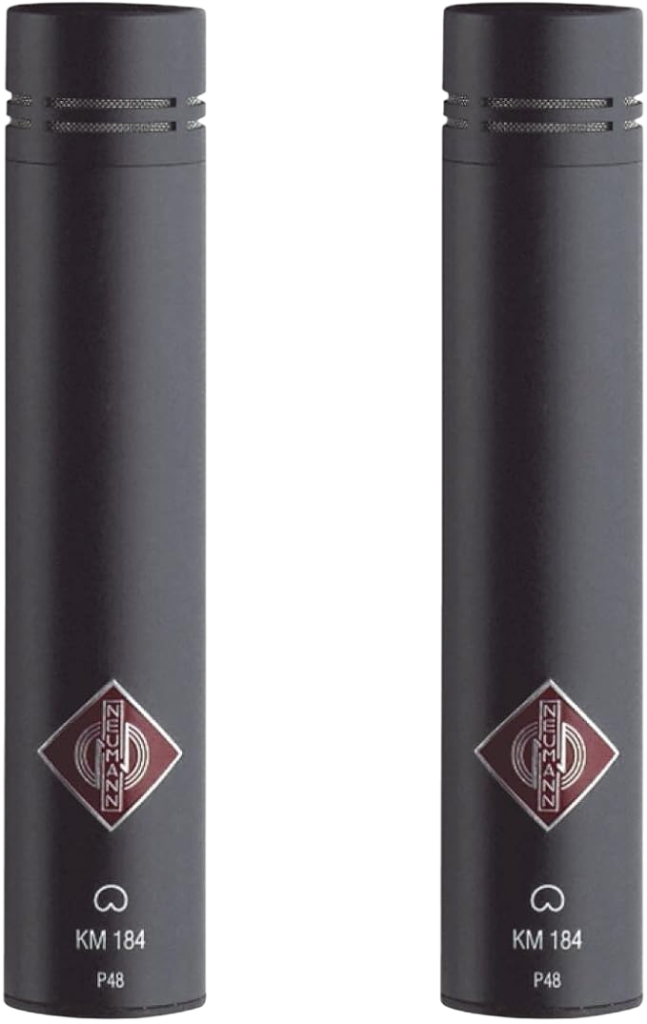
Sweetwater lists it at $899 each.
The price is the main barrier.
Shure SM81 for flat and accurate pickup
The Shure SM81-LC has a flat 20 Hz to 20 kHz response, a cardioid pattern and 16 dB-A self-noise, per Shure’s spec.
Its max SPL is 136 dB, rising to 146 dB with the 10 dB attenuator.
A three position switch gives flat, 6 dB per octave below 100 Hz or 18 dB per octave below 80 Hz.

Sensitivity is -45 dBV per pascal, which is on the low side.
Microphone Geeks notes it needs more preamp gain than most.
B&H lists it at $439.
AKG C451 B for bright cymbals and overheads
The AKG C451 B recreates the acoustics of the classic CK 1 capsule from 1969, which has a rising frequency character by design.
It lists 18 dB-A self-noise and a 135 dB max SPL, with 10 and 20 dB pads that raise that to 145 and 155 dB.
A switchable bass filter cuts at 75 or 150 Hz.

SoundRef points out it is a little noisier than the KM 184 at 13 dB-A.
AKG’s US store lists it at $749 each.
That brightness suits cymbals and dense mixes.
On sources that are already bright it may need EQ.
Rode NT5 for a budget stereo pair
The Rode NT5 has a half inch gold sputtered cardioid capsule, 16 dB-A self-noise, a 143 dB max SPL and 12 mV per pascal sensitivity.
The matched pair runs on 24 or 48V phantom power and ships with clips, windscreens and a case.
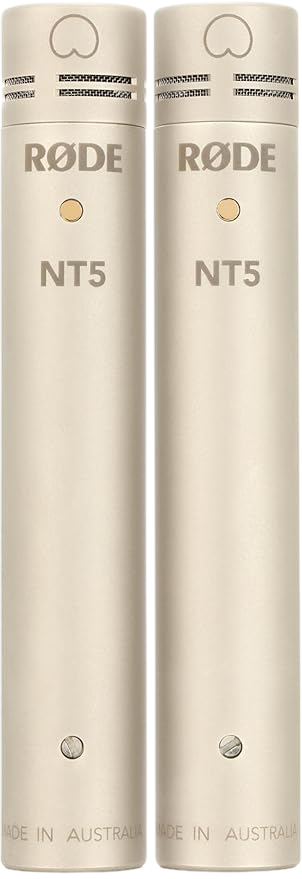
Retailers list the pair at about $400 to $449.
SoundRef calls the 16 dB-A noise respectable and says it heard no hiss while recording guitar.
sE Electronics sE8 for low noise and value
The sE8 lists 13 dB-A self-noise, a 25 mV per pascal output and a max SPL of 139 dB, rising to 159 dB with its 20 dB pad.
It also has 80 and 160 Hz low-cut filters.
The pair comes with a stereo bar, clips and windscreens.
Sound On Sound found a very mild presence lift starting near 5 kHz and peaking a couple of decibels near 8 kHz.
Retailers list pairs from about $499 to $569.
Schoeps CMC 6 with MK 4 for top tier accuracy
The Schoeps CMC 6 with the MK 4 capsule is a modular cardioid system.
Schoeps lists 14 dB-A equivalent noise, 15 mV per pascal sensitivity and a 131 dB max SPL, with the MK 4 as its best selling capsule.
The CMC 6 runs on 12 or 48V phantom power.
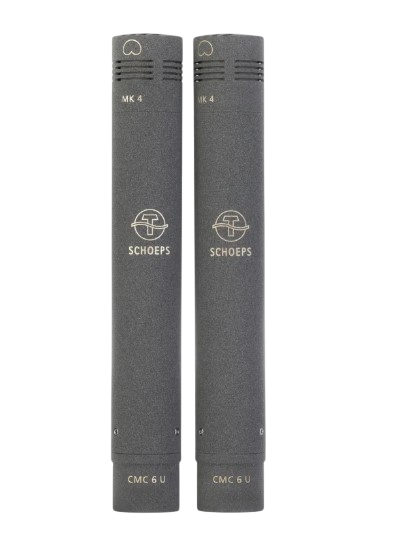
Its 131 dB max SPL is the lowest in this list.
That makes it a better fit for quiet and moderate sources than for close miked loud ones.
Full Compass lists a mono set at $2,142, and Sweetwater lists the stereo set at $3,914.
Audio-Technica AT4051b for a neutral all rounder
The AT4051b pairs an AT4900b-48 body with a cardioid capsule, and omni and hypercardioid capsules are sold separately.
Audio-Technica lists 16 dB SPL self-noise, 19.9 mV per pascal sensitivity, a 145 dB max SPL that reaches 155 dB with the 10 dB pad, and an 80 Hz high-pass filter.
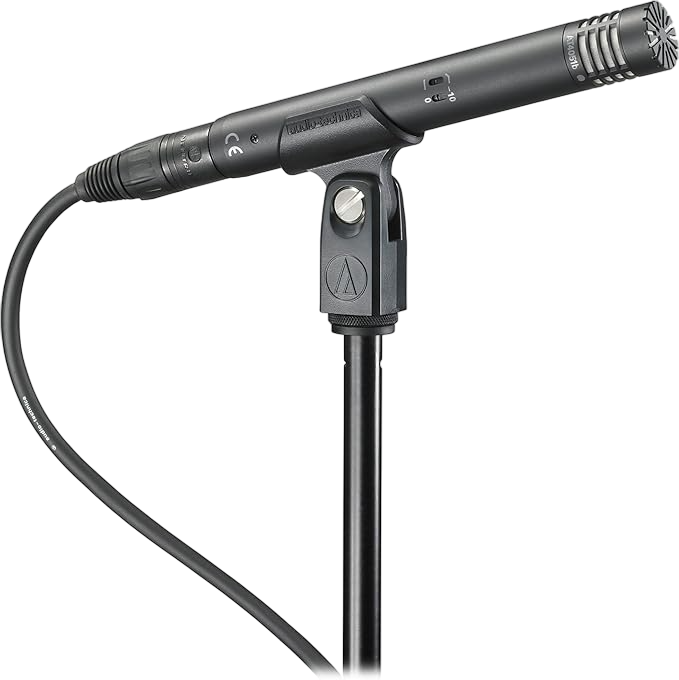
Audio-Technica lists it at $769.
According to Recording Hacks, the b revision cut noise from 19 to 16 dB, added the pad and flattened the highs compared with the older 4051a.
How do these mics compare
Here is how the numbers line up.
- Quietest on paper are the KM 184 and sE8 at 13 dB-A, then the Schoeps at 14
- The SM81, NT5 and AT4051b sit at 16, and the C451 B is at 18
- Most headroom with pads is the sE8 at 159 dB, then the C451 B and AT4051b at 155 dB
- Least headroom is the Schoeps at 131 dB
Numbers do not tell you how a mic sounds on your source.
Ask what you record most, then pick the mic that fits it.
Should you buy one mic or a stereo pair
If you record piano, drum overheads, choirs or ensembles, plan on a pair.
Stereo techniques such as XY and ORTF use two matched mics, and a matched pair keeps the left and right channels consistent.
The NT5 and sE8 ship as pairs.
If you must start with one mic, buy one that you can pair later, and do not mix two different models for stereo.
My final verdict
My take is simple.
Buy the sE8 pair if you want the best value, with low noise and plenty of headroom.
Buy the Rode NT5 pair if cost matters most.
Buy the KM 184 for a trusted reference mic, the C451 B for cymbals and the SM81 for flat and rugged pickup.
The Schoeps is for professional budgets and quiet sources.
This guide uses published specs and retailer prices, not my own test recordings.
Frequently asked questions
Do small diaphragm condensers need phantom power
Yes.
Every mic here needs phantom power, and the NT5, SM81 and CMC 6 also accept lower voltages.
Which small diaphragm condenser has the lowest self-noise
The Neumann KM 184 and the sE8 both list 13 dB-A, ahead of the Schoeps at 14.
What is the cheapest good small diaphragm condenser pair
The Rode NT5 pair at about $400.
The sE8 pair costs a little more and lists lower noise and more headroom.
Can I use a small diaphragm condenser for vocals
You can, but they are mostly used on instruments.
Large diaphragm condensers and dynamic mics are the usual vocal choices, so compare them in our large diaphragm condenser guide.
Do I need a matched pair for stereo
It is the safer choice.
Matched mics give consistent levels and tone across both channels.
As an Amazon Associate I earn from qualifying purchases. There are some affiliate links on this page that will redirect you directly to the original products and services. Also by buying through those links you will be supporting us. So thank you ^.^