The best headphones for audio mixing are not always the headphones that sound the most exciting.
That matters because a headphone can make your bass feel huge, your vocals sound silky, and your treble feel detailed while quietly pushing your mix in the wrong direction.
For mixing, you want headphones that give you reliable information.
You need to hear muddy low mids, harsh vocals, excessive sibilance, weak bass, uneven compression, stereo problems, and reverb without the headphone hiding or exaggerating those issues.
For most people working in a quiet room, open back headphones are the best starting point for audio mixing. They usually provide a more spacious presentation and work well for critical listening. Closed back headphones make more sense when you need isolation or record vocals and instruments.
But there is another part of the equation that matters even more.
You need to learn what your headphones are telling you.
I have found that a familiar $150 headphone can be more useful than an unfamiliar $500 model when you already know how your mixes translate from it.
That is why this guide focuses on the actual mixing decisions each headphone helps you make, not simply its specifications.
Are open back headphones really better for mixing
For most people, yes.
Especially if you mix in a quiet room.
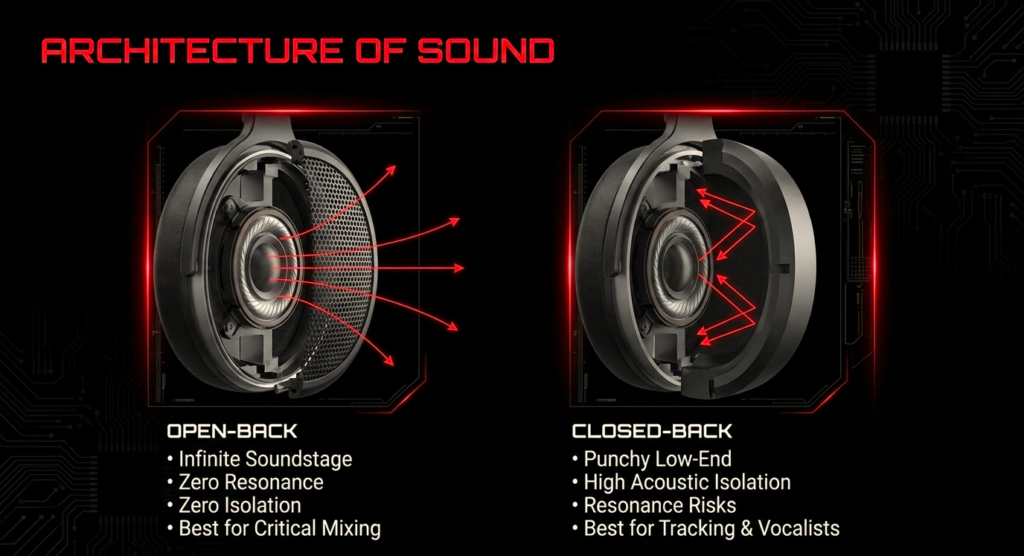
Open back headphones allow air to move more freely around the driver and generally produce a more open presentation. Current studio headphone testing also tends to favor open back designs for critical mixing and mastering work.
But open back headphones have one major weakness.
They leak sound.
That creates problems if you are recording a singer with a microphone sitting close to the headphones.
The headphone signal can leak into the microphone.
They also provide very little isolation from your surroundings.
So the right question is not simply whether open back headphones sound better.
The better question is
What are you doing with them?
Open back headphones
Open back headphones are excellent when mixing is the main job.
You get a spacious presentation and you do not feel as physically enclosed by the headphone.
That can make long sessions more comfortable for some people.
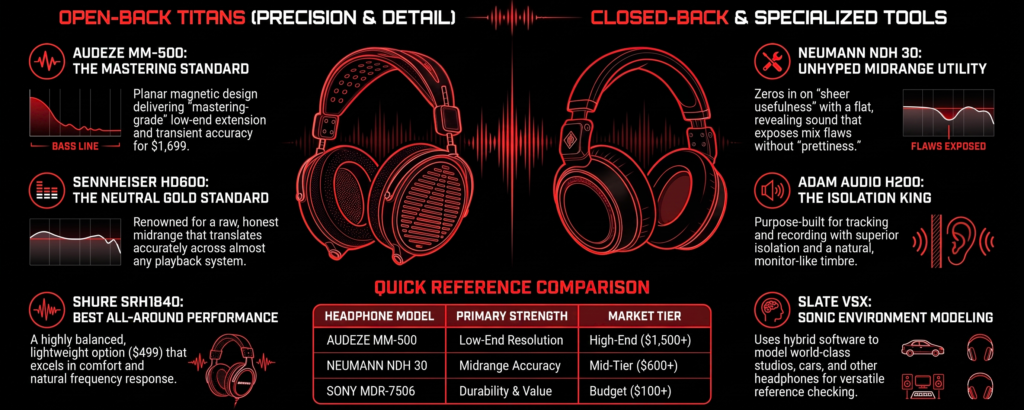
Models such as the Sennheiser HD 490 PRO, Sennheiser HD 600, Beyerdynamic DT 900 PRO X and Neumann NDH 30 fit naturally into this category.
The downside is obvious.
Anyone sitting near you can hear what you are playing.
Your microphone can hear it too.
That makes open backs a poor choice for vocal tracking.
Closed back headphones
Closed back headphones seal the driver inside the ear cup.
That gives you isolation.
If you record vocals, podcasts or acoustic instruments, this can be extremely useful.
You can send the performer a monitor mix without leaking a large amount of sound into the microphone.
Closed backs also make more sense if you work in a noisy room.
The tradeoff comes during mixing.
The enclosed presentation can feel less natural, and some closed back models have stronger tonal coloration.
That does not make them bad mixing headphones.
It simply means you need to know what you are hearing.
The AKG K371 and Sony MDR-7506 are good examples of closed back headphones that can serve useful studio roles.
Semi open headphones
Semi open headphones sit somewhere between the two designs.
They can provide some of the openness associated with open back headphones while retaining more isolation than a fully open design.
Treat the label carefully, though.
“semi open” does not automatically mean better for mixing.
Look at the actual frequency response, imaging, comfort and intended use of the specific model.
What are the best headphones for audio mixing
Now we can get to the headphones.
I would not rank them purely from first to last.
Different headphones solve different problems.
A headphone that makes sense for a professional mixing engineer may be a terrible purchase for someone who records vocals in a bedroom.
Sennheiser HD 490 PRO
The Sennheiser HD 490 PRO is one of the strongest choices if mixing is your primary goal.
It uses an open back design and was built specifically with production work in mind.
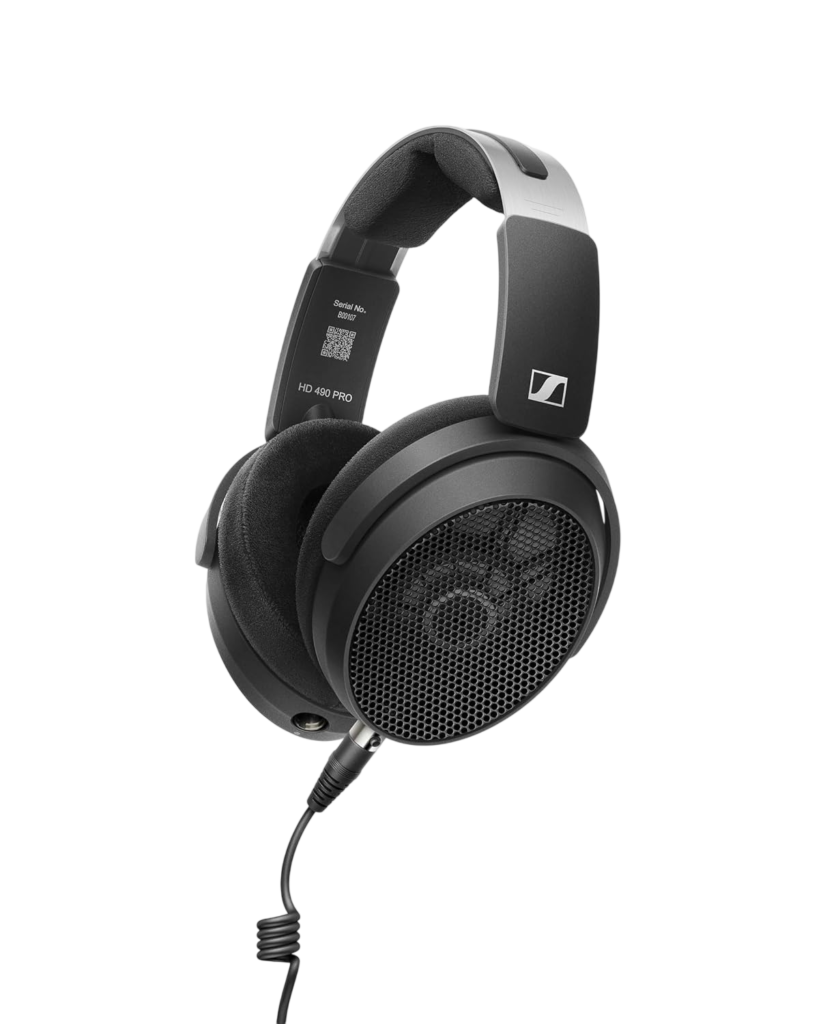
The biggest advantage is its balanced presentation.
It gives you enough low end to make useful bass decisions while keeping the midrange clear enough for vocals and instruments.
RTINGS currently rates it highly for studio use and describes its sound as well balanced for mixing and mastering.
It also comes with two different ear pad options.
That is useful because you can slightly change the way the headphone presents your mix depending on the pads you use.
Comfort is another major factor here.
Mixing can involve hours of listening.
A headphone that sounds excellent but becomes uncomfortable after 45 minutes can become a frustrating tool.
The HD 490 PRO makes a strong case for itself as a primary mixing headphone rather than simply a studio accessory.
Its biggest drawback is price.
If you are just starting out, you can get a very capable mixing setup for less.
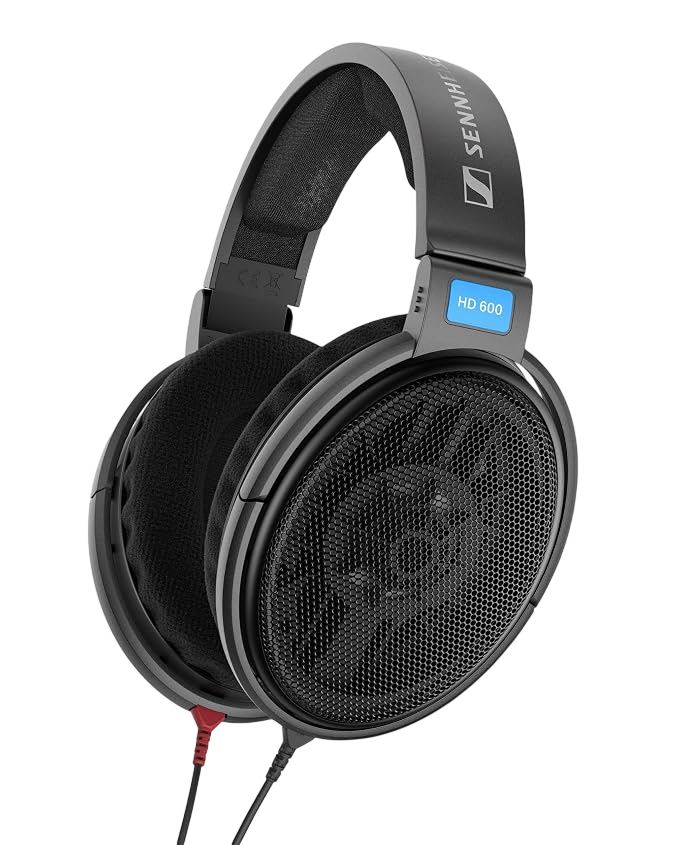
Sennheiser HD 600
The Sennheiser HD 600 is the classic reference choice.
It has been around for decades, yet engineers still use it for critical listening.
That longevity tells you something important.
Audio equipment does not become useless simply because newer products arrive.
The HD 600 is especially useful for the midrange.
Vocals, guitars and other important elements are easy to evaluate.
That makes it particularly attractive for vocal-heavy music.
Its main weakness is the low end.
Do not buy an HD 600 expecting enormous sub bass.
You will want to cross-check the deepest frequencies elsewhere.
This limitation can actually be useful if you understand it.
You learn how the headphone behaves, then compensate through experience and reference checking.
One Reddit discussion from audio engineers illustrates exactly this point, with users discussing the HD 600 as a serious mixing reference despite its limitations in the low end.
That is the real value of a familiar reference.
You stop asking whether the headphone sounds good and start asking what its sound means.
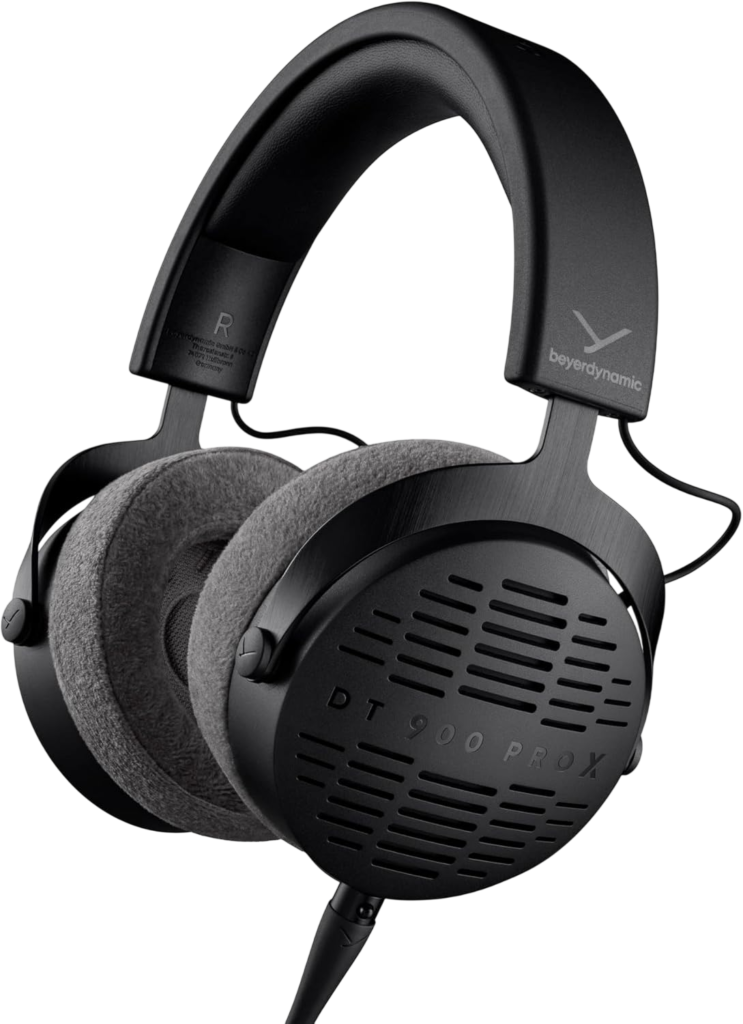
Beyerdynamic DT 900 PRO X
The Beyerdynamic DT 900 PRO X is another strong open back choice for a home studio.
It gives you a detailed presentation without requiring an unusually complicated setup.
That matters for beginners.
You do not want your first serious mixing headphone to force you into buying several other pieces of equipment just to use it properly.
The DT 900 PRO X also offers good imaging.
That makes it useful when you are working with panning, reverbs and stereo effects.
Its tonal character will not suit everyone.
As with every headphone, you should spend enough time with it to learn its particular strengths before trusting it for final EQ decisions.
Neumann NDH 30
The Neumann NDH 30 sits in a more expensive category.
It targets engineers who want a serious reference headphone for mixing and mastering.
Its main appeal is not flashy sound.
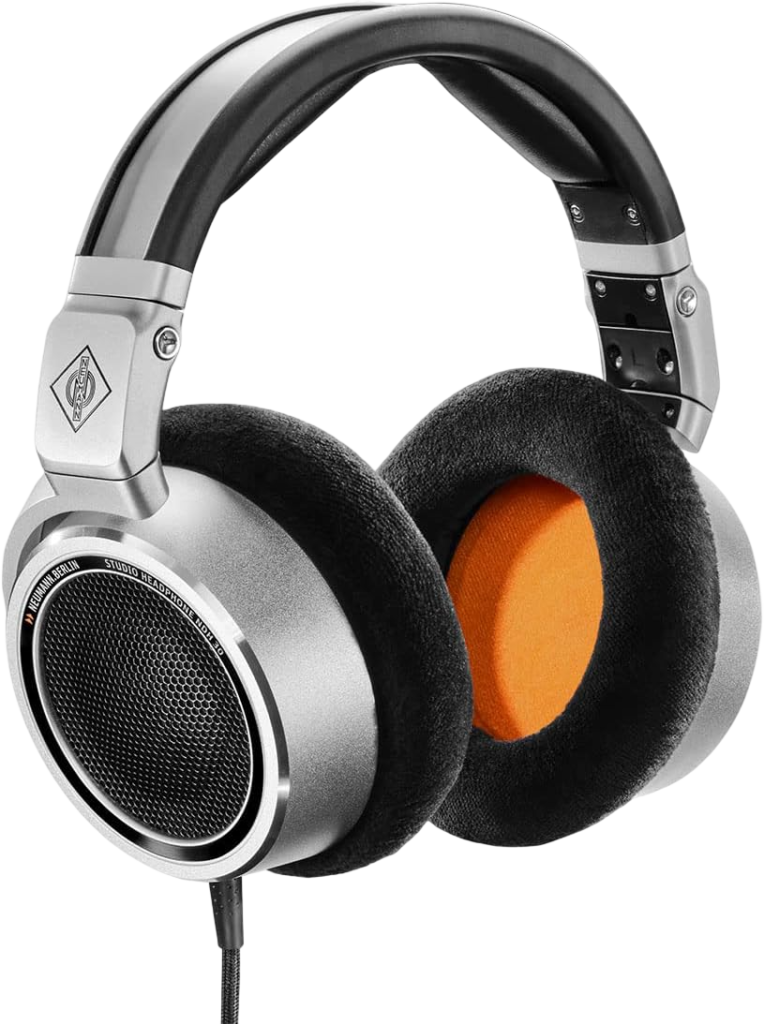
It focuses on a controlled, analytical presentation and accurate stereo information.
That makes it particularly interesting for experienced mixers.
The important question is whether you actually need to spend this much.
If you are still learning basic EQ, compression and gain staging, upgrading from a $150 headphone to a $500-plus headphone will not suddenly fix your mixes.
Your monitoring technique matters first.
Your room matters.
Your ears matter.
Your workflow matters.
The expensive headphone becomes easier to justify when you already understand the limitations of your current monitoring system.
Audeze MM-100
The Audeze MM-100 takes a different approach.
It uses a planar magnetic driver.
Planar headphones can offer excellent detail and controlled low frequency reproduction.
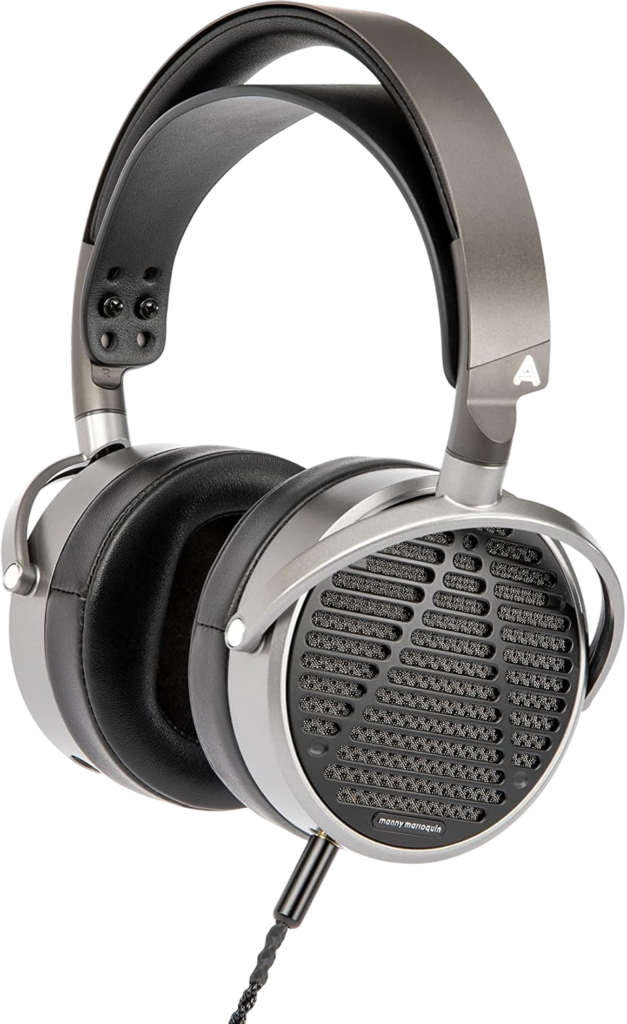
That makes the MM-100 interesting for engineers who want to inspect small details in a mix.
There is one tradeoff worth considering.
Planar headphones can be heavier than many conventional dynamic headphones.
If you mix for several hours, comfort becomes part of the technical specification.
That sounds like a minor detail.
It is not.
Ear fatigue and physical discomfort can change how carefully you listen.
A headphone you cannot comfortably wear for a full session loses some of its value as a mixing tool.
Beyerdynamic DT 990 PRO
The Beyerdynamic DT 990 PRO is one of the popular budget open back options.
It gives you a spacious presentation and plenty of detail.
That makes it useful for hearing small elements in a dense arrangement.
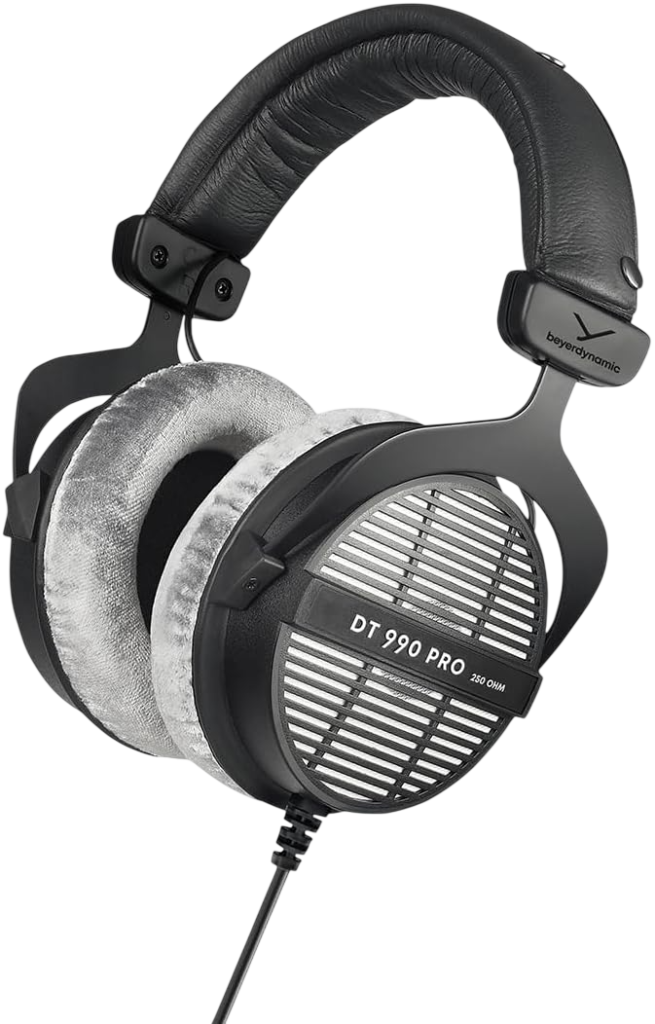
The catch is its treble character.
If you are sensitive to bright headphones, you may find yourself reacting too strongly to high frequencies.
That can lead to overly dark mixes if you compensate incorrectly.
The DT 990 PRO can still work very well.
You simply need to learn its personality.
This is a recurring theme with mixing headphones.
Knowing the headphone is part of the headphone.
Sony MDR-7506
The Sony MDR-7506 has become a studio classic for a reason.
It is closed back.
It isolates reasonably well.
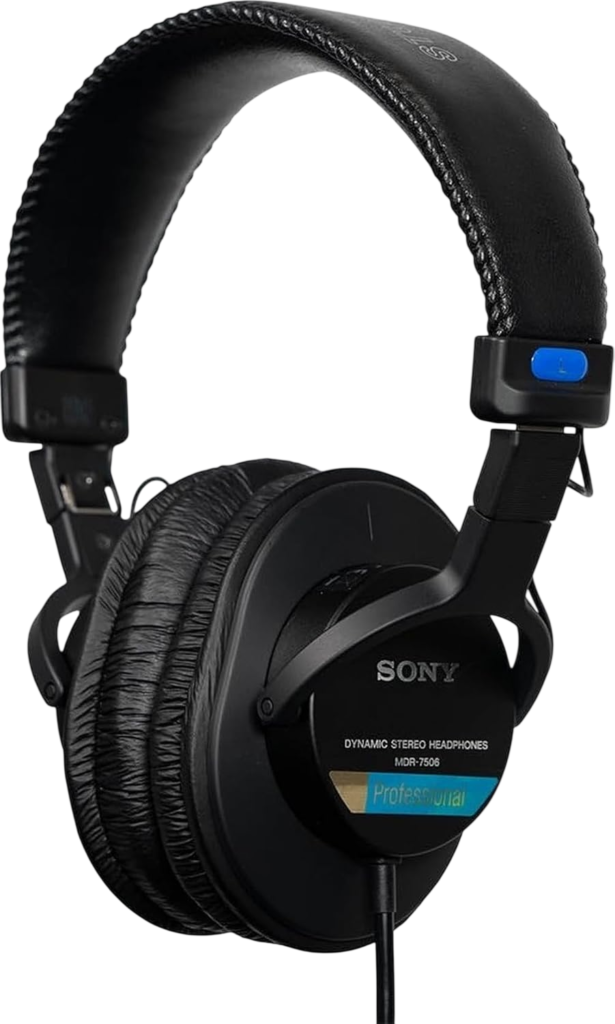
It is relatively affordable.
And engineers have used it for decades.
That makes it especially useful for tracking and checking details.
Its bright presentation can expose things such as clicks, sibilance and unwanted noise.
But I would not recommend using it as your only mixing reference without learning its tonal behavior.
It works especially well as a second reference.
If your mix sounds balanced on your primary open back headphone and still makes sense through the MDR-7506, you have another useful piece of information.
AKG K371
The AKG K371 is a compelling choice for someone who needs closed back headphones without moving into expensive territory.
Its tonal balance makes it more useful for critical work than many consumer headphones.
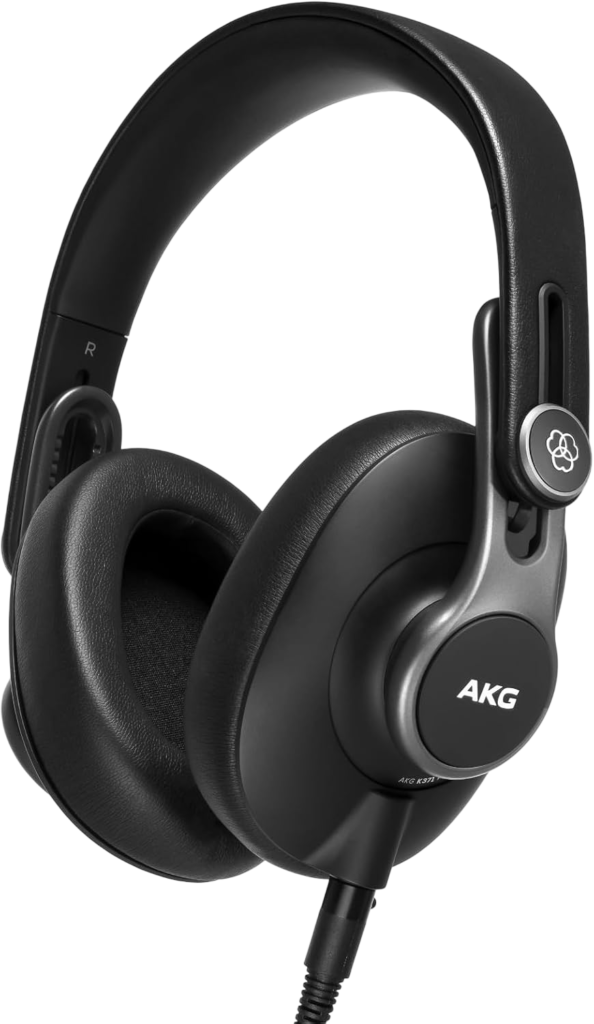
It also works well for tracking.
That combination makes it attractive for home studios where one headphone needs to perform several jobs.
You can use it for recording.
You can use it for editing.
You can use it for mixing.
You just need to remember that closed back headphones can present stereo space differently from open back models.
Audio Technica ATH-M50x
The Audio Technica ATH-M50x is probably one of the most recognizable studio headphones in this price range.
It is durable.
It folds.
It isolates.
It works well for tracking and general production.
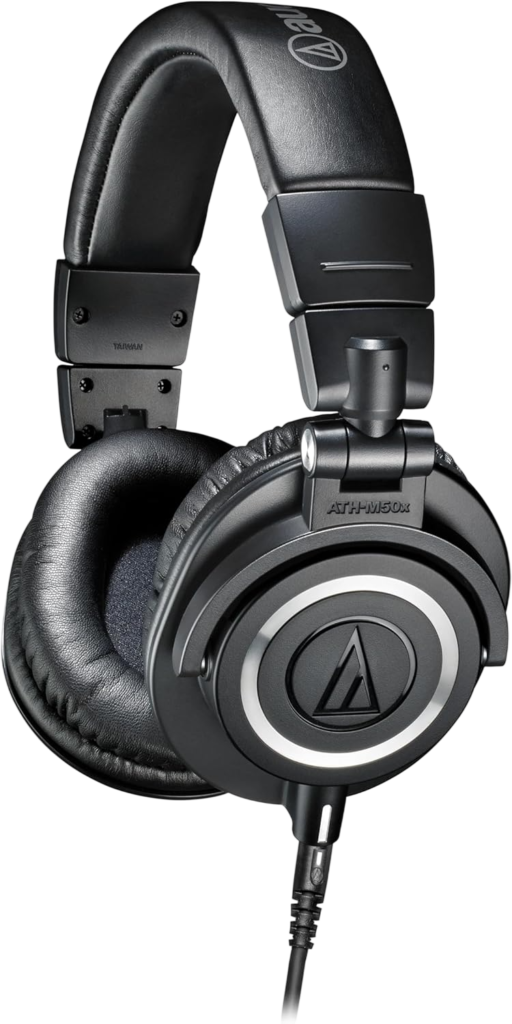
That popularity sometimes creates an expectation that it must also be the best headphone for mixing.
It is not that simple.
The M50x can absolutely be used for mixing.
But I would treat it as an all purpose studio headphone rather than automatically calling it the best critical mixing reference.
That distinction matters.
Popular does not mean neutral.
Which headphones are best for mixing vocals
If vocals dominate your music, prioritize midrange clarity.
You need to hear whether the vocal sits naturally between the instruments.
You also need to catch sibilance.
A singer can sound smooth on one headphone and painfully bright on another.
You need to hear that before publishing the mix.
For this reason, the Sennheiser HD 600 remains a particularly interesting choice for vocal mixing.
The HD 490 PRO and DT 900 PRO X are also strong options if you want a more spacious open back presentation.
If you need isolation while recording the vocalist, switch to a closed back model such as the MDR-7506 or K371.
A useful workflow is to record with closed backs and mix with open backs.
You do not need to force one headphone to perform every job.
Which headphones are best for mixing bass and sub bass
This is where headphone-only mixing becomes tricky.
Your kick and bass need to work together.
The fundamental frequencies can overlap heavily.
You might have a kick centered around one area and a bass synth occupying another.
If the headphone exaggerates one of those regions, your judgment changes.
Start by checking the relationship rather than chasing an exact frequency.
Ask
Can I clearly distinguish the kick from the bass?
Then ask
Does the low end remain controlled when I reduce the volume?
Then check the spectrum.
Finally, listen on another system.
This workflow is far more reliable than assuming that the headphone with the deepest bass will produce the best bass mixes.
For serious low end work, I would always use at least one additional reference.
Which headphones are best for mixing and mastering
Mastering requires an even more disciplined approach.
You are making smaller changes.
A tiny EQ adjustment can affect the entire track.
That makes tonal consistency especially important.
The strongest candidates from this list include the Sennheiser HD 490 PRO, Neumann NDH 30, Sennheiser HD 600 and Audeze MM-100.
But there is no universal mastering headphone.
A mastering engineer should know the monitoring system extremely well.
That familiarity allows small changes to become meaningful.
If you constantly switch between headphones, you keep changing your reference point.
That can make you less confident rather than more accurate.
How much should you spend on mixing headphones
You do not need to spend $500 to start mixing seriously.
A reasonable way to think about the budget is this
| Budget | What you can expect |
|---|---|
| Under $100 | Basic monitoring, tracking and learning |
| $100 to $200 | Strong home studio options |
| $200 to $400 | Serious mixing headphones |
| $400 to $700 | Premium reference monitoring |
| $700+ | Specialist high end monitoring |
The sweet spot for many home producers sits somewhere around $150 to $400.
That gives you access to headphones that can provide a reliable reference without turning your monitoring system into your largest studio expense.
Remember one thing before spending more.
A $500 headphone cannot teach you how to mix.
It can only give you information.
You still need to know what to do with that information.
Do you need a headphone amplifier for mixing
This question comes up often when people start looking at studio headphones.
You see a headphone with a 250 ohm or 300 ohm impedance rating and immediately wonder whether your audio interface can drive it.
The answer depends on more than impedance.
Impedance and sensitivity both matter.
Your audio interface also matters because different headphone outputs can provide different amounts of voltage and current.
If your headphones reach your normal listening level comfortably and still have enough headroom, you probably do not need another amplifier just because the headphone has a high impedance rating.
For example, the Sennheiser HD 600 has traditionally been paired with headphone amplifiers because of its 300 ohm impedance.
But that does not mean every HD 600 owner needs to immediately buy an amplifier.
Test your actual setup first.
Turn your interface to a sensible monitoring level.
Listen for whether you have enough volume without pushing the output close to its maximum.
If you can comfortably reach your preferred level with clean playback, the amplifier should not become your first upgrade.
Your money may be better spent on better monitoring, room treatment, acoustic problems or simply more time learning your headphones.
Can you mix professionally using headphones
Yes.
But you need a reliable workflow.
Headphones remove some of the problems associated with an untreated room.
That can make them particularly useful for producers working in bedrooms, apartments and temporary recording spaces.
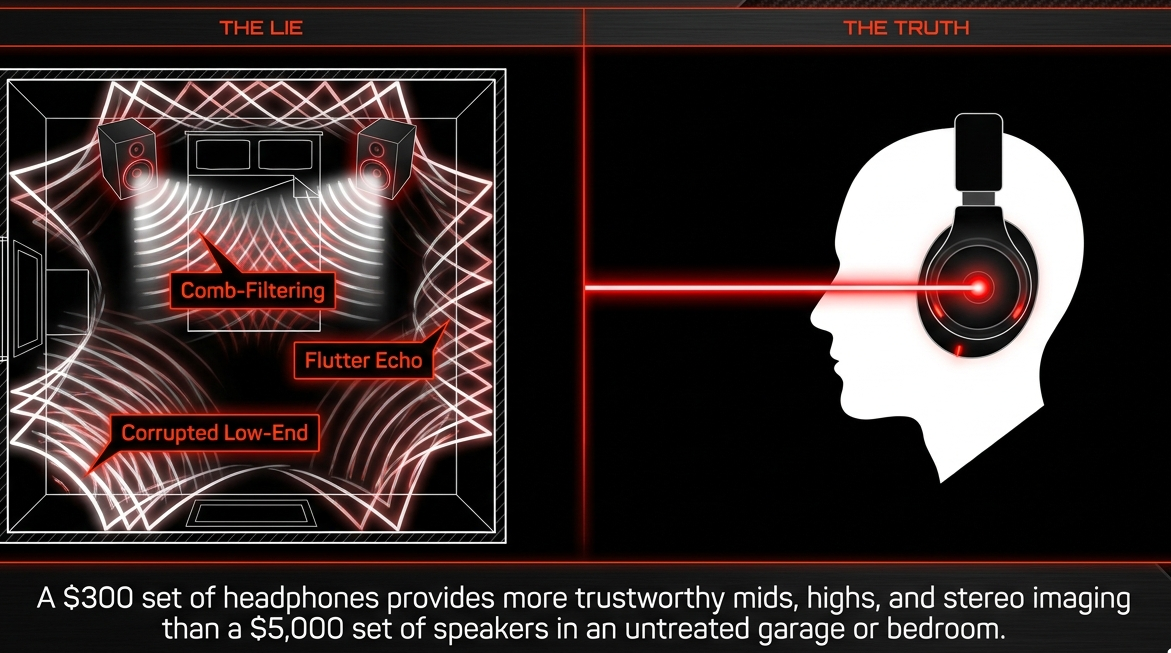
At the same time, headphones create their own problems.
Stereo information can feel different.
Bass can be harder to judge.
Your left and right ears receive isolated channels in a way that does not happen with normal speaker listening.
That is why professional headphone mixing usually involves cross-checking.
You might make your main decisions on your open back headphones.
Then you check the mix on speakers.
Then earbuds.
Then a phone or laptop.
You are not looking for every system to sound identical.
You are looking for serious problems that survive across systems.
If the vocal disappears on your phone, investigate it.
If the bass becomes overwhelming everywhere except your main headphones, investigate it.
If the mix sounds balanced on five systems, you have much more confidence in the result.
How to make headphones more reliable for mixing
Buying a good headphone is only the beginning.
Your listening process determines how useful that headphone becomes.
Use reference tracks
Reference tracks give your ears something familiar to compare against.
Choose professionally released songs that are close to your own project.
Match the genre when possible.
If you are mixing a modern pop track, use modern pop references.
If you are mixing acoustic folk, use acoustic references.
You want comparable arrangements, instrumentation and low frequency content.
Do not simply pick your favorite song.
Pick a song that answers the questions you are currently struggling with.
If your vocal sounds too bright, choose a reference with a vocal tone you trust.
If your kick and bass feel confusing, choose a reference with a similar low end.
This turns reference tracks into a diagnostic tool.
Match playback levels
Louder often sounds better.
That is a problem.
If your mix is louder than the reference, you may unconsciously prefer it even when the balance is worse.
Keep your comparisons reasonably close in loudness.
This is especially important when evaluating headphones.
A louder headphone can appear more detailed and powerful simply because it is louder.
Give your ears a fair comparison.
Check your mix in mono
Mono is brutally useful.
Collapse your mix and listen.
You may suddenly notice that a guitar disappears.
A stereo effect may become much quieter.
The vocal might become too dominant.
A synth may lose important information because of phase interaction.
You do not need to mix your entire song in mono.
Use mono as a diagnostic check.
Check at low volume
Turn the volume down.
Really down.
At low levels, you can often hear whether the vocal still sits correctly against the instruments.
You can also notice whether the kick and bass have become too dominant.
If your mix only sounds exciting when you turn it up, something may be wrong.
Do not use extreme volume as a substitute for balance.
Use multiple playback systems
You do not need five pairs of expensive headphones.
A simple reference chain can look like this
Primary mixing headphones → second reference → speakers → earbuds → everyday device
Each system gives you another perspective.
Your main headphones help you make detailed decisions.
Your second reference challenges those decisions.
Speakers show you how the mix behaves in a more natural room based environment.
Earbuds tell you whether the arrangement still works on everyday listening equipment.
Your phone or laptop can reveal whether the vocal and important midrange elements survive poor playback conditions.
The goal is not perfection on every device.
The goal is translation.
Should you use headphone calibration for mixing
Headphone calibration can be useful.
It attempts to compensate for the headphone’s frequency response so that you get a more predictable monitoring curve.
This can be particularly useful when you already have a headphone you like but want a more standardized reference.
But calibration does not magically turn an inexpensive headphone into a perfect mastering system.
It cannot completely solve every issue involving
- Imaging
- Distortion
- Driver behavior
- Fit
- Ear shape
- Stereo perception
- Comfort
Think of calibration as another tool.
Use it if it improves your workflow.
Do not buy calibration software simply because you assume it will make every headphone accurate.
What headphones should you avoid for mixing
I would not create a blacklist of specific headphones.
A headphone that works badly for one engineer may work perfectly well for another after years of familiarity.
Instead, watch for certain characteristics.
Be cautious with headphones that have
- Extremely boosted bass
- Very aggressive treble
- Strong V shaped tuning
- Excessive distortion
- Poor channel matching
- Uncomfortable ear pads
- Excessive clamping force
- Unpredictable wireless processing
- Heavy noise cancellation processing that cannot be bypassed
Consumer headphones are not automatically bad.
You can absolutely use your favorite consumer headphones as a translation check.
In fact, you should.
The mistake happens when you use a heavily colored headphone as your only critical reference and assume its sound represents reality.
Why your favorite sounding headphones may be bad for mixing
This might be the most important idea in the entire article.
A headphone that sounds amazing can still be a poor mixing reference.
Think about your favorite pair of headphones.
Maybe it gives you massive bass.
Maybe the vocals sound warm.
Maybe cymbals sparkle.
Maybe everything feels wide and cinematic.
That is excellent for enjoyment.
Mixing requires something different.
You need to know whether the bass is actually balanced.
You need to know whether the vocal is too bright.
You need to know whether the stereo field is genuinely wide or simply exaggerated by the headphone.
This creates an important distinction
Pleasant sound is not the same as useful monitoring information.
Imagine your headphones boost the bass.
You mix your song until the bass sounds perfect.
You export the track.
Then you play it through your car.
The bass disappears.
Why?
Because you compensated for what your headphones were doing.
The same thing can happen in reverse.
If your headphones have weak bass, you may add too much.
Now your listeners hear a bloated low end.
This is why experienced mixers learn their monitoring system.
They understand its biases.
They know how a kick should sound through it when the finished mix is actually balanced.
That knowledge becomes more valuable over time.
How to choose the right mixing headphones for your setup
Do not start with a product.
Start with your workflow.
Choose open back if
- You mix in a quiet room
- Mixing is your primary task
- You do not need isolation
- You want a spacious presentation
- You rarely record vocals through the same headphones
The Sennheiser HD 490 PRO, HD 600 and Beyerdynamic DT 900 PRO X are strong places to start.
Choose closed back if
- You record vocals
- You record acoustic instruments
- Your room is noisy
- You need isolation
- You want one headphone for tracking and occasional mixing
The AKG K371 and Sony MDR-7506 make more sense in this situation.
Choose a cheaper reference if
- You are learning to mix
- Your budget is limited
- You already own usable speakers
- You want a second monitoring perspective
You can learn a huge amount with an affordable headphone.
Do not let gear shopping become a substitute for listening practice.
Choose a premium model if
- You mix frequently
- You already understand your current headphones
- You need better long session comfort
- You regularly make critical mixing decisions
- You know exactly what limitation you are trying to solve
That last point matters.
Do not spend $500 because someone says a $500 headphone sounds better.
Spend $500 because you know why you need it.
Best headphones for audio mixing compared
| Headphone | Design | Best use | Biggest strength | Main limitation |
|---|---|---|---|---|
| Sennheiser HD 490 PRO | Open back | Mixing and mastering | Balanced monitoring | Higher price |
| Sennheiser HD 600 | Open back | Vocals and midrange | Excellent reference character | Limited deep bass |
| Beyerdynamic DT 900 PRO X | Open back | Home studio mixing | Detail and imaging | Tonal preference varies |
| Neumann NDH 30 | Open back | Serious mixing | Reference focused presentation | Expensive |
| Audeze MM-100 | Open back | Detailed mixing | Planar detail | Heavier design |
| Beyerdynamic DT 990 PRO | Open back | Budget mixing | Detail and spaciousness | Bright treble |
| AKG K371 | Closed back | Tracking and mixing | Balanced closed back sound | Less open presentation |
| Sony MDR-7506 | Closed back | Tracking and reference | Detail and isolation | Bright upper range |
| Audio Technica ATH-M50x | Closed back | Production and tracking | Versatility | Not my first choice as a sole mix reference |
So which headphones should you actually buy
There is no reason to make this complicated.
If you want one strong open back headphone specifically for mixing, start with the Sennheiser HD 490 PRO.
It gives you a modern studio focused design and enough versatility to handle serious production work.
If your priority is vocals and midrange accuracy, the Sennheiser HD 600 remains an excellent choice.
If you want a modern open back option at a lower price, the Beyerdynamic DT 900 PRO X deserves a serious look.
If you need a closed back headphone for both recording and mixing, the AKG K371 is one of the most sensible options.
If you want an inexpensive studio reference for tracking and checking details, the Sony MDR-7506 remains difficult to ignore.
And if you already own a decent headphone, stop for a second.
You may not need to buy anything.
Spend a week learning its tonal balance.
Mix a few songs.
Compare them against professional references.
Check them on speakers, earbuds and your phone.
You may discover that your current headphone was never the problem.
A simple headphone mixing workflow that actually works
Here is the workflow I would recommend for a home producer.
Step 1
Start your mix on your primary headphones.
Keep the volume moderate.
Do not chase loudness.
Step 2
Balance the vocal and main instruments.
Make sure the important elements work before spending time on tiny details.
Step 3
Check the low end.
Listen to the kick and bass together.
Use a spectrum analyzer if you need additional information.
Step 4
Switch to a reference track.
Compare the overall tonal balance.
Do not copy the reference.
Use it to calibrate your judgment.
Step 5
Turn the volume down.
Ask whether the vocal still feels present.
Ask whether the song still has energy.
Step 6
Check mono.
Look for disappearing instruments and phase problems.
Step 7
Move to another playback system.
Use speakers, another headphone or earbuds.
You are looking for problems that repeat.
Step 8
Fix only consistent problems.
If the bass sounds excessive everywhere except your primary headphones, investigate it.
If only one system produces the problem, learn whether that system has a known tonal bias.
Step 9
Take a break.
Your ears need time away from the mix.
Step 10
Listen again later.
Fresh ears often reveal problems that an expensive headphone cannot.
Did you know
The age of a headphone does not determine whether it can mix well.
The Sennheiser HD 600 and Sony MDR-7506 have been around for years, yet both remain relevant in studio discussions.
That tells you something useful.
Audio production does not work like smartphone shopping.
A new product does not automatically replace an older reference.
Once engineers learn how a headphone behaves, that familiarity becomes part of the tool.
Common mistakes people make when buying mixing headphones
The biggest mistake is buying based on how impressive the headphone sounds.
Another common mistake is assuming that more bass means better monitoring.
Some people also buy an open back headphone and then discover that they cannot use it while recording vocals.
Others spend hundreds of dollars on a headphone before fixing much cheaper problems in their monitoring setup.
Avoid these mistakes
- Buying purely from frequency range specifications
- Choosing the headphone with the biggest bass
- Ignoring treble peaks
- Ignoring comfort
- Buying open backs for noisy environments
- Using one headphone for every decision
- Mixing too loudly
- Never using reference tracks
- Constantly switching between headphones
- Assuming a premium headphone will fix poor mixing technique
- Ignoring translation checks
The best purchase is the one that solves a problem you actually have.
Frequently asked questions
Does a flat frequency response really matter
Yes, but “flat” does not mean the headphone needs to produce a perfectly straight line on a measurement graph.
Your ears and brain do not perceive every frequency equally.
Headphones also interact with the shape of your ears, the fit of the ear pads, and the way the drivers sit around your ears.
What you really want is a predictable tonal balance.
Imagine you are mixing a kick drum.
Your headphones have an exaggerated low end, so the kick already sounds powerful.
You reduce the kick by 2 or 3 dB because it feels too loud.
You move to another system and suddenly the kick sounds weak.
The headphone did not necessarily sound bad.
It simply gave you information that encouraged the wrong decision.
The same thing happens in the opposite direction.
A headphone with weak bass can make you add too much low end.
A headphone with excessive treble can make you remove frequencies that your mix actually needs.
That is why mixing headphones should prioritize accuracy and consistency over excitement.
Why midrange accuracy can matter more than huge bass
The midrange contains an enormous amount of information in a typical mix.
Vocals sit there.
Guitars sit there.
Pianos, snares, synths and much of the character of percussion also live there.
This makes the midrange especially important when you are trying to decide whether instruments are fighting each other.
A vocal might sound perfectly clear on your headphones.
Move to another system and you may discover that the vocal is buried underneath the guitars.
That can happen because your headphones emphasized the vocal’s presence region.
This is one reason the Sennheiser HD 600 has remained popular among engineers.
Its reputation comes largely from its useful midrange presentation rather than from spectacular bass or an enormous soundstage.
The lesson is simple.
A mixing headphone should help you hear the relationships between instruments.
How important is bass accuracy for mixing
Bass creates one of the biggest problems for headphone mixing.
You need to judge the relationship between the kick, bass guitar, synth bass and sub frequencies.
Yet extremely low frequencies can be difficult to judge from headphones alone.
This is where many beginners make the same mistake.
They find headphones with powerful bass and assume they have found the perfect mixing headphone.
Powerful bass and accurate bass are two different things.
A headphone can make 50 Hz feel enormous while giving you a misleading impression of how much energy your mix actually contains.
You should therefore treat your headphones as one part of the monitoring system.
Use a spectrum analyzer when necessary.
Compare against a trusted reference track.
Then check the finished mix on another playback system.
That process gives you much more useful information than simply buying a headphone with the biggest driver or deepest advertised bass response.
Why stereo imaging matters
Mixing is not only about frequency.
You also need to know where sounds sit in the stereo field.
Can you clearly hear the vocal in the center?
Does the guitar actually move toward the left?
Is the reverb spreading naturally?
Does a stereo synth disappear when you switch to mono?
Good imaging makes these decisions easier.
This is one reason open back headphones can be attractive for mixing.
They often create a more spacious presentation than closed back designs.
But do not make the mistake of thinking that wider always means better.
An exaggeratedly wide headphone can make your mix feel wider than it really is.
You might then reduce stereo effects unnecessarily or make your mix too narrow for other systems.
The goal is not maximum width.
The goal is trustworthy width.
Are open back headphones better for audio mixing
Usually.
They are particularly useful in quiet rooms because they tend to provide a more spacious monitoring experience.
Closed back headphones remain useful for recording and noisy environments.
What are the best headphones for mixing music
The Sennheiser HD 490 PRO is one of the strongest all around choices for dedicated mixing.
The Sennheiser HD 600, Beyerdynamic DT 900 PRO X and Neumann NDH 30 are also strong options depending on your budget and preferences.
Are closed back headphones good for mixing
Yes.
They can work well when you need isolation or record vocals.
You should simply understand their tonal and spatial characteristics.
Can I mix using headphones instead of studio monitors
Yes.
Many producers mix successfully on headphones.
You should cross-check the final mix on several playback systems because headphones and speakers present stereo and low frequency information differently.
Are expensive headphones better for mixing
Not automatically.
A more expensive headphone can provide better performance in certain areas, but your familiarity with the monitoring system matters enormously.
Is the Sennheiser HD 600 good for mixing
Yes.
It is particularly useful for midrange and vocal decisions.
Its limited deep bass presentation means you should cross-check sub bass and low frequency decisions elsewhere.
Is the Sony MDR-7506 good for mixing
It can be.
It is particularly useful for tracking, editing and secondary reference checks.
Its tonal character means I would not rely on it blindly as your only mixing reference.
Are Beyerdynamic headphones good for mixing
Yes.
The DT 900 PRO X is a particularly useful open back option.
The DT 990 PRO can also work well, although its treble character may require some adjustment.
Do I need an amplifier for mixing headphones
Not necessarily.
Check whether your audio interface can comfortably drive your chosen headphones to your normal monitoring level.
Impedance alone does not determine whether you need an amplifier.
Should I use EQ calibration on mixing headphones
It can help.
Calibration can make the tonal response more predictable, but it does not eliminate every limitation of the headphone.
Can I mix bass on headphones
Yes, but cross-check it.
Low frequency decisions deserve additional verification through speakers, another headphone, earbuds or measurement tools.
How long can I mix with headphones
There is no universal safe or useful session length for everyone.
Take regular breaks and avoid excessive listening levels.
Comfort also matters because physical fatigue can affect your concentration.
What matters more for mixing, frequency response or soundstage
Start with tonal balance.
A huge soundstage cannot compensate for a misleading frequency response.
Once the tonal balance is trustworthy, imaging and spatial presentation become important for stereo decisions.
Final verdict
The best headphones for audio mixing are the ones that help you make decisions that survive outside your studio.
For most people mixing in a quiet room, I would start with an open back model.
The Sennheiser HD 490 PRO is a strong overall choice.
The Sennheiser HD 600 remains an excellent reference for midrange and vocal work.
The Beyerdynamic DT 900 PRO X gives home studio users another strong open back option.
If you need isolation, the AKG K371 makes more sense.
For tracking and secondary reference work, the Sony MDR-7506 remains useful.
But here is the part I would remember before buying anything.
Your first job is not to find the perfect headphone.
Your first job is to find a headphone you can trust.
Then learn it.
Mix with it.
Compare your work against professional references.
Check your songs on speakers, earbuds and everyday devices.
After enough repetition, you will start recognizing what a good mix sounds like through your particular headphones.
That knowledge is worth far more than another upgrade.
And when you eventually buy a better headphone, you will know exactly what you are listening for.
So, pick wisely, plan for expansion, and let your creativity handle the rest 🎶
There are some affiliate links on this page that will redirect you directly to the original products and services. Also by buying through those links you will be supporting us. So thank you ^.^
Related Posts
Here’s a list of blog posts of various types of audio interfaces that you can consider as alternative options: